

-

How Switches Control Logic Levels
Switches control logic levels by physically connecting a microcontroller’s input pin to either a high voltage source (Logic 1) or a ground reference (Logic 0). However, simply connecting a wire isn't enough; you must ensure the signal is stable, clean, and unambiguous. In digital electronics, there is no "maybe." A pin must be definitely On ... Read more
Learn More -
The Simplest Way to Test a Tact Switch
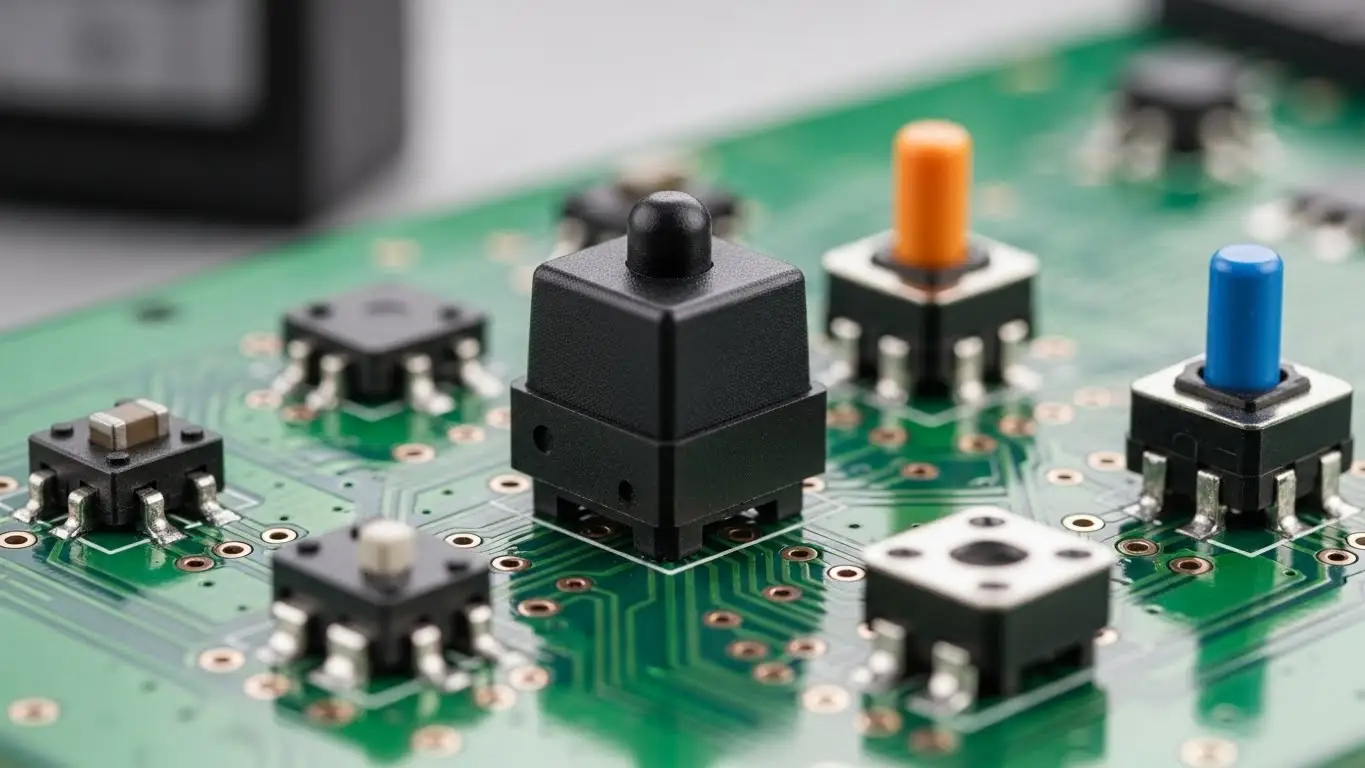
The simplest way to test a tact switch is by using a digital multimeter set to "Continuity Mode" (the setting with the sound wave symbol). Connect the black and red probes to the switch terminals on opposite sides. When the switch is open (unpressed), the multimeter should stay silent (reading "OL"). When you press the ... Read more
Learn More -
How DIP Switches Are Used in Basic Electronics
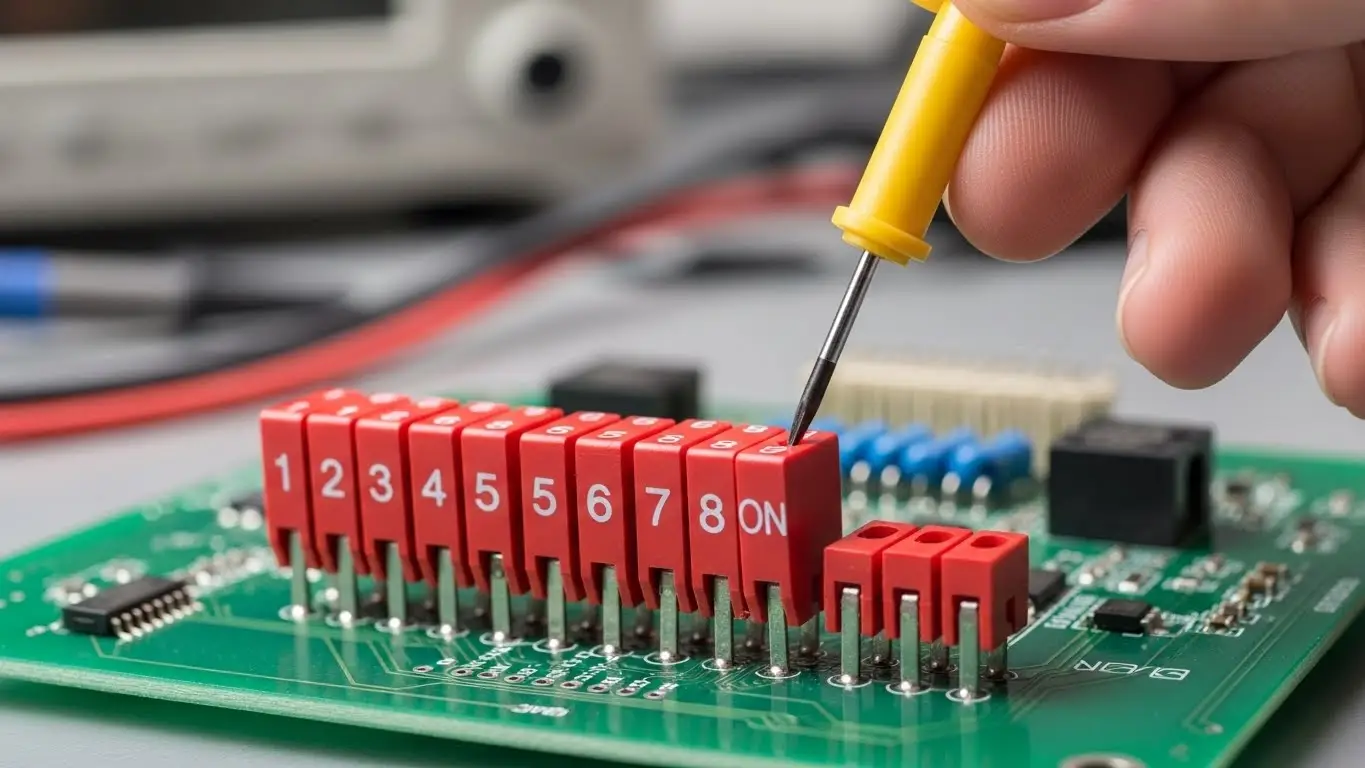
DIP switches are used in basic electronics to manually configure hardware settings without the need for software code or external programmers. By toggling individual switches in a block to "On" or "Off," users create a unique binary code that the device reads to determine its behavior. Common applications include setting the frequency for garage door ... Read more
Learn More -
What Beginners Should Know About PCB Switches
PCB switches are electromechanical components mounted directly onto a Printed Circuit Board (PCB) to control the flow of electricity within a circuit. They serve two primary functions: accepting user inputs (like pressing a button on a keypad) or configuring hardware settings (like setting a garage door opener frequency). For beginners, the most important distinction is ... Read more
Learn More -
Introduction to Tact Switches: The Mechanics of the "Click"
This introduction to tact switches covers everything from basic mechanics to selecting the right component for your PCB. You likely press a dozen tactile switches every day without realizing it. They are the hidden heroes behind the "Volume Up" on your remote, the "Reset" on your router, and the "Start" on your microwave. While simple ... Read more
Learn More -
Beginner’s Guide to DIP Switch Configuration
This beginner guide to dip switch configuration is your roadmap to mastering hardware customization. You don’t need an engineering degree to understand these tiny components. You just need a steady hand, the right tool, and a basic understanding of on/off logic. Whether you are pairing a garage door remote, setting up an arcade machine, or ... Read more
Learn More -
Industrial Switches: A Comprehensive Guide for Beginners
New to industrial networking? Discover the key differences between commercial and industrial switches, unmanaged vs. managed options, and how to choose the right hardware for your facility. The PLCs are running, the power is on, but the data isn’t flowing. After hours of troubleshooting and thousands of Euros in lost production, you find the culprit: ... Read more
Learn More -
Debouncing Issues in DIP & Tact Switches: The Engineering Guide
Understanding debouncing issues in DIP and tact switches is the difference between a reliable device and a glitchy prototype. When mechanical contacts close, they don't just connect; they bounce microscopically, creating "phantom" signals that microcontrollers misinterpret as multiple inputs. This guide covers the physics of contact bounce and the hardware and software solutions to fix ... Read more
Learn More -
Factors Affecting Tact Switch Tactile Feel
The tactile feel of a switch is primarily determined by the Force-Stroke (F-S) curve, which maps the relationship between the physical pressure applied and the distance the actuator travels. The three critical variables defining this "personality" are Actuation Force (how hard you press), Travel Distance (how far the button moves), and the Click Ratio (the ... Read more
Learn More -
How Gold-Plated Contacts Improve DIP Switch Life
Gold-plated contacts improve DIP switch life by preventing oxidation, ensuring reliable signals in low-voltage "dry circuits." Unlike tin or silver, gold is a noble metal that does not corrode or form an insulating oxide layer. For engineers, the choice is simple: if you are switching logic-level signals (under 100mA / 20V), specifically in modern 3.3V ... Read more
Learn More
You Are Here:
Home / Industry Blog /