

-

Gold-Plated vs Standard DIP Contacts: Which is Best for Your Application?
Gold-plated DIP switch contacts offer superior corrosion resistance and extremely low contact resistance, making them ideal for low-current, high-reliability applications and long-term storage. Standard contacts (typically tin or silver-plated) are more cost-effective and suitable for higher current loads and environments where occasional actuation can clean the contact surface. Why Does the Contact Material in DIP ... Read more
Learn More -
DIP Switch vs DIP Module: The Essential Guide for Electronics Design
The fundamental difference is that a DIP Switch is a single electromechanical component for setting binary parameters, while a DIP Module is a complete, pre-assembled circuit board containing one or more DIP switches, sometimes with additional circuitry like resistors or LEDs, streamlining integration and often offering higher density customization for specific applications. Who Are DIP ... Read more
Learn More -
Low-Profile vs Standard Tactile Switches: The Definitive Comparison for Precision, Portability, and Performance
Choosing between low-profile vs standard tactile switches is a foundational decision in design. It dictates the entire user experience. A low-profile tactile switch is inherently shorter, creating a more compact product with a shorter key travel. In contrast, a standard tactile switch is taller, offering a more traditional, pronounced keystroke and greater customizability. Your final ... Read more
Learn More -
Illuminated vs Standard Tact Switch: A Definitive Guide for Designers and Engineers
When designing a user interface for any electronic product—from industrial controls to consumer devices—the choice between an illuminated tact switch and a standard (non-illuminated) tact switch is a critical decision. The core difference is simple: An illuminated tact switch includes an integrated LED (or multiple LEDs) to provide visual feedback, while a standard tact switch ... Read more
Learn More -
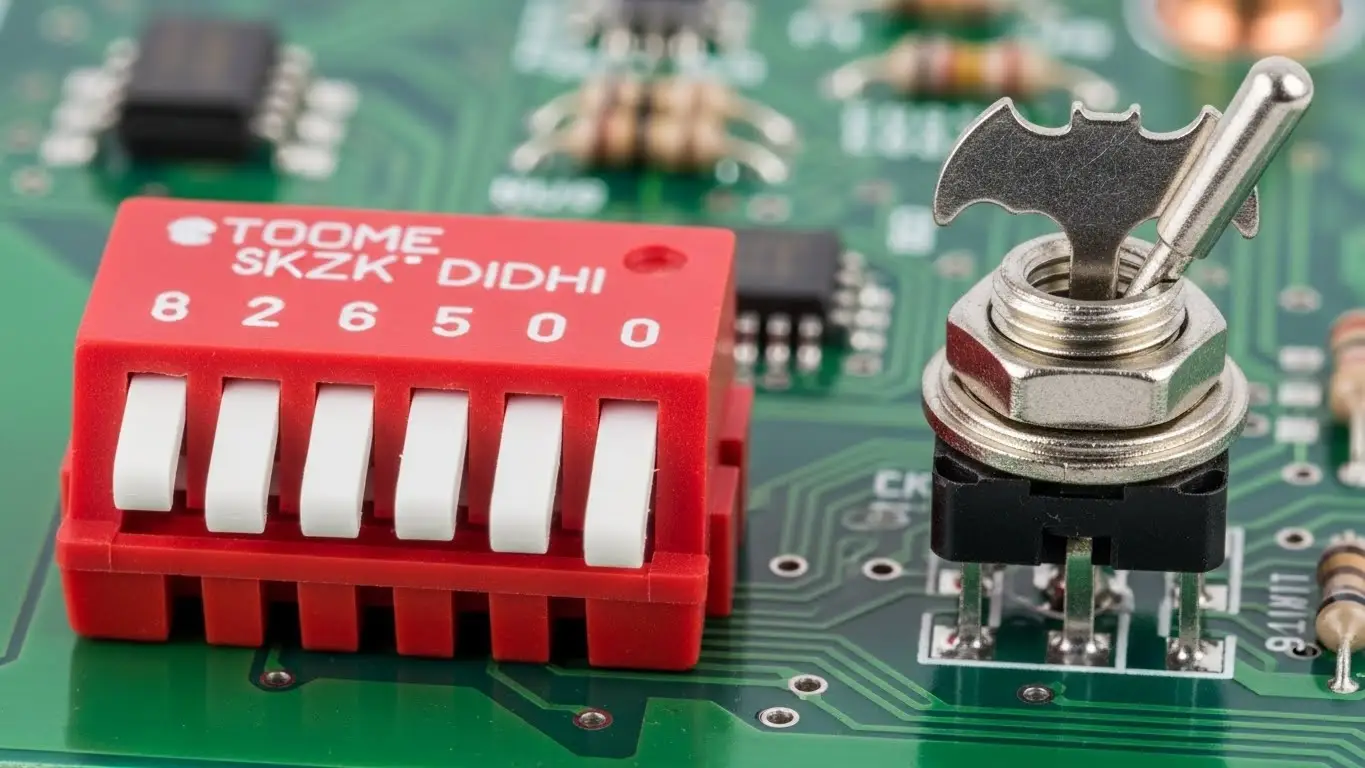
DIP Switch vs Toggle Switch: The Engineer’s Guide to PCB Control
When designing a Printed Circuit Board (PCB) or a control panel, the choice between a DIP switch and a Toggle switch usually comes down to one question: How often does this switch need to be moved? Below, we break down the engineering mechanics, durability, and use cases to help you finalize your Bill of Materials ... Read more
Learn More -
Slide DIP vs Rotary DIP Switch
The main difference between a Slide DIP switch and a Rotary DIP switch lies in their actuation method and output logic. A Slide DIP switch consists of multiple individual actuators (sliders) that provide a simple binary ON/OFF state for each pole, occupying more board space as the bit count increases. In contrast, a Rotary DIP ... Read more
Learn More -
Sealed vs Waterproof Tact Switch: Key Differences
The primary difference between a sealed tact switch and a waterproof tact switch lies in the degree of Ingress Protection (IP) rating. While the terms are often used interchangeably, "sealed" typically refers to "process sealed" switches designed to withstand the flux washing process during PCB manufacturing (often rated IP64 or lower). In contrast, "waterproof" tact ... Read more
Learn More -
Tact Switch vs Micro Switch
The primary difference between a tact switch and a micro switch lies in their intended function and mechanics. A tact switch (tactile switch) is designed specifically for direct user interaction, providing a noticeable physical "click" feedback at low voltages to signal an input, such as pushing a button on a keypad. A micro switch (snap-action ... Read more
Learn More -
SMD DIP Switch vs Through-Hole DIP Switch: The Designer's Guide
Choosing between an smd dip switch vs through hole component is often the first real argument a junior engineer has with their production manager. I vividly remember my first PCB design review; I had specified a rugged through-hole switch because it "felt" sturdier. The manufacturing lead looked at the Bill of Materials, sighed, and asked ... Read more
Learn More -
DIP Switch vs Jumper: Which Is Better?
There is a distinct sinking feeling known only to field technicians: the sound of a plastic jumper slipping from your needle-nose pliers and pinging off the metal chassis of a mission-critical control panel. You’re on a factory floor, it’s 100 degrees, and you’re now searching for a piece of plastic the size of a grain ... Read more
Learn More
You Are Here:
Home / Industry Blog /