

-

How to Test DIP Switches with a Multimeter
To test a DIP switch with a multimeter, set your meter to Continuity Mode (indicated by a sound wave or diode symbol). Place your black and red probes on the two parallel pins corresponding to a single switch position (across the body width, not side-by-side). When you toggle the switch to ON, the multimeter should ... Read more
Learn More -
How to Configure DIP Switch Positions
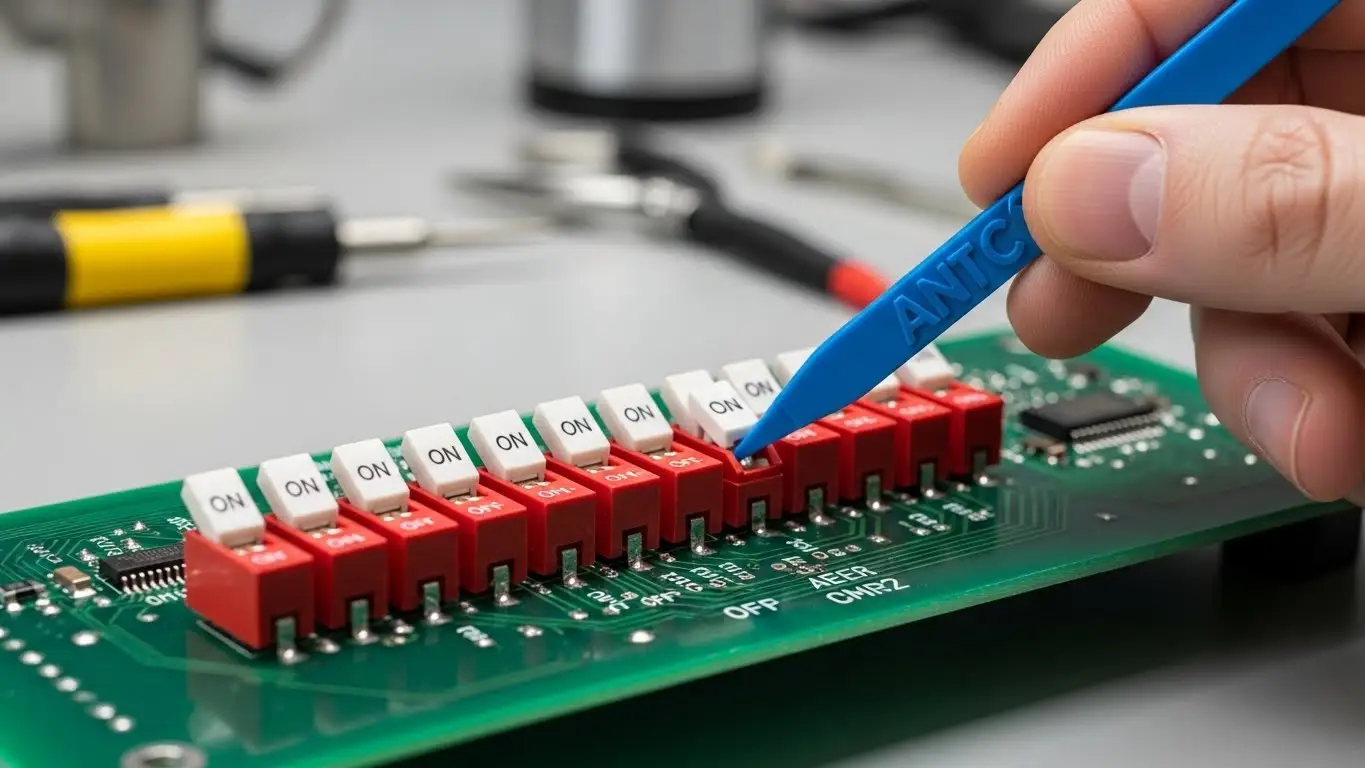
To configure DIP switch positions, you manually toggle individual levers (actuators) on the switch block to a specific "ON" (closed) or "OFF" (open) state. This physical configuration creates a unique binary code that the device’s microcontroller reads to determine settings such as device addresses, operational modes, or communication frequencies. Typically, you use a small tool ... Read more
Learn More -
How to Install a Tact Switch on PCB
To install a tact switch on a PCB, you must first identify the correct pin orientation, as most 4-pin switches are internally connected in pairs. Insert the switch legs into the through-holes (or align them with pads for SMT), ensuring the component sits flush against the board. Secure the switch by bending a leg or ... Read more
Learn More -
Installation & Usage Made Simple
In the world of industrial automation, a switch is only as reliable as its installation. It is a frustration we hear often: a high-quality pressure or flow switch fails prematurely, not because of a manufacturing defect, but due to a subtle oversight during the setup phase. At hx-switch.eu, we understand that precision is non-negotiable. Whether ... Read more
Learn More -
How to Select Tact Switches for Automotive Devices: The Engineering Guide
Selecting tactile switches for automotive applications is fundamentally different from consumer electronics. In a vehicle, a switch isn't just an interface; it is a safety-critical component exposed to thermal shock, constant vibration, and chemical aggressors. While standard switches prioritize cost and compactness, automotive tact switches must prioritize reliability (AEC-Q200 compliance) and haptic consistency. A switch ... Read more
Learn More -
How to Choose a DIP Switch for Router Settings
Network instability is often blamed on software bugs or interference, but experienced hardware engineers know the truth lies deeper in the physical layer. A failing component—specifically a degraded DIP switch—can silently reset baud rates, scramble device IDs, or toggle between RS-232 and RS-485 modes without warning. When a router’s configuration depends on physical binary states, ... Read more
Learn More -
Best DIP Switches for Controller Boards
The best DIP switches for controller boards are typically Surface Mount (SMT) Half-Pitch DIP switches for modern, high-density PCBs, or Piano-style (side-actuated) DIP switches for boards located in accessible enclosures. For industrial controller boards requiring frequent wash-downs or harsh environment protection, tape-sealed slide DIP switches with gold contacts are the industry standard. Selecting the right ... Read more
Learn More -
Best Long-Lifespan Tact Switches
The best long-lifespan tact switches are electromechanical components rated for 1 million to 10 million actuation cycles. Achieving this durability requires specific materials: look for switches utilizing stainless steel domes rather than phosphor bronze, as steel offers superior resistance to metal fatigue. Additionally, high-end durable switches often feature silver or gold-plated contacts to prevent oxidation ... Read more
Learn More -
How to Select Switches for IoT Devices
Selecting the right electromechanical switches for Internet of Things (IoT) devices requires balancing strict size constraints, energy efficiency, and environmental durability. To ensure optimal performance, you must prioritize components that offer low contact resistance to preserve battery life and compact footprints, such as SMT tactile switches, to fit dense PCBs. Additionally, the operating environment dictates ... Read more
Learn More -
Choosing Tactile Switches for Industrial Devices
Mastering how to choose tactile switches for industrial devices requires prioritizing environmental sealing (IP ratings), mechanical actuation force (for gloved operation), and vibration resistance. Unlike consumer electronics, industrial switches must withstand harsh chemicals, extreme temperatures, and millions of cycles without signal failure. I once audited a factory floor where a $500,000 CNC machine was sitting ... Read more
Learn More
You Are Here:
Home / Industry Blog /