

-

Industrial Switch Comparisons
You can buy a standard Ethernet switch for $30 at an electronics store. You can also buy an industrial-grade switch for ten times that amount. To a procurement manager looking at a spreadsheet, the choice seems obvious—save the money. But to an automation engineer, that $30 switch represents a ticking time bomb. In an air-conditioned ... Read more
Learn More -
Fixing Noisy Signals in DIP Circuits: The Ultimate Guide
Noisy signals in DIP circuits usually result from mechanical switch bounce or floating inputs (lack of pull-up resistors). To fix this, implement debouncing strategies (adding an RC filter or software delay of 10–20ms) and ensure every input pin has a stable voltage reference. If noise persists, inspect for oxidation and apply contact cleaner. Why is ... Read more
Learn More -
DIP Switch No Signal: Troubleshooting & Repair Guide
A "no signal" fault in DIP switches typically results from contact oxidation (increasing resistance >100mΩ), insufficient wetting current, or cold solder joints. To resolve this, first verify continuity with a multimeter, clean contacts with a specialized deoxidizer, and reflow solder points. If the actuator is physically compromised, component replacement is required. Why is my DIP ... Read more
Learn More -

Why Choosing the Wrong Panel Mount Micro Switch Costs More?
A Panel Mount Micro Switch is a small, snap-action switch fixed to a control panel. It sends precise on/off signals in vehicles, machines, and outdoor devices. It looks simple. It is not. Pick the wrong seal or actuation force and tiny errors creep in. Water, dust, and vibration start to win. Signals drift. Operators press ... Read more
Learn More -
How to Fix Stuck Tactile Switches: Diagnosis, Cleaning, and Replacement Guide
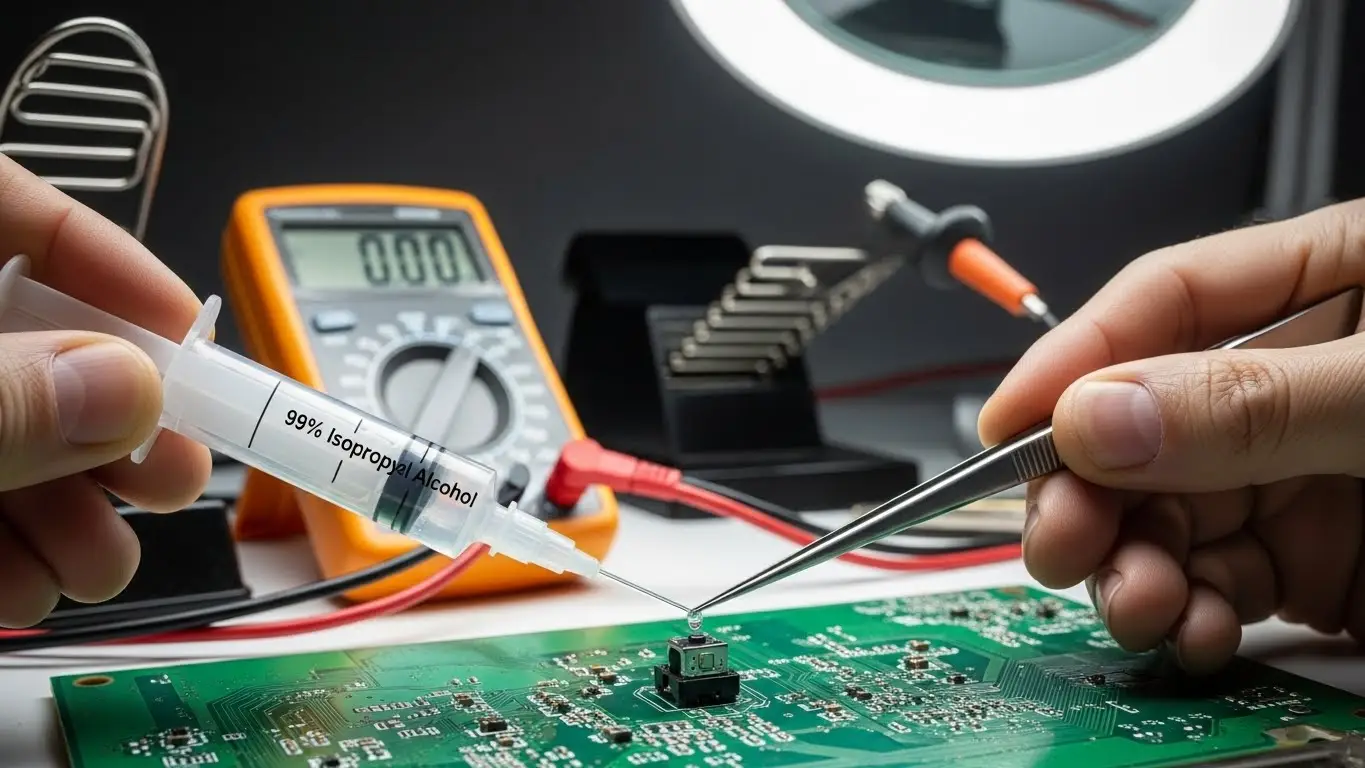
To fix a stuck tactile switch, first disconnect all power sources. Apply a small amount of 99% Isopropyl Alcohol (IPA) directly to the actuator and press the button rapidly to clear internal debris or oxidation. If the tactile "click" is gone (dome collapse), the switch requires desoldering and replacement. HX-Switch recommends testing continuity with a ... Read more
Learn More -
Why Tact Switches Stop Responding: 4 Common Failures & Fixes
Why does a tactile switch stop working? In 90% of cases, the culprit is contact oxidation (increasing electrical resistance), mechanical dome fatigue (loss of the "click"), or flux contamination from improper soldering. While these switches are rated for thousands of cycles, they are not sealed against the environment. Over time, dust, moisture, and even invisible ... Read more
Learn More -
Why DIP Switches Cause Configuration Problems (And How to Avoid Them)
DIP switches are legendary for their reliability, yet they are a frequent source of configuration headaches. Why? The problem is rarely the switch itself—it’s how the switch interacts with software and human perception. The three most common causes of DIP switch configuration failures are the "Read-Once" logic trap (changing settings without rebooting), orientation ambiguity (misreading ... Read more
Learn More -
Fix Intermittent DIP Switch Signals: Cleaning, Debouncing & Repair
Is your device behaving erratically, ignoring configuration settings, or flickering between modes? Intermittent DIP switch signals are a common headache in legacy electronics and new IoT prototypes alike. The problem is rarely the switch "breaking" in the traditional sense. Instead, it is usually contact oxidation or signal bounce. Before you desolder component, try the "Wipe ... Read more
Learn More -
Common Tact Switch Failures: Troubleshooting & Repair Guide
If your tactile switch is failing, the problem is almost always one of two things: mechanical fatigue (the metal dome has collapsed) or contact contamination (oxidation or debris is blocking the signal). For a quick fix on intermittent switches, flushing the component with a dedicated contact cleaner like DeoxIT D5 often works. However, if the ... Read more
Learn More -
DIP Switch Not Reading Correctly? Fixes
If your DIP switch isn't reading correctly, the most common culprit is contact oxidation or debris preventing a clean electrical circuit closure. First, try cycling the individual switch actuator back and forth 5-10 times; the internal wiping action often clears minor buildup. If that fails, apply a specialized electronic contact cleaner (like DeoxIT) and re-test ... Read more
Learn More
You Are Here:
Home / Industry Blog /