

-

Best Switches for Communication Modules
The best switches for communication modules—such as IoT gateways, routers, and industrial modems—are DIP switches, tactile (tact) switches, and slide switches. DIP switches are the industry standard for hardware configuration, allowing engineers to manually set baud rates, addresses, or protocols without software intervention. Tactile switches are essential for user interfaces, primarily serving as reset or ... Read more
Learn More -
Best DIP Switches for Automation Systems
Best DIP switches for automation systems must balance reliability, environmental sealing, and ease of configuration. In industrial environments, the ideal choice is often a Rotary DIP switch for quick address setting or a Piano-style switch for side-access configuration. Prioritize gold-plated contacts for low-voltage logic circuits to prevent oxidation and ensure consistent signaling over decades of ... Read more
Learn More -
Best Tact Switches for IoT Devices
Selecting the best tact switches for IoT devices is a critical design decision that directly impacts user experience and product longevity. Whether you are building a wearable fitness tracker or a remote industrial sensor, the button is the primary physical interface. If that switch fails, your "smart" device becomes useless. In my experience prototyping hardware, ... Read more
Learn More -
The definitive Industry Guide
In modern manufacturing, network failure isn't just a technical annoyance—it is a financial hemorrhage. If you have ever watched a production line grind to a halt because a communication packet was dropped, you know the stakes. The cost of downtime in automotive or pharmaceutical production can range from $20,000 to over $100,000 per hour. Yet, ... Read more
Learn More -
How to Wire a DIP Switch in a Circuit
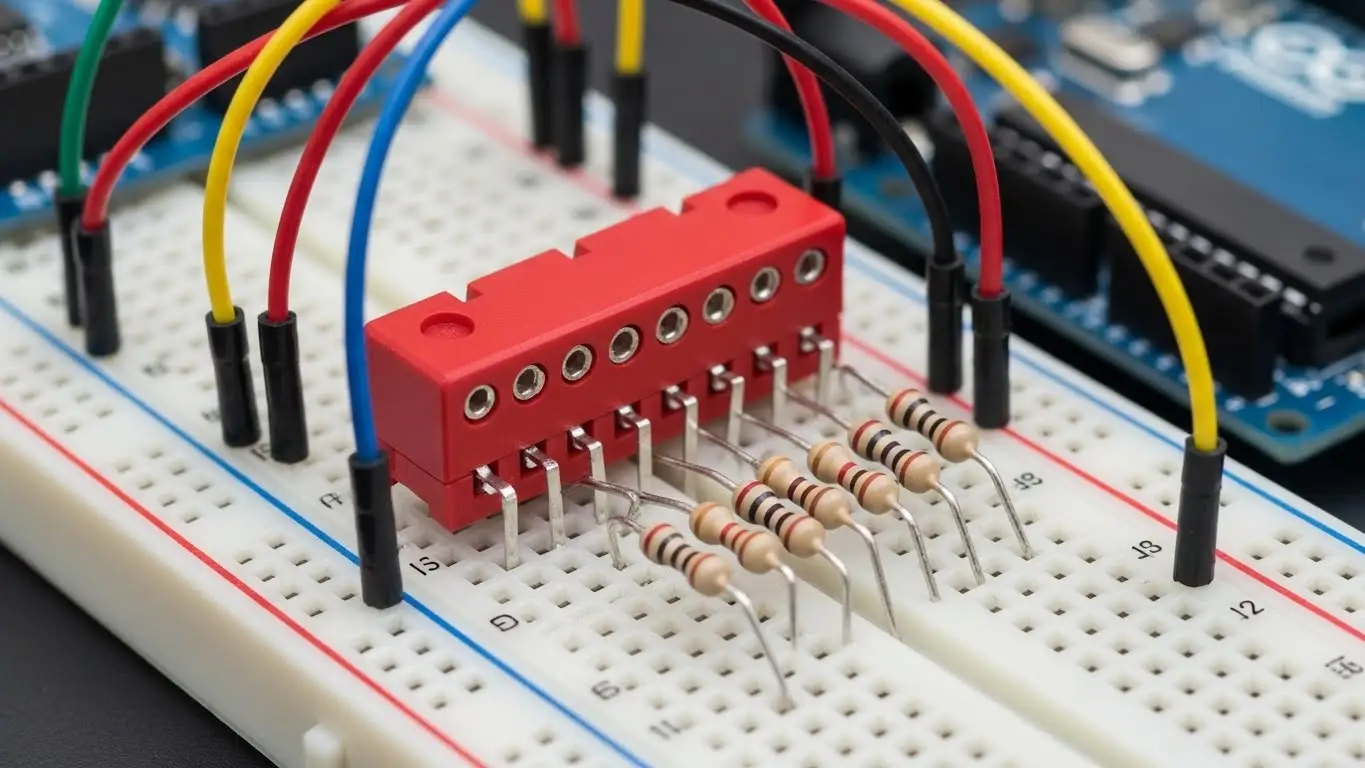
To wire a DIP switch correctly, you generally connect one side of the switch pins to the ground (GND) and the corresponding pins on the other side to the digital input pins of your microcontroller or logic circuit. Crucially, you must ensure the signal state is stable by using a pull-up resistor. You can either ... Read more
Learn More -
DIP Switch Reading Errors — Troubleshooting Guide
DIP switch reading errors typically stem from three root causes: mechanical failure (oxidation, dust, or wear), human error (misinterpreting labels or binary values), or logical faults (reading the switch at the wrong time). To fix this, first verify that the physical position matches the "ON" label. If the setting is correct but the device fails ... Read more
Learn More -
How to Assemble Tact Switches on SMD Boards
How to assemble a tact switch on smd board is a precision skill that separates professional electronics manufacturing from amateur tinkering. Getting this right ensures your device provides that satisfying, crisp "click" for years, while a poor assembly leads to intermittent failures and frustrated users. In my years managing production lines and hand-assembling prototypes, I ... Read more
Learn More -
How to Read DIP Switch Settings
How to read dip switch settings is a fundamental skill for industrial technicians, retro-computing enthusiasts, and PCB designers. These compact components act as the hardware "voice" of a device, dictating behavior without a single line of software code. Whether you are configuring a DMX lighting controller or a garage door remote, understanding these binary codes ... Read more
Learn More -
Designing PCB Footprints for Tact Switches: A Definitive Guide
To design a PCB footprint for tactile switches, you must prioritize mechanical stability alongside electrical connectivity. Essential steps include verifying manufacturer datasheets for exact pin pitch, extending solder pads by 0.2mm to 0.5mm at the "toe" to increase shear strength, and defining a courtyard that prevents component collision during actuation. Always validate the footprint against ... Read more
Learn More -
How to Solder SMD Tact Switches: Hand & Hot Air Guide
To solder an SMD tact switch effectively, use the "Tack and Reflow" method. First, apply a small amount of solder to one PCB pad only. Holding the switch with tweezers, heat that tinned pad and slide the component into place until it sits flush. Remove the heat and let it set to anchor the switch. ... Read more
Learn More
You Are Here:
Home / Industry Blog /