

-

When to Use Rotary Switches Instead of DIP Switches: A Practical Guide
You should use rotary coded switches instead of DIP switches whenever end-user convenience and error reduction are your top priorities. While DIP switches are cost-effective for permanent factory settings, rotary switches are superior for field-adjustable settings—such as assigning device addresses or IDs—because they are human-readable (0-9) and do not require binary calculation. Choose a rotary ... Read more
Learn More -
Alternatives to Tact Switches in Compact Devices: The Engineering Guide
Designing sleek wearables often forces you to seek alternatives to tact switches in compact devices. While the standard tactile switch has been the heartbeat of user interfaces for forty years, modern consumer expectations for waterproofing and slim profiles are rendering it obsolete. If you are struggling to fit a 3mm switch into a 2mm housing, ... Read more
Learn More -
Best Alternatives to DIP Switches: The Definitive Guide for Modern PCB Design
Are you still relying on bulky, manual DIP switches for your circuit configurations? While they have been a staple in electronics for decades, finding the best alternatives to DIP switches is often the first step toward modernizing your PCB designs, saving board space, and improving user experience. Whether you are designing a compact IoT device ... Read more
Learn More -
A Comprehensive Analysis of the Best Alternatives
In the last 15 years of designing industrial networks, I’ve seen the landscape change dramatically. There was a time when "reliability" simply meant buying the most expensive blue or yellow box you could find, paying a premium for the logo, and hoping for the best. But today, with supply chains stretched thin and budget scrutiny ... Read more
Learn More -
Gold-Plated vs Standard DIP Contacts: Which is Best for Your Application?
Gold-plated DIP switch contacts offer superior corrosion resistance and extremely low contact resistance, making them ideal for low-current, high-reliability applications and long-term storage. Standard contacts (typically tin or silver-plated) are more cost-effective and suitable for higher current loads and environments where occasional actuation can clean the contact surface. Why Does the Contact Material in DIP ... Read more
Learn More -
DIP Switch vs DIP Module: The Essential Guide for Electronics Design
The fundamental difference is that a DIP Switch is a single electromechanical component for setting binary parameters, while a DIP Module is a complete, pre-assembled circuit board containing one or more DIP switches, sometimes with additional circuitry like resistors or LEDs, streamlining integration and often offering higher density customization for specific applications. Who Are DIP ... Read more
Learn More -
Low-Profile vs Standard Tactile Switches: The Definitive Comparison for Precision, Portability, and Performance
Choosing between low-profile vs standard tactile switches is a foundational decision in design. It dictates the entire user experience. A low-profile tactile switch is inherently shorter, creating a more compact product with a shorter key travel. In contrast, a standard tactile switch is taller, offering a more traditional, pronounced keystroke and greater customizability. Your final ... Read more
Learn More -
Illuminated vs Standard Tact Switch: A Definitive Guide for Designers and Engineers
When designing a user interface for any electronic product—from industrial controls to consumer devices—the choice between an illuminated tact switch and a standard (non-illuminated) tact switch is a critical decision. The core difference is simple: An illuminated tact switch includes an integrated LED (or multiple LEDs) to provide visual feedback, while a standard tact switch ... Read more
Learn More -
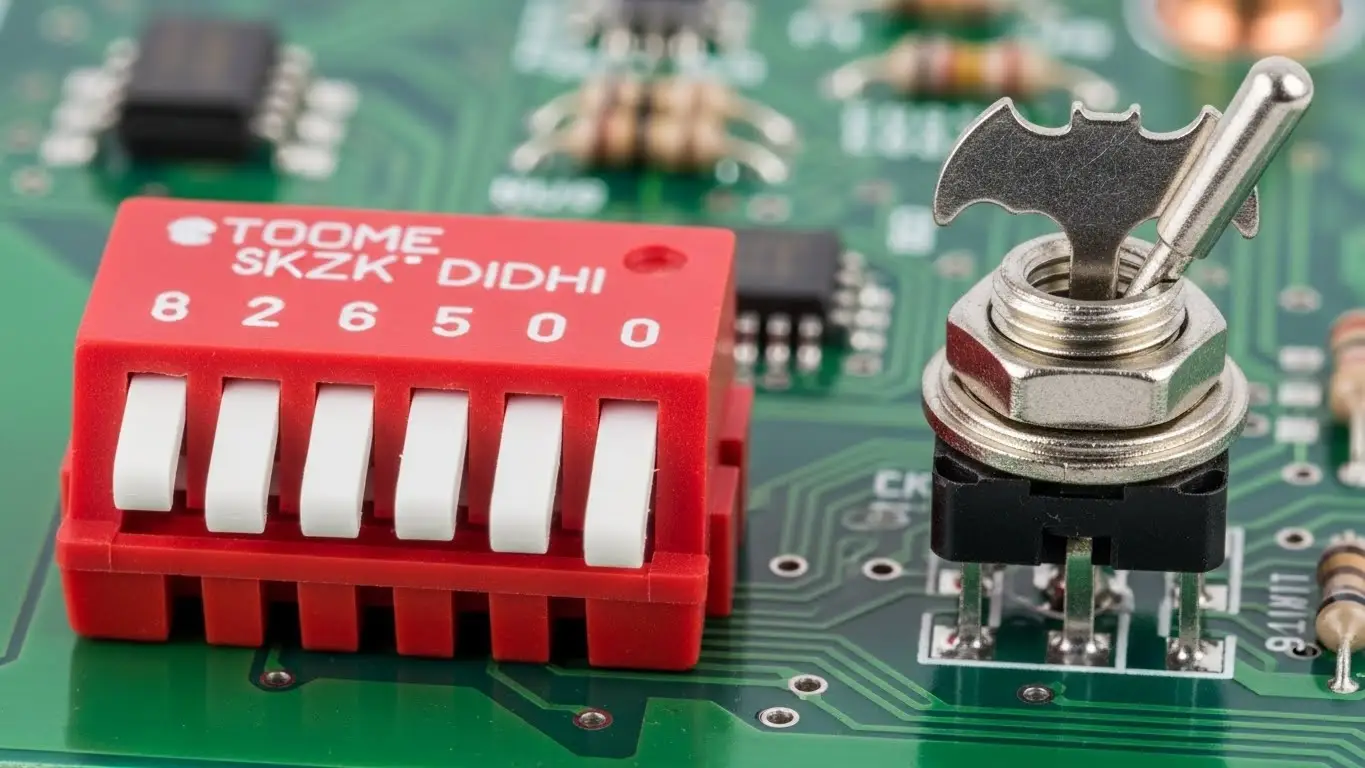
DIP Switch vs Toggle Switch: The Engineer’s Guide to PCB Control
When designing a Printed Circuit Board (PCB) or a control panel, the choice between a DIP switch and a Toggle switch usually comes down to one question: How often does this switch need to be moved? Below, we break down the engineering mechanics, durability, and use cases to help you finalize your Bill of Materials ... Read more
Learn More -
Slide DIP vs Rotary DIP Switch
The main difference between a Slide DIP switch and a Rotary DIP switch lies in their actuation method and output logic. A Slide DIP switch consists of multiple individual actuators (sliders) that provide a simple binary ON/OFF state for each pole, occupying more board space as the bit count increases. In contrast, a Rotary DIP ... Read more
Learn More
You Are Here:
Home / Industry Blog /