


Miniature Selector Switch Manufacturer: From Application Needs to Approved Supply | Hanxia
A tiny selector switch can take up a small amount of board space and mean the difference between the user's confidence in using a device. A control which is comfortable on a loose sample may not be easy to fit in its case. There can also be a different terminal arrangement in a matching footprint.
Selecting a miniature selector switch manufacturer requires OEM engineers and purchasing teams to make the leap from the action the end user should be able to take to a repeatable production specification. Start with what the device needs to do, then make sure it behaves electrically, integrates mechanically, performs with samples, and supplies are acceptable prior to approval of a part.
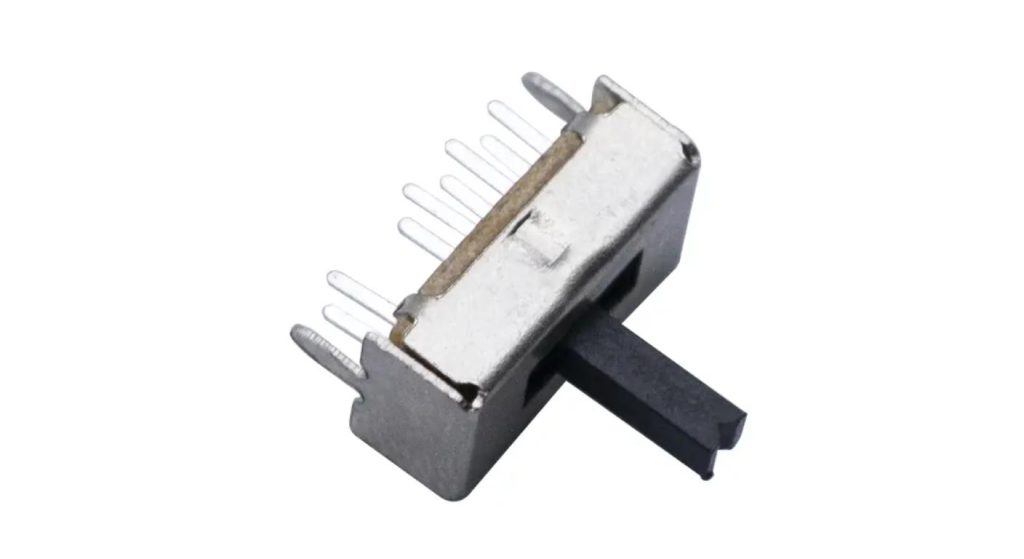
Specify which information the user will be entering.
Explain the action to be taken before selecting the component. Will someone want to choose between two modes of operation, disconnect a battery circuit or change a setting during the servicing? Determine if it is a job that needs to be selected after it leaves or only adjusted during installation and if it needs to be adjusted on a daily basis.
Miniature selector switches here are related to small switches that are used for discrete circuit or mode selection, such as PCB slide switches. They are not to be confused with large industrial rotary controls. Hanxia's slide switch series is just a starter to check compact switching solutions.
Convert the action to be done into a sequence of connectives. “Two modes” does not describe the circuit: determine the connections at each position and the changes in the circuit as the actuator changes position.
Ensure that the Electrical Job is set up prior to footprint.
Determine if the switch has current flowing through it or whether it is a low current input to a controller. Different checks will be performed on these applications. The component used for a logic input should not be automatically used to interrupt a motor, lamp or charging path.
Write down (Working voltage, steady current, probable starting current and type of load). Note: Don't assume the rating will be the same for the conditions in which you want to switch, ask the manufacturer to confirm. Maximum ratings are not conclusive at very low levels of signal.
Review contact resistance, contact behavior and firmware transition behavior for controller inputs. Direct load switching – verify the applicable electrical endurance conditions. Maintain these requirements on the specific model and drawing revision throughout sourcing process.
Verify Whole Actuation Envelope.
There are other space requirements besides the housing outline. Add the terminal projection, actuator travel, mounting features, other nearby components and the enclosure opening. A switch may be able to fit the PCB, but there may not be enough space for the lever of the switch to be pushed by the finger.
Test the tolerance between the board and enclosure. If not, the actuator can rub against an opening or fall short of their destination. Test operation with assembled components instead of relying on nominal clearance to determine operation.
Hanxia's micro slide switch with adjust function is one of the candidates you can consider for compact selection jobs. Don't assume it's a design match, ask for its current dimensional drawing and terminal connection diagram. Product photos can be used to identify construction but it is not enough to determine compatibility.
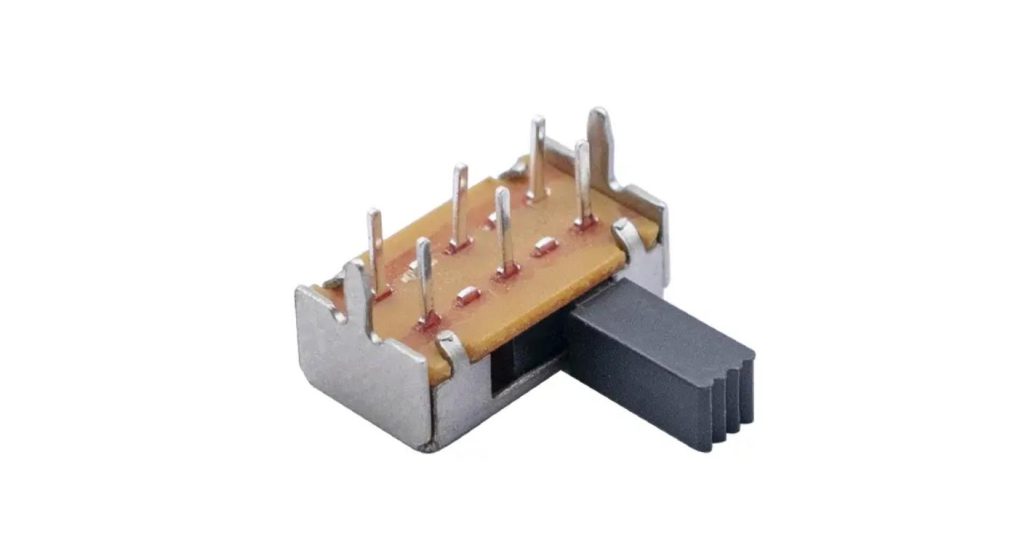
Match Operating Feel to the Application is a new target.
A selector should indicate his position without having to use too much force. A detent would be useful to ensure that no accidental changes are made, but if the actuator is small and exposed, it can be uncomfortable to use if it is regularly operated. Assess the control within the proposed containment area.
Take into account both access and force. The service selection could be recessed for intentional use of a tool, and every day mode controls should be accessible without any awkward hand movements. Make sure that surfaces around the actuator are not conducive to sideways loading or levering against the actuator.
Compare a number of samples. Variations in motion, fixation and/or loose parts can be more readily identified by comparison. Notate acceptable behaviour in the sample approval criteria, for the purchasing and engineering to consider the same characteristics.
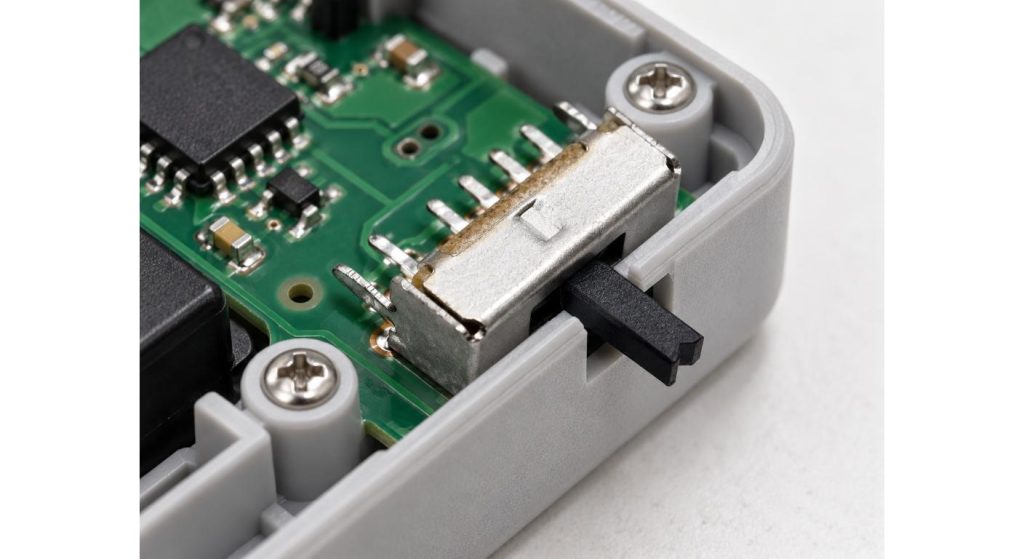
Please check Assembly Conditions before ordering samples.
Select the mounting and termination style in the light of the actual mounting process. Verify that the proposed part is compatible with the proposed soldering method, board thickness and handling sequence. Production compatibility does not necessarily exist for similar external dimensions.
Check for soldering restrictions and cleaning restrictions. Metal covers should not be assumed to seal or be washable. Flux, cleaning fluid or debris into the mechanism can cause subsequent operation to be affected.
Package also is important for production planning. Prior to a pilot order, agree on component orientation, packaging format and identification requirements. If automated placement is to be considered, involve the assembler early in part and packaging information which will be easily changed.
Test sample(s) in finished product.
Firstly, perform sample verification based on the required model and drawing. Check dimensions and continuity of terminals in all stable positions. Then put the switches together according to the proposed production process, repeat the functional tests.
Perform all the required tests under all the operating conditions of the device. Watch start-up, mode changes, re-run and inadvertent contact with control. In a software interpreted input, determine if a sluggish or a stuttering movement causes an undesirable state.
Do not compare the headline lifetime figures and instead use an application relevant cycle test. Note the load, operating speed, environment and acceptance limits. Afterwards check electrical performances and mechanical functions. Maintain failed samples and observations for discussion as the failure pattern sometimes tells more than pass/fail.
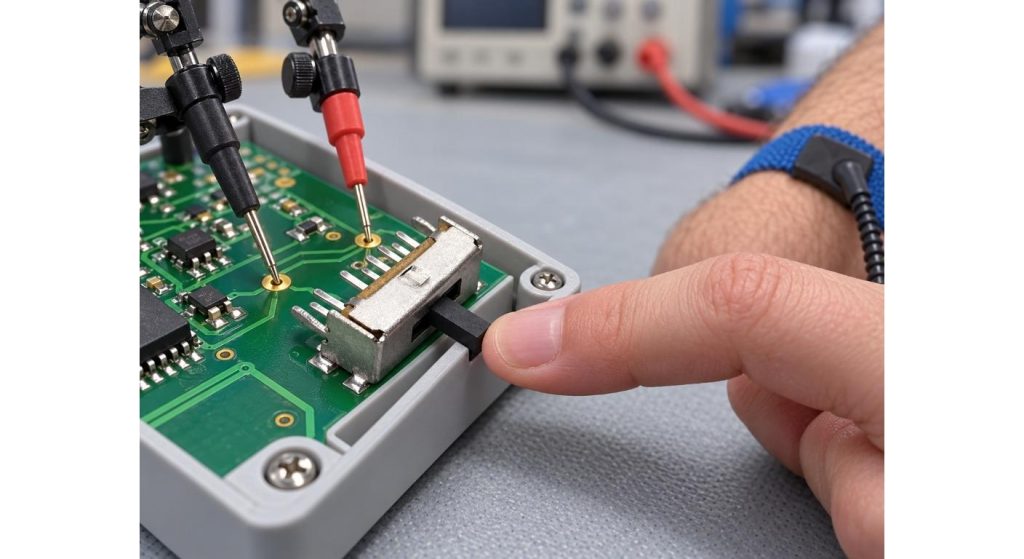
Review and assess Manufacturing Evidence and Supply Continuity
A manufacturer assessment should relate to a quality statement and the part that is being purchased. Inquire about the characteristics noted in the sample testing and how they are included in the incoming materials, in process checks and in final inspection. Ask for pertinent records, don't accept an irrelevant test report.
Hanxia's manufacturing overview features automated assembly and inspection capabilities. Use that information to begin a discussion on how the proposed model will be inspected, how the lot(s) will be identified and the proposed process for handling non-conforming parts.
Obtain and compare quotations on a similar basis. Establish approved construction, packaging, order quantity, delivery assumptions and responsibility of tooling, if applicable. Decide on communication of material, dimensional or process changes. A repeat order should include the approved specification, unless the specification is to be changed, and the orderer and the manufacturer agree to the change.
Convert Approved Sample to Purchase Specification.
Sample approval should result in a controlled reference and not just an e-mail stating "the switch works. Associate the sample accepted with the following: Part number, Drawing revision, Connection diagram, Test results, Packaging requirements.
Please contact Hanxia before asking for production price, provide application, electrical conditions, space, mounting methods and demand. This provides a practical basis to the supplier for confirming a standard option or discussing a modification.
| Approval Record | Responsible Team | Confirmation Point |
| Circuit connection diagram | Hardware engineering | Before PCB release |
| Enclosure fit review | Mechanical engineering | Before enclosure tooling |
| Assembly trial record | Manufacturing engineering | Before pilot production |
| Functional test acceptance | Quality and engineering | Before sample approval |
| Supply and change terms | Purchasing and supplier | Before production order |
A miniature selector switch manufacturer is required when his component, documentation and repeat supply all support the same approved design. Agree this prior to Volume purchasing and then refer to it during incoming inspection and for any future changes.
FAQs
Q1. Is a Miniature Selector Switch necessarily a Rotary Switch?
No. Selection: Describes the function; there are also modes that can be selected using a compact slide switch. Indicate what action(s) and connection(s) are needed.
Q2. Are there any size constraints for replacing switches?
Not automatically. Review the terminal connections, travel of actuators, ratings, and assembly requirements prior to approving a replacement.
Q3. What to send as samples?
Including circuit conditions, required positions, space requirement and mounting details. Draw an enclosure view or drawing if possible.
Q4. Is mechanical life, electrical life?
No. — This is dependent on the switching conditions and load. Ask for tests data for the intended application.
Q5. What should be kept on file upon approval?
Retention of approved drawing, sample identification, test results and purchase specification. Change them together when there is an authorized change.
