





Marine Grade Rocker Switch Explain: IP Ratings, Seals, And Salt Mist
Marine Grade Rocker Switch performance is not decided by looks, but by what happens inside the housing when water, vibration, and salt air show up at the same time.
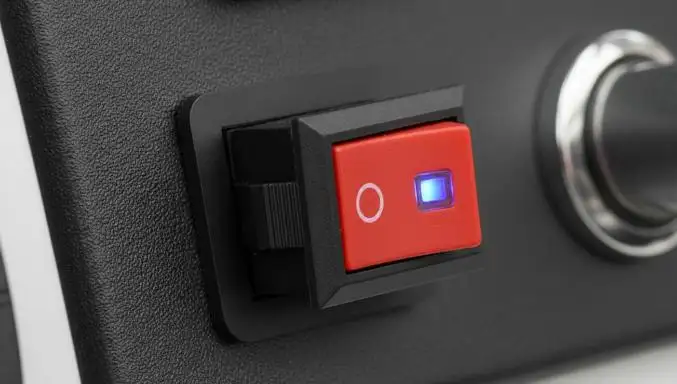
What "Marine Grade" Should Mean in Real Use
In marine, RV, and outdoor power systems, a switch is not a small accessory. It is a control point that can fail under spray, condensation, and corrosion. A Marine Grade Rocker Switch is expected to keep its feel, keep its contact stability, and keep its sealing over long service cycles.
At Hanxia, we treat "marine grade" as a testable promise. A good product story starts with clear definitions: what level of water protection is required, how seals are built, and how corrosion resistance is verified. When those points are explained in simple terms, beginners can choose correctly, and professional buyers can specify parts with fewer returns and fewer warranty cases.
IP Ratings Explained: What IP65, IP66, and IP67 Really Tell You
An IP rating is a shorthand for protection against solids and water. It does not automatically mean "ocean-safe," but it gives you a clear baseline for water exposure.
Here is how buyers usually interpret common IP targets for a Marine Grade Rocker Switch:
✓ IP65: Protected from dust and low-pressure water jets. Often suitable for dashboards under a canopy.
✓ IP66: Stronger water-jet protection. More forgiving for open-console use.
✓ IP67: Temporary immersion protection (commonly understood as up to 1 meter for up to 30 minutes, depending on the test standard and design intent).
One practical point for buyers: IP ratings describe the enclosure, not the wiring method you choose later. A sealed switch can still fail in the field if the wiring side is left exposed to moisture and salt air. That is why many OEM and harness teams treat IP as "the start," then design the full assembly around it.
Seals and Materials: The Hidden Details That Decide Reliability
Most failures blamed on "water" are actually caused by slow ingress. A small gap lets moisture creep in, then it sits near metal parts, then corrosion grows. This is why sealing design matters as much as the rating printed on a datasheet.
In a Marine Grade Rocker Switch, sealing usually includes several layers working together:
✓ Cap And Actuator Seal: Prevents splash entry through the moving rocker area.
✓ Housing Interface Seal: Controls leakage at the joint between upper and lower housing.
✓ Panel Seal / Gasket: Protects the mounting cutout, where water can pool and creep inward.
Material choice also affects long-term stability. For example, elastomer seals must keep elasticity after temperature swings, and plastic housings must resist stress cracks over time. From a buyer's point of view, this becomes a practical advantage: stable seals mean fewer intermittent faults, fewer "it works today but not tomorrow" service calls, and fewer replacements in the field.
At Hanxia, we focus on seal geometry and consistent assembly control, because even a good material can underperform if compression and fit are inconsistent from batch to batch.
Salt Mist and Corrosion: Why the Test Hours Matter
Salt air is different from fresh water. Salt accelerates corrosion, and it also creates conductive paths that can cause leakage current or contact instability. That is why marine and coastal applications often reference salt spray / salt mist testing.
A widely used method in the industry is ASTM B117 salt spray testing, where parts are exposed to a controlled salt fog environment for a set number of hours. Common checkpoints you may see in purchasing specs include 96 hours, 240 hours, 500 hours, or even 1,000 hours, depending on the risk level and the expected service environment.
How to use this information as a buyer:
• If a product will live inside a protected cabin, you may prioritize sealing and feel.
• If the switch is mounted on an open console, or used near a dock, salt mist resistance becomes a primary filter.
• If the project must reduce warranty risk, specifying a salt spray target helps align supplier quality and buyer expectations.
A Marine Grade Rocker Switch that performs well under salt mist is not only "more durable." It also protects your brand reputation, because corrosion-related failures tend to appear after installation—when replacement cost is highest.
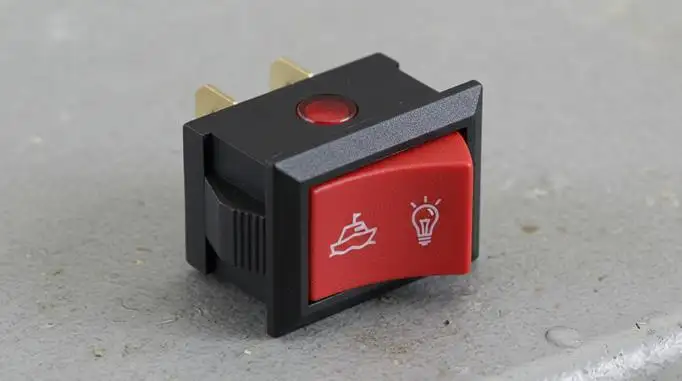
How to Specify the Right Marine Grade Rocker Switch for Your Project
A clean specification helps you avoid over-buying and under-protecting at the same time. Instead of asking for "the best," define the environment and the usage pattern.
Start with these practical questions:
✓ Where is it installed? Open console, cabin panel, engine compartment, or exterior box.
✓ What is the water exposure type? Splash, water jet cleaning, or occasional immersion.
✓ What is the corrosion risk? Coastal air, dockside splash, or inland use.
✓ How will it be wired? Harness with sealed connectors, or open terminals in a dry enclosure.
✓ Do you need visibility at night? LED illumination, backlit icons, or both.
When these points are clear, you can match IP rating targets with seal design and corrosion resistance, instead of guessing. From Hanxia's perspective as a manufacturer, this also improves production accuracy. Clear requirements reduce the chance of "spec drift," and help you receive consistent batches across long programs.
Hanxia's Practical Approach and a Simple Next Step
At Hanxia, we build Marine Grade Rocker Switch solutions for customers who want fewer surprises in harsh environments. We focus on measurable protection—IP performance supported by sealing structure, and corrosion resistance supported by salt mist verification—so your product team can specify with confidence.
If you are developing a boat console, RV control panel, or outdoor power distribution box, we suggest a simple sourcing workflow:
• Confirm the target IP level based on real exposure,
• Confirm how the panel cutout will be sealed,
• Align corrosion resistance with your coastal or inland market,
• Finalize labeling, LED options, and harness approach.
CTA: Build a More Reliable Marine Switch Program With Hanxia
Share your application scenario (boat/RV/outdoor equipment), your target IP rating, and whether salt mist resistance is a priority. Hanxia can recommend a Marine Grade Rocker Switch configuration that fits your environment and supports stable, repeatable production—so you launch with fewer returns and a stronger reliability story.
