





Tactile Push Button Switch for Electronic Devices Explained: How It Works
Think back to the last button you pressed on any electronic device—the volume control on a stereo, the power button on a monitor, the key on a security keypad. That satisfying click came from a component called a Tactile Push Button Switch for Electronic Devices. Most users never notice these tiny parts, but product designers think about them constantly. At HANXIA, we have spent nearly twenty years manufacturing these small interfaces that translate finger pressure into electrical signals. Understanding the engineering inside these switches helps you make smarter decisions when designing products that need to feel right and last long.
What Sets Tactile Switches Apart From Ordinary Buttons
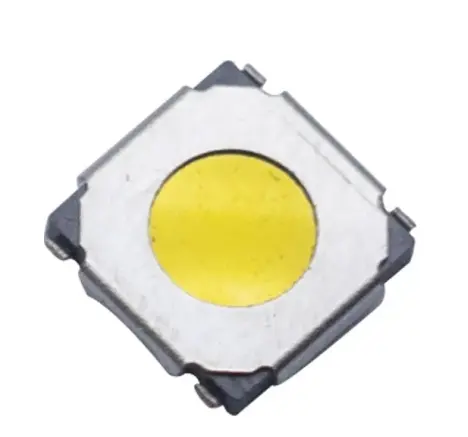
A Tactile Push Button Switch for Electronic Devices belongs to a family engineers describe as momentary electromechanical switches. The word momentary is important here. Unlike a wall light switch that stays in position until someone flips it back, these switches only complete the circuit while your finger applies pressure. Take your finger off, and everything resets automatically.
The defining characteristic of these switches is the feedback they provide. Press down, and the switch pushes back with a distinct bump. That bump tells your finger that the command registered without needing to look at a screen or wait for an LED to light up. This feedback happens in milliseconds but shapes how users judge product quality. Mushy switches feel cheap. Crisp switches feel premium.
At HANXIA, we focus on ultra-compact versions designed for crowded circuit boards where space comes at a premium. Our 4x4 millimeter and 5.2x5.2 millimeter J Bend SMT models appear in applications ranging from hospital patient call buttons to outdoor equipment control panels. Engineers building space-constrained products choose these switches because they deliver the same consistent performance found in much larger components.
A Closer Look at the Parts Inside
Opening up a Tactile Push Button Switch for Electronic Devices reveals four main components working together in a remarkably small space. Each part serves a specific function that contributes to the overall feel and reliability.
The actuator, sometimes called the plunger, is the part your finger actually touches. We mold these from POM engineering resin because this material maintains its shape and mechanical properties through hundreds of thousands of presses without wearing down. Designers frequently face the challenge of fitting switches into products with different thicknesses. That is why we offer actuator heights ranging from 1.5 millimeters up to 5.0 millimeters. You select the height that matches your mechanical stack-up, and the tactile feel stays consistent across your entire product line.
Beneath the actuator sits the snap dome, a precision-formed piece of stainless steel that behaves like a microscopic spring. Press down, and the dome resists initially, building pressure under your finger. Then it suddenly collapses with that characteristic snap. This collapse creates both the physical sensation you feel and the audible click you hear. Release pressure, and the dome springs back to its original shape, ready for the next press cycle.
Below the dome lie the electrical contacts, typically made from silver alloy for most standard applications. Here is something that surprises many engineers. Low-level signals below 10 milliamps can have trouble with standard silver contacts over time because oxidation gradually forms a thin insulating layer. For these situations, HANXIA offers gold-over-nickel plating that maintains perfect conductivity even with the smallest signals. This is one of those details that prevents intermittent failures six months into production.
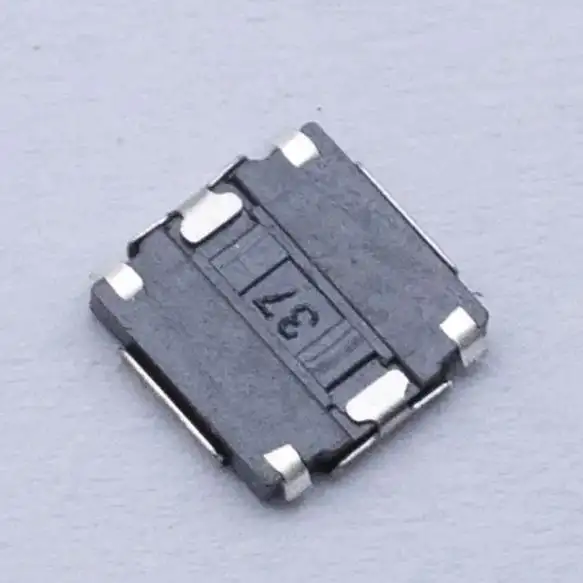
The heat-resistant thermoplastic housing holds everything together while the J-bend terminals create solder joints strong enough to survive drops and vibration. The UL94 V-0 rating means the housing material meets international safety standards for flame resistance, an important consideration for products requiring safety certification.
The Physics of That Satisfying Click
Understanding exactly what happens during that split second of pressing helps explain why these switches perform consistently for hundreds of thousands of cycles. When your finger begins pressing, the actuator moves downward a very short distance—typically between 0.2 and 0.35 millimeters. This short travel is intentional. It allows for quick actuation without requiring your finger to move very far, which matters in applications where operators press buttons repeatedly throughout a shift.
The force required to collapse the dome gets calibrated during manufacturing, and different applications demand different feels. HANXIA offers several actuation force options based on decades of working with customers across industries:
✓ 160 grams works well for consumer devices where you want light interaction that doesn't tire fingers during extended use
✓ 200 grams provides the standard feel users expect from television remotes and common household appliances
✓ 250 and 320 grams suit industrial environments where operators wear gloves or where accidental presses could cause equipment damage
When the dome finally collapses, the stainless steel contacts the terminals below, completing the circuit. Because these switches are SPST-NO, which stands for Single Pole Single Throw Normally Open, the circuit only connects while you are actually pressing. Release your finger, and the dome springs back, breaking the circuit and resetting everything for the next press.
One detail that matters greatly for your firmware team is bounce time. The instant two metal contacts meet, they do not stay perfectly still. They vibrate, causing the circuit to rapidly connect and disconnect for a few milliseconds and generating false signals that microcontrollers interpret erroneously. Our switches keep this bounce time at or below 10 milliseconds, meaning your processor receives a clean, single signal without requiring complex filtering routines in software.
Production Benefits You Notice on the Assembly Line
Moving from prototype to production shifts your focus from how something works to how reliably you can build it at scale. The J-bend SMT terminal design we use offers several practical advantages that become obvious once boards start moving through your assembly line.
The visible solder fillet created by that gullwing shape serves two purposes. First, it holds the switch firmly in place, providing board retention that prevents components from popping off even when finished devices get dropped during normal use. Second, it lets quality control inspectors verify solder joint integrity just by looking, catching potential issues before products ship to customers.
Sometimes designs change late in development or assembly errors happen. Unlike some other terminal styles, the J-bend configuration allows for easier rework when needed. Our housings also handle the heat of reflow soldering without distorting, meeting JEDEC J-STD-020 standards with peak temperatures of 255 to 260 degrees Celsius. You can run these switches through standard SMT assembly and even allow up to two reflow cycles when board designs require multiple passes.
Production efficiency directly affects your costs, which is why we package HANXIA switches in 8 millimeter embossed tape compatible with standard pick-and-place machines. Typical reels contain between 2,500 and 4,000 pieces, giving you the volume needed for large production runs while minimizing the time spent changing tapes.
Finding the Right Switch for Your Application
Different products demand different tactile experiences. A surgical pendant used in operating rooms needs a different feel than a children's learning toy or an outdoor security keypad. HANXIA builds flexibility into our product line so you can match the Tactile Push Button Switch for Electronic Devices to your specific requirements.
Consumer electronics like fitness trackers and smart home controls typically prioritize low profile and light touch. Our 4x4 millimeter body with 160 gram force and a low actuator height creates a sleek, modern feel that users describe as precise without being tiring during repeated daily use. These switches fit comfortably into devices where battery life and compact size drive industrial design decisions.
Industrial interfaces face completely different demands. Durability becomes paramount, and accidental presses can cause real problems on a factory floor. The larger 5.2x5.2 millimeter body with 320 gram actuation force provides that firmer press operators can feel even through work gloves. These switches deliver operating life up to 300,000 cycles depending on force and plating choices, and they function reliably in temperatures from minus 20 to plus 85 degrees Celsius covering most industrial environments.
Low-level logic circuits present their own engineering challenge. When your device uses very low voltage or current, like direct input to a microcontroller, standard silver contacts can develop that oxidation layer we discussed earlier. For these applications, our gold-plated contact options ensure clean, stable connections throughout the device lifetime, preventing those intermittent failures that frustrate customers and drive up warranty costs.
Practical Advice From Real Manufacturing Experience
After helping hundreds of customers integrate switches successfully, we have gathered practical knowledge that can save you time during development. As you plan your PCB layout and mechanical design, keep these considerations in mind.
Debouncing deserves attention even with our low bounce times. Adding a simple RC circuit or building 5 to 10 milliseconds of debounce into your firmware guarantees perfect signal interpretation regardless of variations in how quickly or firmly operators press.
Solder wicking can affect switch height if you are not careful. Using solder-mask-defined pads gives you better control over how much solder flows onto those J-bend leads, helping maintain consistent actuator height across your entire board.
The snap dome inside your switch needs protection from over-travel. Designing your panel or keycap to include an external stop prevents the actuator from being pushed beyond its intended range, preserving that crisp feel for hundreds of thousands of cycles.
Side loads cause more premature switch failures than almost anything else. Ensure your pressing mechanism pushes straight down, perpendicular to the switch. Angled forces reduce the tactile feel and can eventually damage the internal dome, leading to field failures that are expensive to fix.
Moving Forward With HANXIA
Bringing a product from concept to manufacturing involves countless decisions, but your choice of interface components directly affects how users perceive your brand every time they press a button. When you work with HANXIA, you benefit from years of hands-on manufacturing knowledge that takes the guesswork out of component selection.
Need standard 4x4 millimeter or 5.2x5.2 millimeter J-bend SMT switches? Looking for something more customized with specific force and height combinations? Our engineering team is eager to understand your application and provide the technical resources you need. We offer mechanical drawings, 3D CAD files, and reliability data for your exact variant, giving you a solid foundation for design decisions from the very beginning.
[Reach Out to HANXIA for Samples and Technical Data]
Share your project requirements with our team, and we will help you choose the right Tactile Push Button Switch for Electronic Devices. Let us build something great together.
