





What Makes a Tactile Switch High Quality?
Tactile switches are small components, but they play an important role in the performance and user experience of electronic products. A high-quality tactile switch provides reliable electrical contact, consistent tactile feedback, long operating life, and stable performance under different environmental conditions.
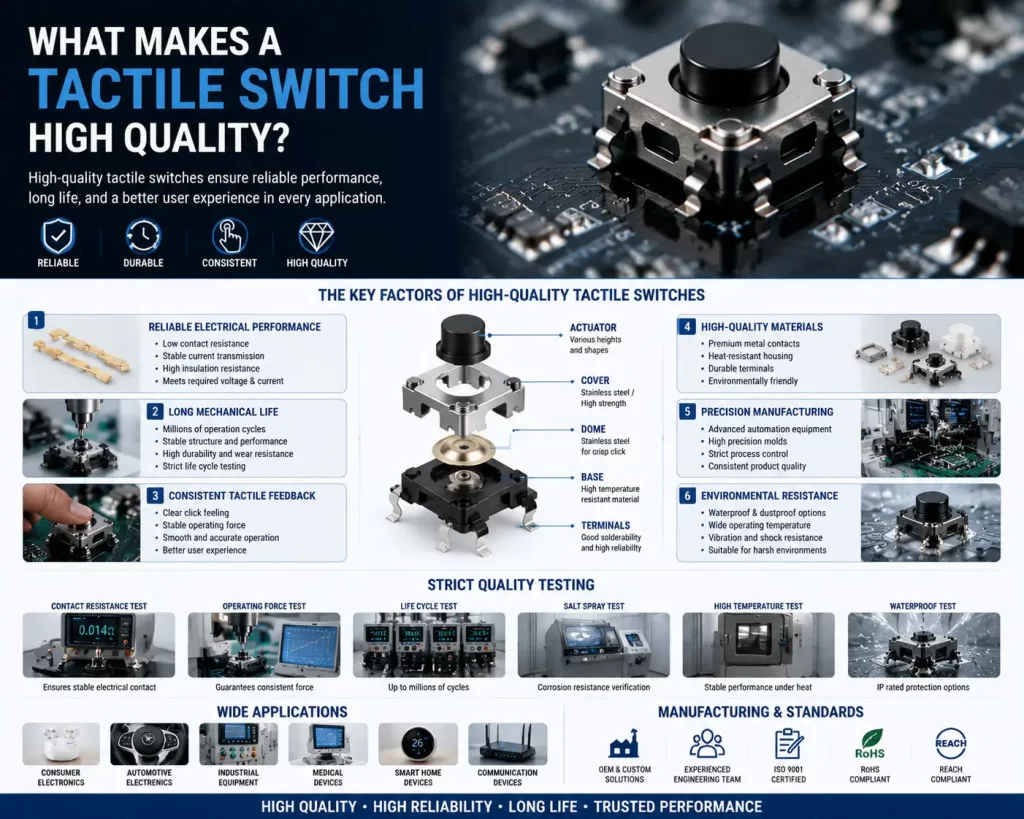
For manufacturers developing consumer electronics, automotive systems, industrial equipment, and medical devices, choosing a high-quality tactile switch is essential to avoid product failures and improve customer satisfaction.
But what exactly makes a tactile switch high quality?
This article explains the key factors that determine tactile switch performance and how companies can evaluate switch manufacturers before selecting a supplier.
1. Reliable Electrical Performance
The first indicator of a high-quality tactile switch is stable electrical performance.
A professional tactile switch should provide:
- Low contact resistance
- Stable current transmission
- Reliable switching performance
- Consistent electrical connection
Poor-quality switches may develop contact problems over time, causing:
- Intermittent operation
- Signal failure
- Device malfunction
High-quality manufacturers carefully select contact materials and perform electrical testing during production.
Important electrical parameters include:
Contact Resistance
Low contact resistance ensures efficient electrical flow and reduces signal problems.
Insulation Resistance
High insulation resistance prevents unwanted electrical leakage between components.
Voltage and Current Rating
A quality switch should safely support the electrical requirements of the application.
2. Long Mechanical Operating Life
A tactile switch is often pressed thousands or millions of times during its lifetime.
A high-quality switch should maintain performance after repeated operation.
Important mechanical characteristics include:
- Operating life cycles
- Stable button movement
- Consistent tactile feedback
- Strong internal structure
Quality manufacturers perform life cycle testing to confirm durability.
Common testing includes:
- Repeated pressing tests
- Mechanical stress tests
- Force measurement analysis
For demanding applications such as automotive and industrial equipment, long lifespan is essential.
3. Consistent Operating Force and Tactile Feedback
One of the main reasons users choose tactile switches is the physical feedback they provide.
A high-quality tactile switch should deliver:
- Clear clicking feeling
- Consistent operating force
- Smooth activation
- Predictable response
Operating force is measured according to customer requirements.
Examples include:
- Light force switches for portable electronics
- Medium force switches for general applications
- High force switches for industrial controls
A reliable manufacturer controls production accuracy to ensure every switch provides the same user experience.
4. High-Quality Materials
Material selection directly affects tactile switch reliability.
Professional manufacturers use carefully selected materials for:
Contact Components
High-quality metal contacts provide:
- Better conductivity
- Lower resistance
- Longer lifespan
Housing Materials
Strong plastic materials improve:
- Mechanical durability
- Temperature resistance
- Structural stability
Terminals
Reliable terminals ensure:
- Strong PCB connection
- Better soldering performance
- Long-term stability
Using low-quality materials may reduce manufacturing costs but can create reliability problems.
5. Precision Manufacturing Process
A high-quality tactile switch requires precise manufacturing.
Professional factories use:
- Automated assembly equipment
- Precision molding technology
- Metal stamping systems
- Advanced inspection equipment
Manufacturing accuracy affects:
- Switch dimensions
- Button alignment
- Mechanical movement
- Electrical performance
Automation helps maintain consistent quality during large-scale production.
6. Environmental Resistance
Many applications require switches that can operate in difficult environments.
High-quality tactile switches may include protection against:
- Moisture
- Dust
- Temperature changes
- Vibration
Examples include:
Waterproof Tactile Switches
Designed for:
- Outdoor electronics
- Automotive systems
- Industrial equipment
High Temperature Switches
Suitable for applications exposed to heat.
Environmental protection improves product reliability and service life.
7. Strict Quality Testing
Quality testing is one of the biggest differences between reliable manufacturers and low-cost suppliers.
A professional tactile switch manufacturer performs:
Electrical Testing
Including:
- Contact resistance testing
- Insulation resistance testing
- Current testing
Mechanical Testing
Including:
- Operating force measurement
- Travel distance testing
- Life cycle testing
Environmental Testing
Including:
- Temperature testing
- Humidity testing
- Waterproof testing
Testing ensures that every production batch meets required specifications.
8. Reliable OEM Manufacturing Capability
A high-quality tactile switch supplier should provide customization options.
OEM capabilities may include:
- Custom dimensions
- Custom operating force
- Different actuator heights
- Waterproof designs
- Special packaging
This allows companies to develop switches optimized for their specific products.
Industries requiring custom tactile switches include:
- Automotive electronics
- Medical devices
- Industrial equipment
- Smart home products
9. Compliance With Industry Standards
Professional tactile switch manufacturers follow international quality and environmental standards.
Common requirements include:
- ISO quality management systems
- RoHS compliance
- REACH compliance
These standards demonstrate controlled manufacturing processes and responsible material management.
How to Choose a High-Quality Tactile Switch Supplier
Before selecting a supplier, companies should evaluate:
Product Documentation
Request:
- Datasheets
- Technical specifications
- Testing reports
Manufacturing Capability
Check:
- Factory equipment
- Production capacity
- Quality systems
Engineering Support
Confirm whether the supplier can provide:
- Product recommendations
- Custom development
- Prototype support
Industry Experience
Suppliers with experience in automotive, industrial, and consumer electronics usually have stronger quality control systems.
Conclusion
So, what makes a tactile switch high quality?
A high-quality tactile switch combines reliable electrical performance, long mechanical life, consistent tactile feedback, premium materials, precision manufacturing, and strict testing procedures.
For companies developing electronic products, selecting the right tactile switch manufacturer is just as important as selecting the component itself.
A trusted supplier provides more than a switch — it provides reliability, engineering support, and confidence that products will perform consistently in real-world applications.
