





Magnetic Micro Switch Explain: NO/NC Logic For Industrial Applications
Magnetic Micro Switch for Industrial Applications often looks like a small part, but it decides a big thing: whether your system “knows” a position is safe, open, closed, or correctly locked.
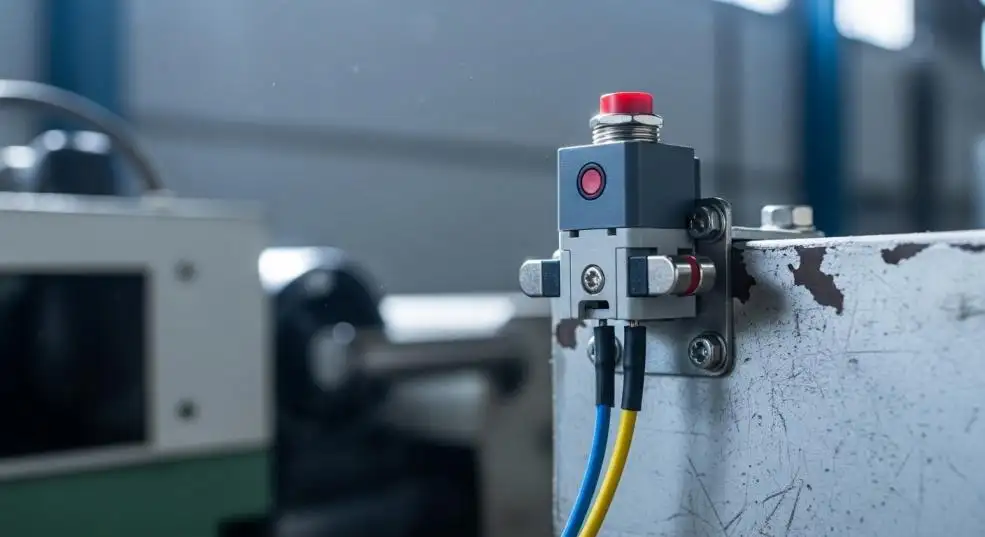
What NO/NC Logic Really Means in Industrial Control
When engineers say NO and NC, they are describing the electrical state of a switch when nothing is actuating it. This simple definition is the foundation for safe control logic.
NO (Normally Open) means the circuit is open at rest. When the switch is triggered, it closes and allows current to flow. This is commonly used when you want a signal only after a door closes, a guard aligns, or a mechanism reaches a target position.
NC (Normally Closed) means the circuit is closed at rest. When the switch is triggered, it opens and stops current. Many safety circuits prefer NC because it can be more “fail-aware”: if a wire breaks or a connector loosens, the circuit opens and the controller can detect a fault sooner.
For beginners, a useful way to remember it is: NO is “off until triggered,” and NC is “on until triggered.” The best choice is not about preference. It is about how you want the machine to behave when something goes wrong.
Why Magnetic Sensing Is Practical for Industrial Applications
A mechanical micro switch can work well, but industrial environments add friction points: vibration, dust, repeated impacts, and small misalignments that grow over time. A Magnetic Micro Switch for Industrial Applications replaces direct physical pressing with magnetic actuation, so the signal can be triggered through a small air gap or non-metal barrier.
This matters in real factories because production lines rarely stay “perfect.” Doors sag, hinges wear, and operators close guards with slightly different force each time. Magnetic actuation helps maintain stable switching behavior with fewer contact issues caused by mechanical force, while also enabling cleaner designs for safety guards, position detection, and interlock confirmation.
In addition, magnetic sensing supports compact layouts. When you can detect position without needing a direct push point, your mounting options expand. That flexibility becomes a practical advantage when equipment space is tight or when retrofitting older machines.
Using NO/NC Logic to Build Safer Behaviors
Many failures are not dramatic. They are small and slow: a cable gets pinched, a connector oxidizes, or a bracket loosens by a few millimeters. NO/NC logic helps you design how the system responds to these “quiet” failures.
Here is a beginner-friendly rule that applies across many industrial controls:
✓ Use NC when you want a more fault-sensitive loop (a broken wire becomes a detected “open” state).
✓ Use NO when you want a clear “only-on-activation” signal (useful for counting, arrival detection, or confirmation signals).
✓ If your control system supports it, use dual-channel logic (NO + NC) for clearer diagnostics.
A Simple Truth Table You Can Use
Think of the “actuator” as the magnet approaching the switch.
NO contact: Rest = Open, Actuated = Closed
NC contact: Rest = Closed, Actuated = Open
This is not just theory. It helps you map how PLC inputs and safety relays should interpret normal operation vs fault conditions. A good design makes it easy to identify whether the problem is a misalignment, an unexpected opening, or a wiring failure.
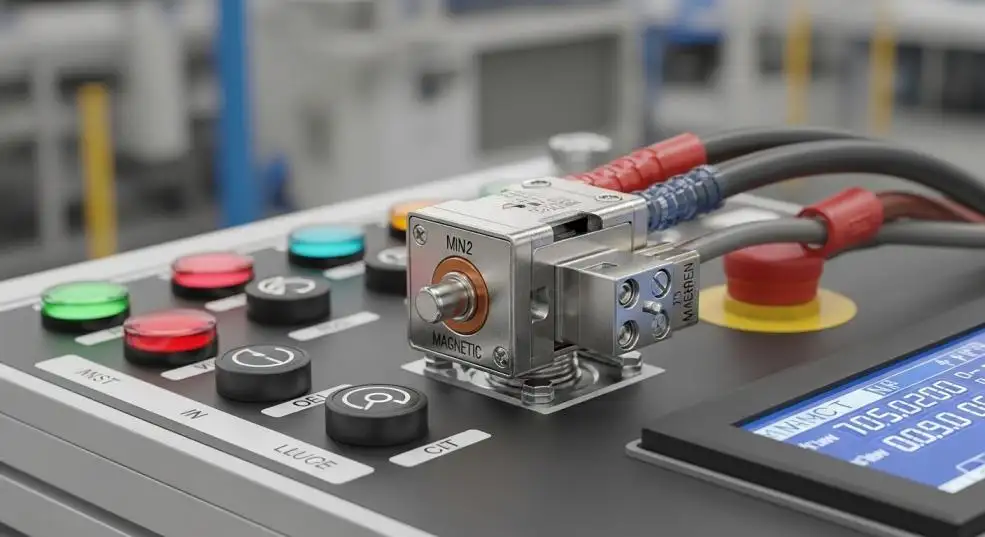
How to Choose a Magnetic Micro Switch for Industrial Applications
Selection is easier when you treat it as a checklist, not a guessing game. A Magnetic Micro Switch for Industrial Applications must match your environment, your wiring standard, and the way your machine is serviced.
Start with the fundamentals: what are you switching (signal input vs load), how is it mounted, and how often does it cycle. Then consider installation realities: cable routing, connector strain, and whether operators may accidentally bump the switch.
Selection Factors That Reduce Site Problems
A well-chosen switch reduces troubleshooting time later. Practical factors include:
Housing and sealing approach (for dust, splash, oil mist)
Mounting tolerance and alignment window (to handle small mechanical drift)
Cable/terminal options that fit your assembly process
Stable switching behavior across the temperatures your line experiences
Clear documentation for wiring diagrams and NO/NC identification
If you are specifying parts for multiple machine models, consistency is also a performance feature. A stable supplier specification reduces mixed inventory and prevents wiring mistakes during maintenance.
How Hanxia Designs Value Into the Smallest Component
At Hanxia, we treat switching as a system function, not a standalone part. That means our product thinking starts from the customer’s daily reality: production lines cannot stop for “mystery faults,” and installers need clear wiring logic that remains consistent across batches.
When we develop magnetic micro switch options, we focus on benefits that translate directly into user outcomes: easier installation, fewer false triggers, and clearer diagnostic behavior in NO/NC circuits. The goal is not just “a switch that works,” but a switch that supports predictable machine behavior. For distributors and OEM teams, it translates to smoother sourcing, simpler technician training, and cleaner, standardized end-user materials.
CTA (For OEM/ODM & Distributors): If you are designing or upgrading a Magnetic Micro Switch for Industrial Applications and need help choosing NO/NC logic, wiring style, and mounting approach, contact Hanxia with your use case (guard door, position detect, interlock confirmation). We will recommend a practical configuration that matches your control logic and service conditions.
A Practical Integration Checklist Before You Release A Design
Before you finalize a BOM or approve a sample, validate the logic in a realistic setup. Many “field issues” happen because the switch worked on a bench, but not on the machine with vibration and real mounting tolerance.
✓ Confirm whether your PLC/safety relay interprets NO/NC states the way you expect.
✓ Test misalignment scenarios on purpose (slight offset, tilt, and vibration).
✓ Ensure cable anchoring and routing prevent movement from reaching terminal joints.
✓ Clearly indicate the normal position/state in drawings for error-free wiring.
✓ Plan a quick diagnostic method: a technician should be able to confirm state fast.
In industrial work, reliability is often the result of small design decisions made early. When NO/NC logic is chosen correctly and magnetic actuation is matched to real installation conditions, the system becomes easier to run, easier to maintain, and less likely to stop for avoidable reasons.
Closing CTA: For 2026 programs and long-term supply planning, Hanxia supports customers with stable specifications and configuration guidance for Magnetic Micro Switch for Industrial Applications—so your NO/NC logic is not only correct on paper, but dependable on the line.
