





Waterproof Tactile Switch 101: How Sealing Ratings Work (2026)
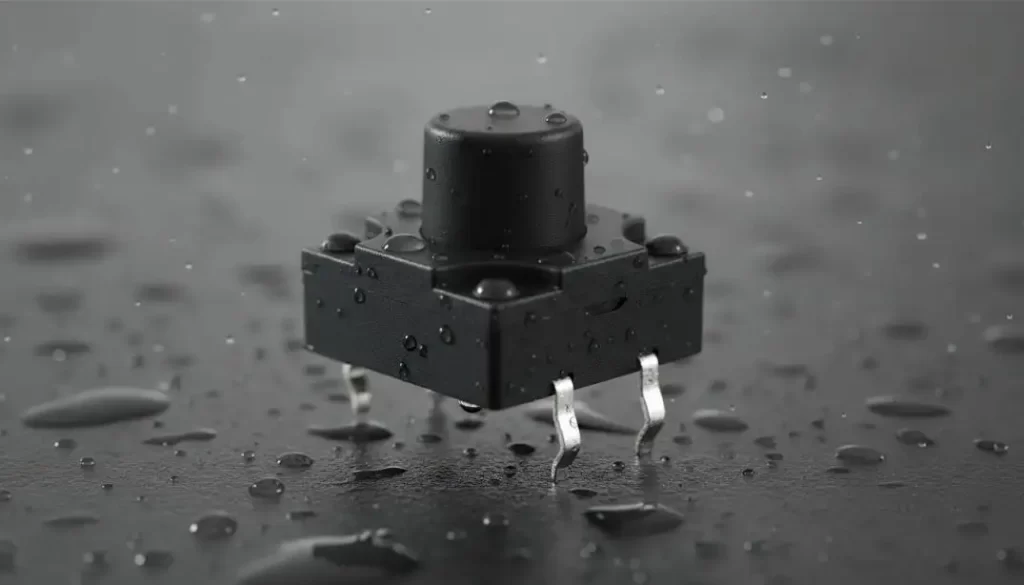
Waterproof Tactile Switch selection in 2026 is no longer only about "keeping water out." It is about understanding sealing ratings, matching them to real failure risks, and choosing a switch that still feels precise after months of outdoor use. From a manufacturer's view at Hanxia, this topic matters most in security products, where a single unstable press can trigger false alarms, missed signals, or service calls that cost far more than the component itself.
Waterproof Tactile Switch 101: What "Sealing Ratings" Really Tell You
Sealing ratings are short codes used to describe how well a product resists ingress from solids (like dust) and liquids (like rain, splashes, or temporary immersion). Beginners often treat them as a marketing label. In reality, a sealing rating is only meaningful when you connect it to a clear environment and a clear test condition.
A practical way to think about it is this: sealing ratings help you answer where water comes from and how long it stays. Outdoor security devices face repeated micro-exposure—wind-driven rain, condensation, hand moisture, and wash-down splash. Each exposure is small, but the repetition is what causes corrosion, leakage paths, and unstable contact behavior over time.
At Hanxia, we encourage buyers to map the rating requirement to the device's actual use case. A keypad mounted under an awning needs a different sealing margin than a gate controller in direct weather. The same is true for the internal design around the switch, such as housing vents, gasket compression, and cable routing.
How to Read Sealing Ratings Without Overbuying
Sealing ratings usually refer to Ingress Protection (IP) ratings defined by IEC 60529. An IP code tells you how well a product resists solids (dust) and liquids (water).
The Most Common Sealing Ratings (IP Codes)
1) Dust / Solid Protection (First Digit: 0–6)
• IP0X: No protection
• IP1X: Protected from large objects (≥50 mm)
• IP2X: Fingers / objects ≥12.5 mm
• IP3X: Tools / wires ≥2.5 mm
• IP4X: Small wires / objects ≥1.0 mm
• IP5X: Dust protected (limited dust ingress, no harmful deposits)
• IP6X: Dust tight (no dust ingress)
2) Water Protection (Second Digit: 0–9 / 9K)
• IPX0: No protection
• IPX1: Dripping water (vertical)
• IPX2: Dripping water when tilted (up to 15°)
• IPX3: Spraying water
• IPX4: Splashing water (all directions)
• IPX5: Water jets (low-pressure)
• IPX6: Powerful water jets
• IPX7: Temporary immersion (commonly ~1 m for ~30 min, per maker spec)
• IPX8: Continuous immersion (depth/time defined by manufacturer)
• IPX9 / IPX9K: High-pressure, high-temperature water jets (often used in automotive/industrial)
Examples You'll See In Real Products
• IP54: Dust-limited + splash resistant (good for light outdoor use)
• IP65: Dust tight + water jets (common for outdoor enclosures)
• IP67: Dust tight + temporary immersion (strong outdoor protection)
• IP68: Dust tight + continuous immersion (specialized, depends on defined depth/time)
Extra Letters You May See
Some IP markings add letters (less common on small switches):
• IP6X (X means "not tested / not specified" for that digit)
• IP6K9K (automotive "K" style)
• IPXXD (access to hazardous parts with a wire, etc.)
Many teams overbuy sealing "just in case," then lose responsiveness or pay unnecessary cost. A better approach is to decide the minimum protection level that prevents the failure modes you actually see.
Here are the questions we recommend for a first pass decision:
✓ Is the switch exposed to direct rain or only occasional splashes?
✓ Will it face condensation from daily temperature swings?
✓ Is the device used with gloves, wet hands, or frequent cleaning?
✓ Is the installation area dusty, sandy, or near industrial particulates?
A sealing rating is also not the full story. Even with a good rating, a product can fail if the switch is installed with the wrong cutout tolerance, insufficient support under the PCB, or poor mechanical alignment that slowly breaks the seal. For this reason, the best sourcing conversations combine the rating requirement with mechanical integration details.
Why Security Devices Demand Both Waterproofing and Tactile Precision
Security equipment is not forgiving. A press must be clear, repeatable, and consistent. If the feel is vague, users press twice. If the feel is too stiff, they press harder. Both behaviors increase stress on the device and can create inconsistent input.
For security panels and outdoor access systems, tactile performance is part of the "human interface safety." It reduces operator errors and supports fast, confident use during urgent moments. That is why a Waterproof Tactile Switch should protect against moisture while still delivering a clean, reliable click.
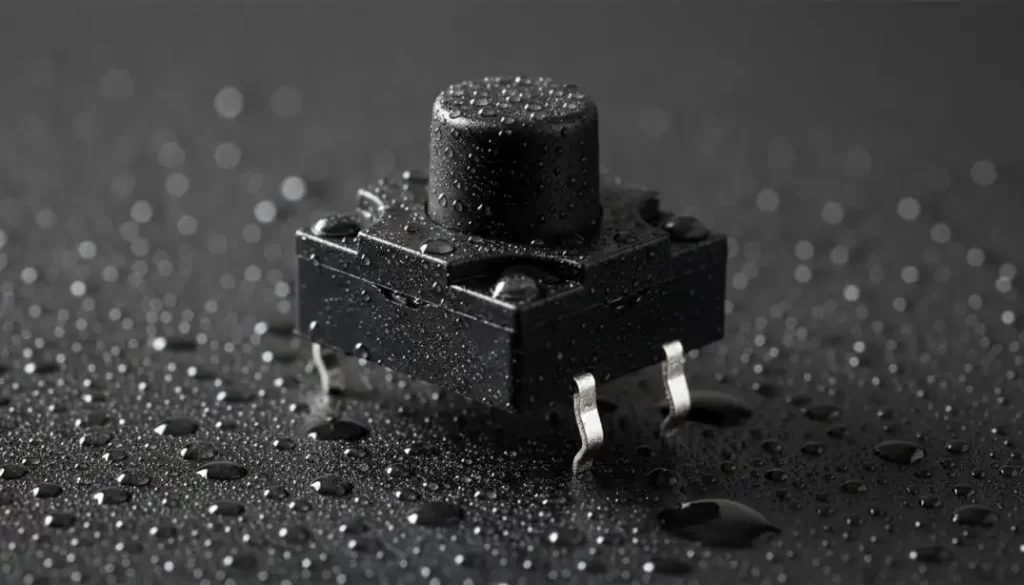
Hanxia designs 12×12 mm tactile formats for space-constrained security devices because this footprint balances integration flexibility with comfortable operation. It allows compact keypad layouts without forcing tiny, hard-to-press buttons that frustrate end users.
Product Snapshot: Hanxia 12×12 Waterproof Tactile Switch for Security
For buyers who want a concrete reference point, here is how our 12×12 waterproof tactile platform is commonly specified in security programs.
One representative configuration is HX TS12HCJFS, rated 50 mA at 12 VDC, with a single (monople) contact loop design. In outdoor security devices, low-current switching is common because the switch is typically a signal input, not a power load. Matching the rating to the circuit protects long-term stability and reduces abnormal heating risk.
Another referenced item is TS1295CJFS (waterproof thick base, 250GF class), with practical electrical and feel parameters that many security engineers request:
✓ Operating force: 250 ± 50 g for deliberate, confident presses
✓ Stroke: 0.25 ± 0.1 mm to keep response quick and crisp
✓ Contact resistance: ≤ 100 mΩ to support stable signal integrity
✓ Insulation resistance: > 100 MΩ for better isolation in humid conditions
✓ Dielectric strength: 250 V, 50 Hz, 1 minute for basic insulation robustness
✓ Qualified life (this configuration): 50,000 cycles
You may also see "extended service life" targets in procurement documents, such as up to 1 million cycles for specific builds. In practice, cycle life depends on the exact structure, materials, and test conditions. If your security product has heavy daily use, define the cycle target early so the switch can be specified and validated for that duty.
Application Scenarios Where Sealing Ratings Matter Most
A sealing rating is most valuable when it prevents predictable field issues. In our experience, the following security categories benefit strongly from a waterproof tactile design:
Application Field (Typical):
• Security alarm systems
• Surveillance cameras and monitoring equipment
• Access control systems
• Outdoor security devices
• Emergency equipment
Safety devices in harsh environments (industrial and certain military-style applications)
In these products, the switch often sits at the edge of the enclosure, where moisture and dust accumulate. Water does not need to flood the device to cause problems. A small leak plus time is enough. That is why sealing ratings should be treated as a reliability tool, not a checkbox.
Why Hanxia: What the Numbers Mean for Your Supply Risk
Selecting a switch is also selecting a manufacturing partner. Consistency matters because a security program may run for years, and field replacements are expensive. At Hanxia, our manufacturing and service model is built to reduce your supply and quality risk.
We have operated since 2014 and support 7,500+ customers across key markets including the U.S., Germany, South Korea, Taiwan, and Hong Kong. For scaling programs, our 38 fully automated production lines can produce over 2 million units daily, which helps maintain stable lead times when your demand increases.
Quality control is not a single checkpoint. It is a chain: raw material inspection, in-line sampling, and final testing, all aimed at consistent feel and electrical stability. For buyers who need procurement confidence, we also offer a 90-day no-questions-asked return policy, designed to reduce the risk of trying a new source in a critical product category.
CTA: Build a 2026 Waterproof Switching Spec With Hanxia
If you are sourcing a Waterproof Tactile Switch for security devices in 2026, contact Hanxia with your application details (indoor/outdoor exposure, expected daily presses, enclosure design, and your target sealing requirement). We will recommend a practical 12×12 configuration and validation plan so your switching feel stays crisp, your signals stay stable, and your product story stays reliable in the field.
