





How a Waterproof USB Type-C Connector Works: Explained for 2026
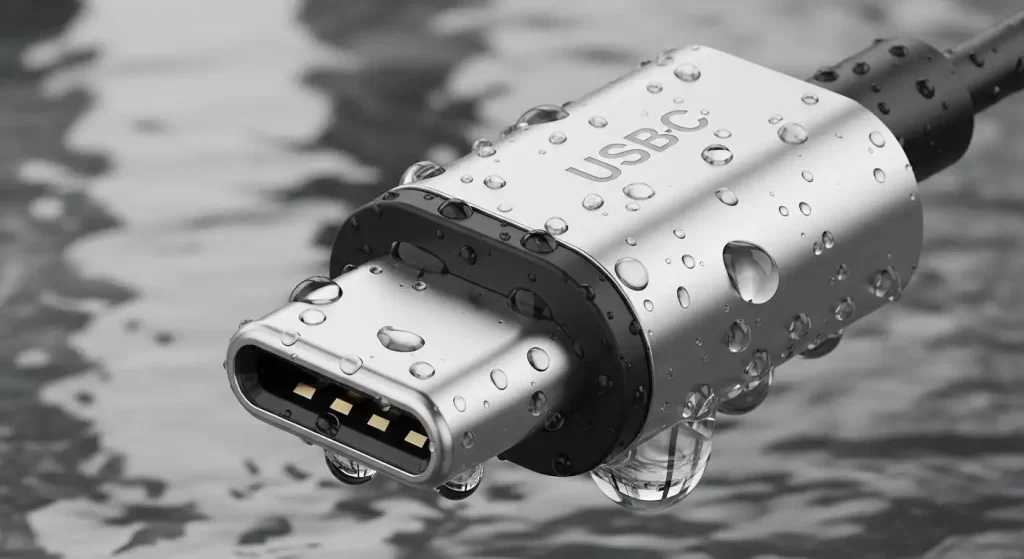
Waterproof USB Type-C Connector technology is changing how products survive rain, sweat, washdowns, and messy field work. If you build wearables, outdoor IoT, e-bikes, marine instruments, medical carts, or industrial handhelds, the choices you make about sealing in 2026 will show up later as fewer RMAs, fewer intermittent faults, and a longer service life. With USB-C now the default interface across consumer and pro gear - and with EU rules pushing laptops to USB-C by 2026 - getting the port right is no longer a nice-to-have. It is core to reliability and customer trust.
Why Waterproof USB Type-C Connector Design Matters in 2026
USB Type-C has consolidated charging and high-speed I/O into one small port. That convenience collides with harsh reality: devices are used outdoors, cleaned under spray, and charged in garages, docks, and factory floors. Moisture intrusion and corrosion are among the top causes of mystery charging failures and flaky data links. A properly engineered Waterproof USB Type-C Connector reduces downtime by keeping contaminants off critical contacts, maintains low contact resistance year after year, and limits galvanic and chemical attack. Add in the common charger mandate and growth of field-service electronics, and robust, sealed USB-C becomes a 2026 baseline - not a premium option.
What "Waterproof" Really Means: IP Codes Demystified
"Waterproof" is a marketing word; IP ratings are the engineering language. Under IEC 60529, the first digit covers dust; the second covers water. Typical targets for a Waterproof USB Type-C Connector include:
• IP66: Dust-tight; resists powerful water jets. Good for washdowns without immersion.
• IP67: Dust-tight; survives temporary immersion to 1 meter for 30 minutes. Strong baseline for outdoor gear.
• IP68: Dust-tight; continuous immersion per an agreed depth/time between supplier and user. Specify both to avoid ambiguity.
• IP69K: High-pressure, high-temperature jets for food, beverage, and heavy washdown environments.
One nuance matters: many panel-sealed connectors maintain IP67 or IP68 at the front interface when no cable is inserted. Once a cable is plugged in, the system-level seal depends on the plug geometry, overmold, any external boot, and enclosure design. If your device must remain sealed with the port "open," look for connectors expressly validated as open-port IPX7 at the face without a mating plug.
Inside the Seal: How a Waterproof USB Type-C Connector Keeps Water Out
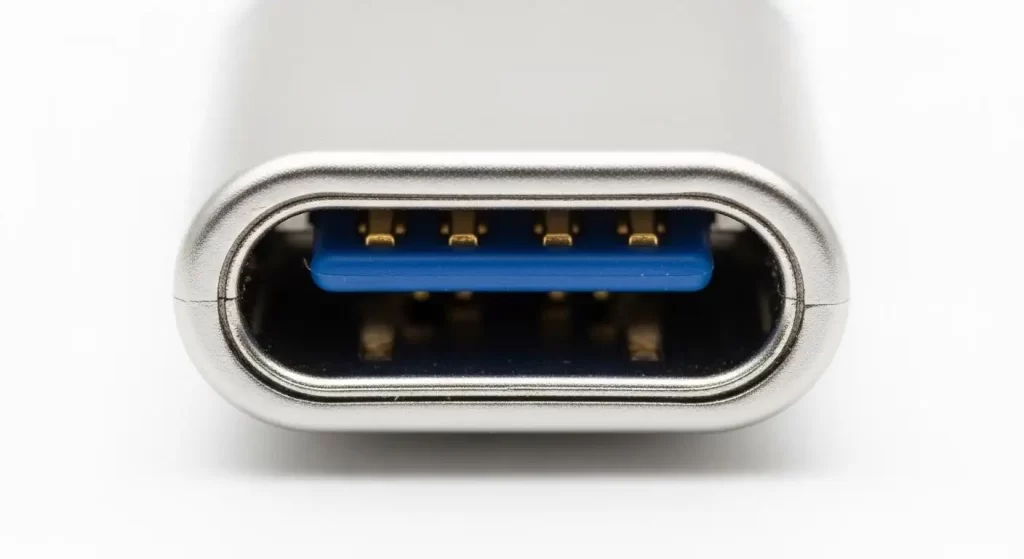
A Waterproof USB Type-C Connector achieves protection through layered barriers, each doing a specific job:
• Primary Face Seal: A precision elastomer gasket or molded lip compresses against the panel or the device bezel to stop water tracking along the shell. Flanged styles often use an O-ring behind the flange; bezel-seal styles use a proud front lip that mates the housing surface.
• Rear Seal And Potting: On the PCB side, a molded rear gasket or potting compound blocks ingress from inside the enclosure or along solder fillets. Important for gear that gets cleaned often or sees moisture swings.
• Built tough: LCP/high-temp nylon insulators keep their shape; stainless or nickel-plated brass shells stand up to salt, sweat, and de-icing chemicals.
• Ready for long service: Thick gold on the mating area (10–30 microinches) resists oxidation, keeping connections low-resistance over thousands of plug/unplug events. Robust shell tabs and through-board stakes improve retention and provide a reliable ground path for ESD.
Seal compression is a design variable, not a guess. Too little compression leaks; too much deforms the gasket and shortens life. Trust suppliers who publish panel cutouts, surface flatness, and torque specs for flanged parts. In short, the geometry around a Waterproof USB Type-C Connector is as important as the connector itself.
Power, Data, and Protection: Standards to Target in 2026
A rugged port still has to be a modern port. The right Waterproof USB Type-C Connector balances sealing with electrical performance and safety:
• USB Power Delivery 3.1 EPR: Up to 48 V at 5 A (240 W) with e-marked cables and compliant source/sink control. Many rugged receptacles can carry 5 A, but temperature rise inside sealed housings is the limiting factor. Plan for derating, thermal spreaders, or heat paths if you target 100–240 W.
• High-Speed Signaling: USB4 reaches 40 Gbps, but many ruggedized ecosystems standardize on USB 3.2 Gen 2 (10 Gbps) or Gen 2x2 (20 Gbps) for a better balance of loss, EMI, and cable robustness. Look for impedance control, matched differential pairs, S-parameters, and eye-diagram data at your target rate.
• Mechanical Life And Environment: USB-IF guidance calls for 10,000 mating cycles. Outdoor and industrial products often require -40 °C to +85 °C operation. Seek cycle-life validation under sand/dust exposure, not just in clean labs.
• ESD And EMC: Shell strikes at ±8 kV contact and ±15 kV air per IEC 61000-4-2 are common claims. Still place board-level TVS on high-speed lines and VBUS, and maintain continuous ground around the receptacle to contain transients.
• Corrosion Resistance: Ask for salt fog data (ASTM B117, 48–96 hours or more). If your enclosure is aluminum, consider galvanic pairing with the connector shell and plating stack. In marine or coastal gear, conformal coat around the rear seal region helps against wicking and salt crystals.
• One extra consideration for sealed products: pressure equalization. Rapid temperature swings can pull moisture past marginal seals. If the entire enclosure is sealed, consider a membrane vent; it reduces pressure differentials that stress your Waterproof USB Type-C Connector face seal.
Selection Checklist: Matching a Waterproof USB Type-C Connector to Your Design
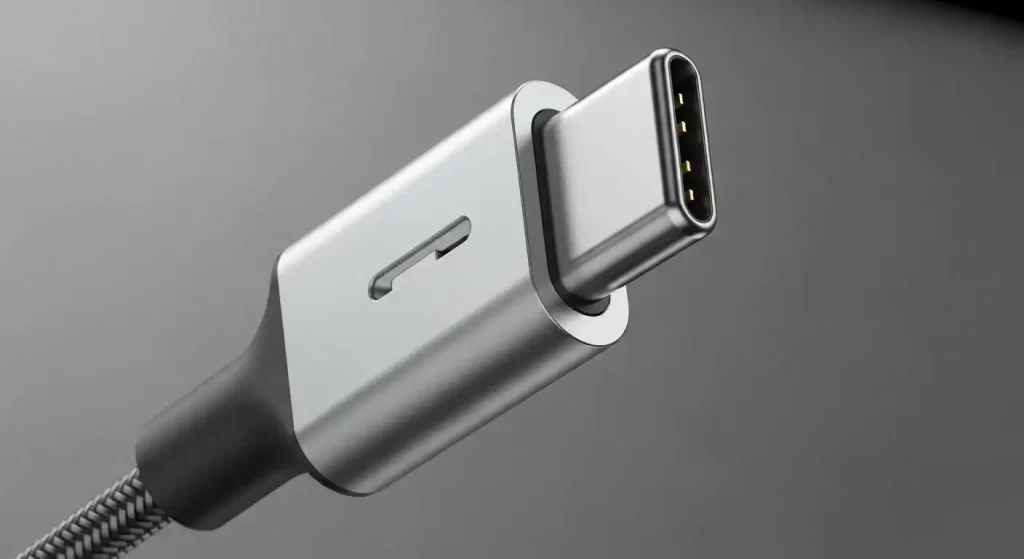
Use this quick, practical list to narrow candidates:
- IP Target And Use Case
• Washdown with hot jets? Aim for IP66/IP69K at the panel.
• Short accidental dunk? IP67 is the baseline.
• Extended submersion? IP68 with a written, tested depth and duration.
- Front-Face Versus System-Level Sealing
• Need protection with no plug inserted? Choose an open-port sealed face.
• Relying on the enclosure? Verify panel flatness, surface finish, and compression window.
- Electrical Performance
• Power: Confirm 5 A capability and review temperature rise data in sealed conditions. For 100–240 W, require PD 3.1 EPR details and e-marker compatibility.
• Data: Validate your required speed (USB 2.0/480 Mbps, 5 Gbps, 10 Gbps, 20 Gbps, USB4). Review insertion loss, return loss, skew, and eye diagrams.
- Materials And Finish
• Shell: Stainless steel or robust nickel plating for corrosion.
• Insulator: LCP or other low-absorbing polymer.
• Contacts: Gold thickness matched to your mating cycle count and environment.
- Mounting/Form factor
• Mid/top/panel-mount flange confirmed; PCB footprint and keep-outs reviewed; shell stakes/screws specified for cable load offload.
- Compliance/Test plan
• IP (IEC 60529); insertion life ≥10k; vibration/shock (IEC 60068-2); ESD (IEC 61000-4-2); salt-fog; UV resistance for exposed plastics in outdoor designs.
Installation, Validation, and Field Care: Avoid the Usual Traps
Even the best Waterproof USB Type-C Connector can fail if the surrounding design is sloppy. A few practices save big headaches:
• Follow The Drawing: Use the exact panel cutout, gasket compression, and torque sequence (cross-pattern on flanges).
• Prevent ingress: Clean mating faces; lint and debris become leak paths.
• Avoid compression loss: Control panel flatness/finish. Soft housings cold-flow; spec inserts/bosses to retain clamp force.
• Offload joints: stakes/screws/brackets; short, grounded high-speed pairs.
• Validate combined: cables in, caps off; spray + vibe; function check; dye/vac leak test.
• Vet chemistry: elastomer-safe threadlockers/solvents; gaskets OK with cleaners, IPA, UV. If contamination occurs in the field, rinse with deionized water, dry thoroughly, and then reconnect power.
Common Pitfalls to Watch
• Assuming IP67 At The Port Means IP67 With Any Cable: The mated seal depends on the plug and overmold. System-level testing is mandatory.
• Overcompressing The Gasket: More torque is not more sealing; it is shorter life and permanent set.
• Ignoring Thermal Rise At High PD Levels: In sealed enclosures, 5 A VBUS can push temperatures over limits. Use thermal paths or derate.
• Skipping Salt Fog And Sweat Testing: Plating stacks behave differently in chloride-rich environments. Verify, don't assume.
• Neglecting Pressure Differentials: Rapid cool-down can pull moisture in. Use a vent if the enclosure is otherwise airtight.
Call to Action: Build It Right the First Time
Ready to harden your next device against rain, sweat, and service abuse? Talk to your supplier about a Waterproof USB Type-C Connector matched to your IP target, power budget, and data rate. Ask for a concise spec pack: IP test reports, PD 3.1 EPR details, salt fog results, ESD validation, and 10,000-cycle life data. Share your panel drawing and enclosure stack-up for a quick fit check, and request samples for environmental trials with your actual cables. Building it right in 2026 starts with the right Waterproof USB Type-C Connector - and the right validation plan to prove it.
