







Product Specification
Product Description
Application Field
Why Choose Us
Product Description
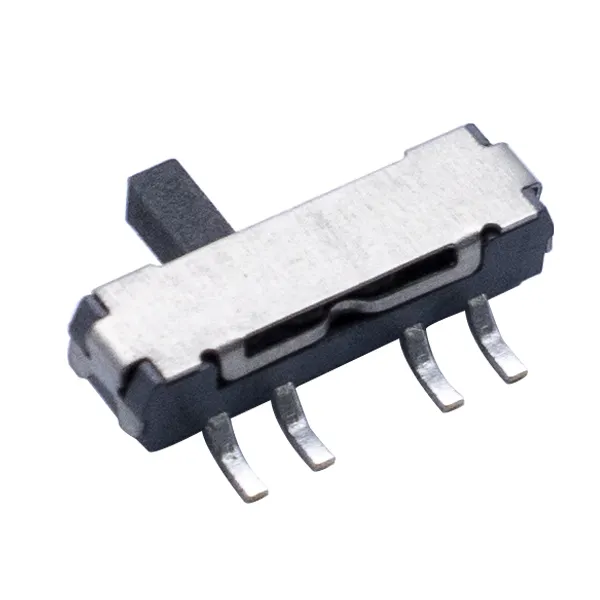
Compact 3-position mini slide switch for home appliances and consumer electronics. Ideal for mode and function selection (ON‑OFF‑ON or ON‑ON‑ON) in low‑power control circuits. Small footprint with smooth, positive detents; available for PCB mounting (THT/SMT) and light-duty panel integration.
Key features and specifications:
- Switch type: 3-position slide; contact forms: SPDT or DPDT (center‑off or continuous)
- Mounting: PCB through‑hole (straight/angled pins) or SMT; optional bracket for thin panel mounting
- Terminals: tin‑plated copper alloy pins; solder lug version available for wiring harness
- Electrical ratings: 125 VAC 1–3 A; 250 VAC 1–2 A; 12/24 VDC 1–2 A (derate by model and load type)
- Electrical performance: contact resistance ≤50 mΩ; insulation resistance ≥100 MΩ (@500 VDC); dielectric strength 1000 VAC/1 min
- Mechanical performance: travel ~2–4 mm; operating force 0.8–2.5 N; crisp detents; mechanical life ≥20,000 cycles
- Materials: flame‑retardant PBT/PA66 housing (UL 94 V‑0); copper‑alloy contacts with silver/nickel plating; stainless/nickel‑plated slider
- Environment: operating temperature −20 to +85 °C; dust protection to IP40; suitable for indoor appliance use
- Compliance: RoHS/REACH; designed to align with IEC/EN 61058 (model‑dependent)
Applications:
- Speed/mode selection in fans, humidifiers, and air purifiers
- Function/brightness selection in desk lamps and small lighting fixtures
- Audio feature selection in radios/speakers
- Control panel settings in kitchen gadgets, personal care devices, toys
Options and customization:
- Actuator length, shape, and color; center‑off or continuous three‑step logic
- Gold‑plated contacts for low‑level signal reliability
- SMT gull‑wing terminals; custom PCB footprints and marking plates
Design notes:
- Use for control/signal switching; avoid switching high inrush or heater/motor loads directly—pair with relays or triacs
- Apply appropriate derating for DC and inductive loads; add RC snubbers or diode suppression as needed
- Verify clearance/creepage on PCB when used near mains circuits; observe reflow/wave solder profiles and prevent solvent ingress during cleaning
