





White Rocker Switch Selection for Clean and Consistent Product Design
A white rocker switch is frequently chosen because it seamlessly fits in appliances, lighting devices, medical gadgets, and light-colored control panels. It can be minimal and simple, but it takes more control to get that clean look as opposed to “white” being picked from a color list.
Two white plastics can look the same when they are first produced and different when they are used together. The final product can also be influenced by surface texture, illumination, printed symbols and by longterm yellowing. Visual consistency is therefore not the only thing that needs to be considered when deciding whether or not to buy one for your OEM business, but also the electrical function and mechanical dimensions.

White Rocker Switch – What is its purpose?
White rocker switches are often used on water dispensers, kitchen appliances, lighting equipment, bathroom devices, laboratory instruments and medical equipment. They offer a readily understood rocking motion and also visually harmonize with white or light grey enclosures.
A white switch will not interrupt a light panel as much as black switches. This is ideal in instances where the product design should seem clean, domestic or clinical. But, on a white surface, dirt, moulding marks and colour differences may be more apparent.
Buyers have the ability to check the range of rocker switches available, then compare rocker switch size, rocker switch pole, rocker switch illumination and rocker switch terminals.
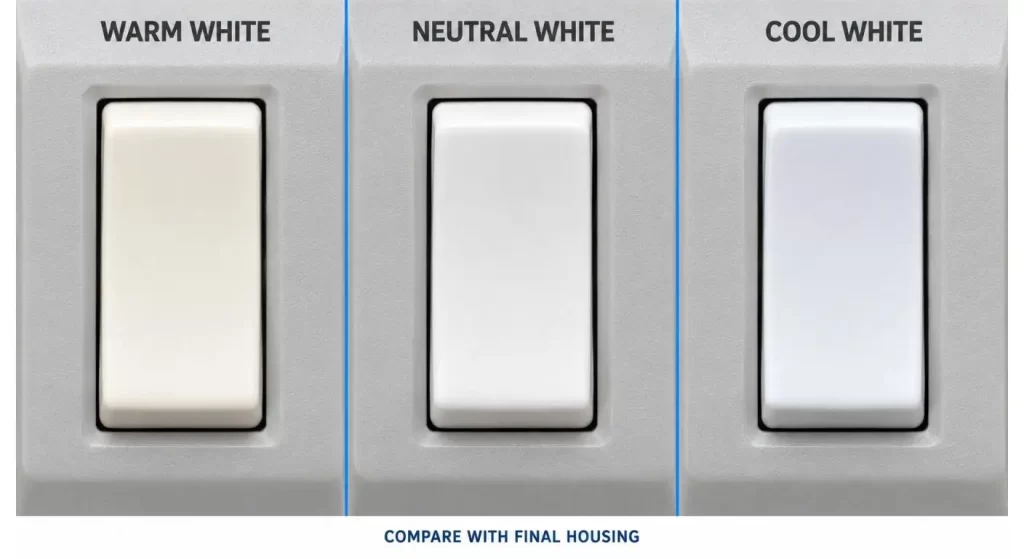
The word “white” needs to be more specifically defined.
White isn't one of the colors that you can keep repeating. Some white plastics are a warm cream colour, others tend to be cooler, or slightly blue in colour. A switch can also be different to one next to painted metal, ABS, PC or other molded plastic.
If the product is new then submit a physical sample of the housing, an approved color chip or measurable color reference. Photograph comparison is not reliable as changes in camera settings, screens and lighting change the look.
Surface finish is important, too. A textured switch is produced from the identical resin as a glossy switch although it looks less shiny. The approved sample should thus be considered as one visual standard which confirms the color, gloss and texture.
Take Color Stability and Yellowing into account
White plastic can alter when exposed to heat, ultra-violet light, cleaning agents or when exposed to indoor light for long periods. This can be particularly seen when the surrounding appliance housing doesn't change, but the switch is starting to show cream or yellow.

The real environment should be used as a model to select materials. A switch that is close to a heater or cooking device or an outdoor light may need another performance than a switch installed in office equipment.
Specify suitable ageing tests, where colour stability will be of major concern. Also the supplier needs to be notified if the production resin, the colour masterbatch and the molding process would stay the same after the initial sample order.
| Evaluation Condition | What to Inspect | Possible Problem |
| Daylight | Switch and housing color match | Warm or cool white difference |
| Indoor lighting | Overall assembled appearance | Unexpected cream or blue tone |
| LED energized | Light distribution through actuator | Hot spots or edge leakage |
| Heat exposure | Color and surface stability | Yellowing or deformation |
| Cleaning test | Printed symbol and surface | Fading, staining or gloss change |
Correspond the Switching Function to the Circuit
It does not have anything to do with the internal circuit; the switch colour varies. A white housing comes with an SPST, SPDT, DPST or DPDT mechanism, and can offer maintained or momentary operation.
The maintained on-off switch remains in the desired position and is appropriate for applications like appliance power or lights. Momentary switch resets to its original position when released, and is used for temporary commands. The terminal arrangement as well as switching logic should be verified against the circuit diagram.
Current and voltage rating should also be the same as that of the actual load. Motors, heaters and transformers have a startup (or inrush) current sometimes several times greater than the normal operating current. When the load is beyond the switch's switching capability it may need a relay.
Determine if light is needed
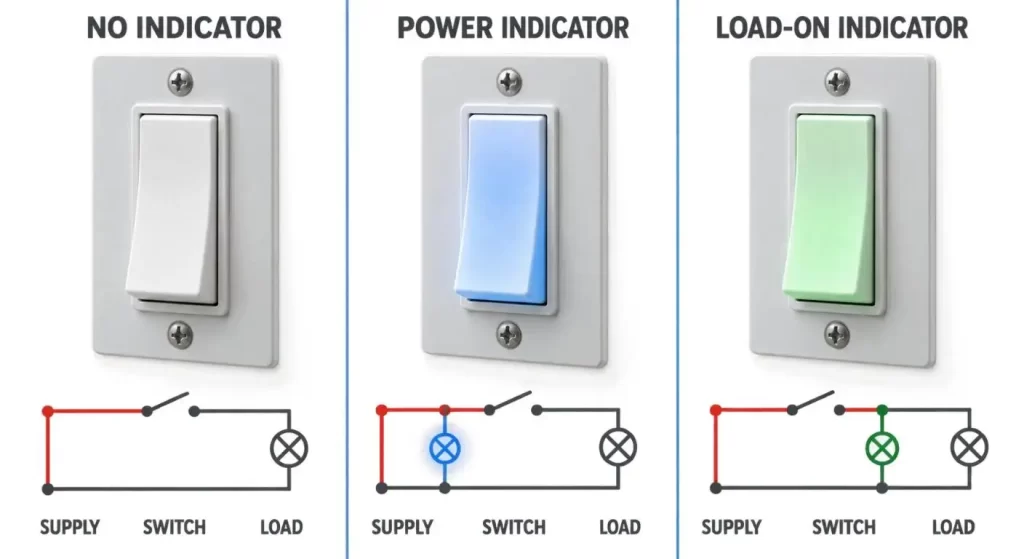
Power can be indicated by an illuminated white rocker switch or the illuminated rocker switch can indicate if the connected function is active. Useful in cases where the equipment is used in a room where it is hard to see, or where the condition of the circuit is not apparent.
It can be on constantly, on only when power is turned on or it can be based on an external terminal connection. Double check this behavior prior to approving the wiring design.
Appearance is another characteristic that is influenced by light color. The colors on the red, green, blue and amber indicators may be different when viewed through the white actuator. Request to see a sample energized in low light and bright light and look for the following signs of trouble: uneven light, too much light or light leaking around the body of the switch.
Review symbols, printing and viewing by users
A dark, clear symbol should be used on a white actuator to be readable. Typically, the black or dark gray markings provide good contrast and the light printed colors might be impossible to see in bright lighting.
Symbols can be pad printed or laser marked, or molded into the actuator. The right way will vary based on the look you wish to achieve, how long the item will be worn and how many orders you are placing. Switches that are used often are subject to rubbing, cleaning/repeat contact and should be tested.
Where appropriate use familiar power/ function notation. Custom text should be concise, allowing it to be easily read on the space available on the actuator.
Please verify Cutout Size and Panel Fit.
It is not always the case that nominal switch size equals the panel cutout size. The buyer should be sure about the cutout width, cutout height, acceptable thickness of the panel and the retaining-clip structure.
A loose opening can cause the switch to move while operating. If the opening is too small, you may be able to ruin the housing or you may not be able to lock the clips properly. The fit may be affected by the surface of the panel, the thickness of the paint and the tolerance of the molding.
There should also be clearance in the rear area for the switch body, switch terminals and cable bends. If space is an issue, consider button switches, or other controls, in comparison to rocker switches before finalizing an enclosure design.

Analyse the Switch in its final product
Even a loose part on a desk can't indicate if the switch is suitable for the completed appliance. Use the housing for samples, which should be the same color as the product, and view the samples under daylight, under retail lighting and under normal indoor light.
Use the switch with any gloves as might be required with the application. Test for force, sound, movement of the actuator and flex of the installed panel. If the equipment is medical or laboratory equipment, include the actual cleaning process in the evaluation.
In the projects where frequent operation and equipment integration need to be taken into consideration, Hanxia's industrial equipment solutions offer further context.
Ensure Consistency Prior to Mass Production
The approved reference is to be as detailed as possible than just the part number. Make notes on the color standard, resin, surface texture, printed symbol, illumination behaviour, terminal layout and packaging method.
Pre-production samples should be representative of the proposed production process. When inspecting inwards, inspect multiple switches from multiple cartons, instead of 1 part from the top of a carton.
Drawings or samples of enclosure required for a custom white tone or symbol should be sent to Hanxia contact team for evaluation, as well as the quantity and operation of the enclosure.
| Item to Confirm | Required Reference | Inspection Focus |
| White color | Approved sample or color value | Batch-to-batch consistency |
| Surface finish | Gloss or texture sample | Visible molding variation |
| Switch circuit | Wiring diagram | Correct pole and throw |
| Indicator | Voltage and lighting logic | Color and activation state |
| Panel fit | Cutout drawing | Retention and alignment |
| Marking | Approved artwork | Position, contrast and durability |
Conclusion
Choosing a white rocker switch means more than just choosing a product that has an exterior color that matches. The switch should contain the necessary circuit function, fit securely, be readable and have the same appearance after repeated use, heat and light and cleaning.
The best way is to test the switch in the final housing and keep the tested switch as the production reference. This minimises conflicts of colour and avoids overlooking electrical and mechanical details.
FAQ
Q1. Where are white rocker switches applied?
White rocker switches are frequently employed in appliances, lighting controls, medical devices and laboratory equipment. They will work with products which have white or light gray enclosures.
Q2. Is it possible to use a white rocker switch with an indicator light?
Yes. The illuminated versions can be red, green, blue or amber depending on the design. Verify LED voltage, wiring configuration.
Q3. Will white switch turn yellow with time?
Yellowing is related to the resin, additives, temperature, UV exposure and chemicals. When colour stability is of paramount importance, buyers should ask for the aging evaluation.
Q4. How do I get a switch that will match a white enclosure?
Take a sample of physical housing or controlled colour reference. The switch should be compared in the finished enclosure under a number of lighting conditions.
Q5. What is the difference between momentary vs. maintained operation?
A maintained switch remains in the state that it is configured to. A momentary switch is a switch that will move to its normal position when the user releases it.
