





Carbon Fiber Rocker Switch Panel: A Practical Selection Guide
Centralized control of lighting, pumps, fans, auxiliary power and other electrical accessories is possible with a carbon fiber rocker switch panel. It's often used in applications such as boats, RVs, off-road vehicles and special equipment, where multiple circuits need to be controlled from a single small space.
But looks aren't all it is about. The long-term performance is more influenced by the switch configuration, circuit load, panel construction, sealing and access of wiring. An appropriate panel should be organized, comfortable to use, and be compatible with the electrical system behind the panel.
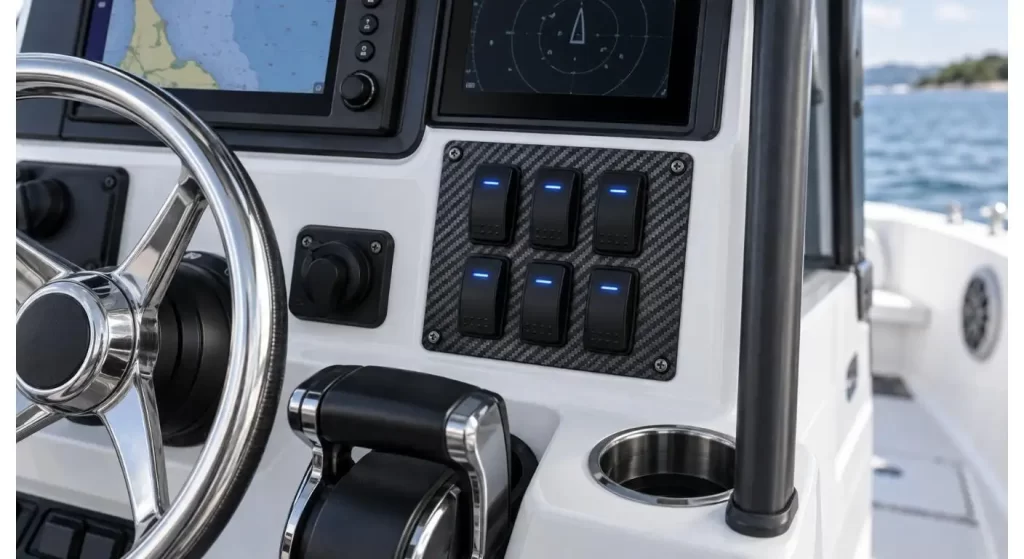
So, What is a Carbon Fiber Rocker Switch Panel?
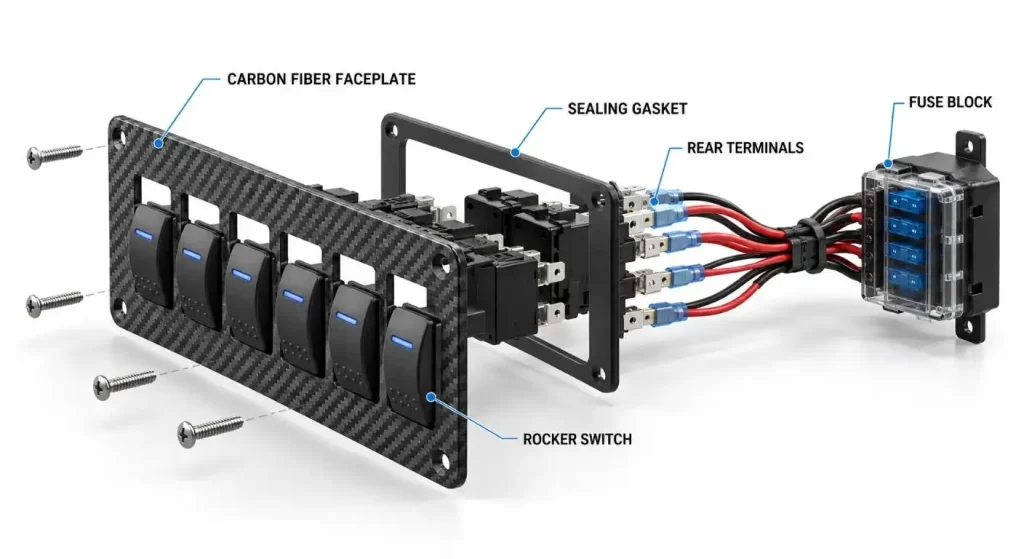
A carbon fiber rocker switch panel is a flat switch panel with multiple rocker switch control points mounted in a carbon fiber patterned or actual carbon fiber mounting surface panel. Depending on the design, it can also feature indicator lights, USB charging ports or voltage displays along with circuit breakers, fuses.
Many of the commercial panels feature an overlay of aluminum, ABS or composite material patterned with carbon fiber. True Carbon Fibre is lighter and more distinctive, but is typically more expensive and does need careful machining. Therefore, the buyers should verify the actual material used for the panels from the product photos.
The individual controls could be one of a variety of different rocker switch types such as on-off, momentary, illuminated and multi-position.
The sorts of building settings where these switch panels are frequently used.
Marine switch panels can be used for navigation lights, bilge pumps, deck lights, cabin light fixtures and ventilation system. RVs and camper vans might have a circuit with water pumps, interior lights, refrigerator and auxiliary power.
on-road/utility vehicles typically have light bar, winch, fan, compressor/ work light controls. Similar panels can be employed in industrial and special-purpose equipment to place commonly used functions together in a single location that is easily seen.
The layout of the panel is dependent on the application. The requirements for sealing a boat that is subject to spray are different than installing a panel in the dry cabin of an RV. Similarly, an accessory that draws a lot of current cannot be handled like a small indicator lamp.
Always start with the Electrical Load, Not the Panel Appearance.
Make a list of all the circuits that the panel will control before choosing the number of or color of switches. Write down the operating voltage, normal current, startup current and type of load (resistive, inductive or motor).
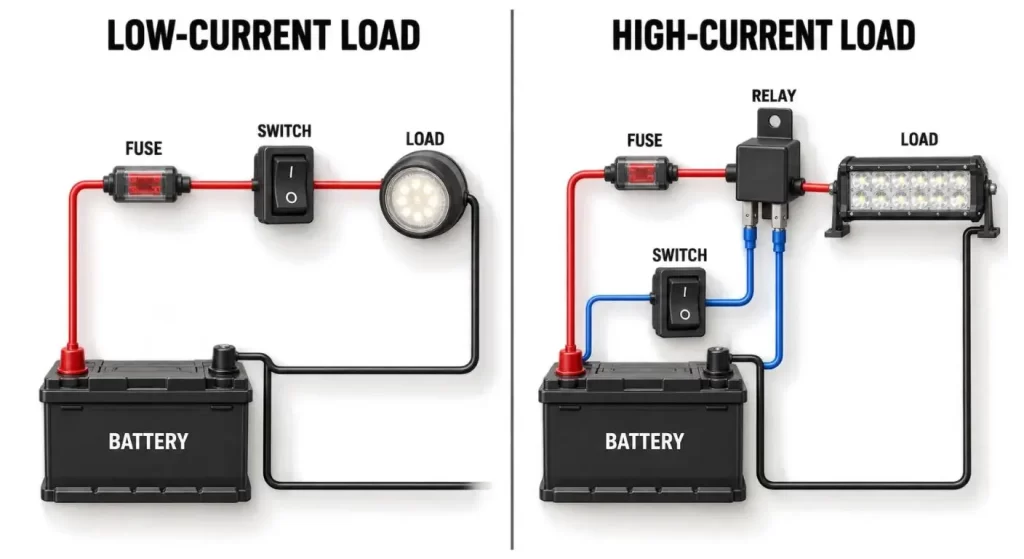
Rocker switches should not be selected merely by the fact that the rated current seems to be greater than the normal load. Pumps, fans and motors may require a large start-up current. In higher current systems, the switch can switch a relay that is used to control the accessory circuit.
For buyers of automotive electronic switch selections, they can also view Hanxia's automotive electronic switch solutions to have a better understanding of the impact of operating conditions on component selection.
| Controlled Function | Typical Switch Mode | Additional Component to Check | Main Selection Concern |
| Cabin or work light | On-Off | Fuse | Combined lighting current |
| Bilge or water pump | On-Off or Auto-Off-Manual | Relay and fuse | Motor startup current |
| Horn | Momentary | Relay | Short high-current operation |
| Winch direction | Momentary DPDT | Contactor | Polarity and interlocking |
| Ventilation fan | On-Off or Multi-position | Fuse or relay | Continuous operating current |
| Auxiliary power outlet | On-Off | Breaker | Maximum connected load |
Choose the Correct Rocker Switch Function
An on-off switch is appropriate if the circuit needs to be on until the user turns it off. Momentary switches only move to one position when they are pressed and then back to their normal position when they are released and are generally used for horns, starters or control of direction.
SPST switches are the simplest type of switch that can be used to control one circuit in an on-off fashion. SPDT, DPST and DPDT switches are helpful when multiple paths or polarity change or simultaneous circuit control is needed. The terminal arrangement is to be the same as that shown in the wiring diagram, even if two identical-looking switches have the same front appearance they can have very different behaviour.
Also illuminated switches needs clarification. One type of light can signal that the dashboard is on and the other type of wiring can only turn the light on when the controlled accessory is in use. This detail must be verified prior to approve panel sample.
Assess Carbon Fiber Panel construction
The rigidity of the face plate should not be reduced to the point where it is not sufficiently rigid around each switch cutout. Thin material or poor machining can cause the edges to bend when switches are depressed, particularly if multiple rectangular holes are made in close proximity to each other.
Check with the supplier if the surface is made of carbon fiber, a laminated carbon-fiber sheet or a decorative printed film. Also look for edge finishing, UV resistance and chemical compatibility. Outside of vehicles and boats, the surface should not fade or peel and it shouldn't allow moisture to get in.
The back of the Panel is as important as the front! Adequate clearance for switch bodies, terminals, cable bends, relays and protective covers.
Take Water, Dust and Vibration Exposure into account.
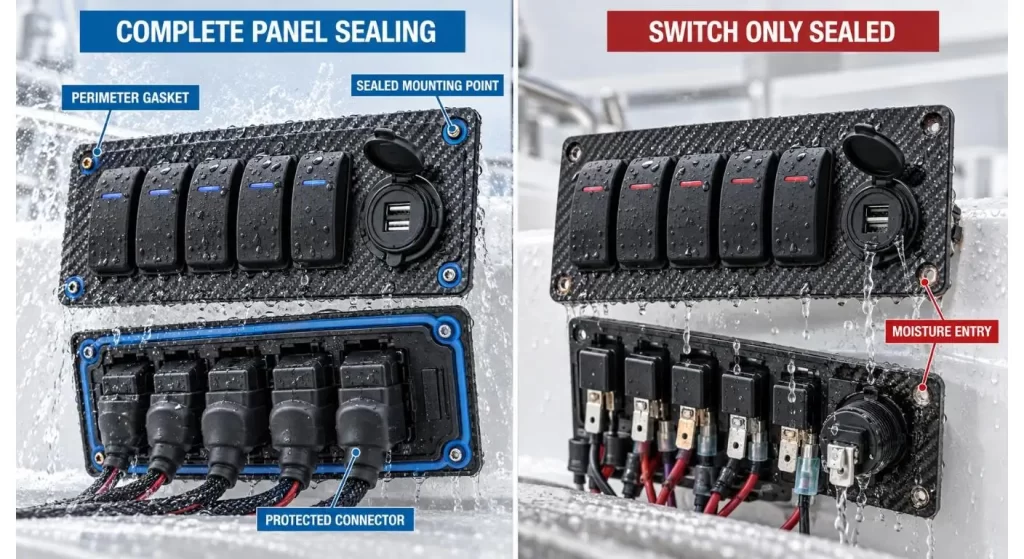
All waterproofing does not make a waterproof panel. Moisture can still penetrate through the edges of the panel, mounting holes, charging ports or inadequate sealing of cable outlets.
For marine and outside applications, you might need switch boots and gaskets and protected connectors. Elevated terminals are required to be anti-loose and cables are required to be strain relieved in vibrating vehicles. A neat back harness also minimizes the potential for abrasion on the dashboard structure.
When it comes to strict control requirements, buyers can reference the project to Hanxia's wider industrial equipment switch solutions to determine the environmental requirements.
Plan the Layout in view of Real Operation
Often-used switches should be within easy reach, without requiring the operator to take his/her eyes off the object of operation for an extended period of time. If it is an emergency or safety function, it should be visually separated from convenience functions.
Do not put like switches close together if they could accidentally get activated and create a problem. Evenly spaced and well-defined icons and groupings enhance usability. Without being distracting, backlighting should be seen at night.
If you are tooling or cutting the faceplate, it is helpful to layout a full-size print-out of the faceplate. This straightforward test can find out if there's inadequate clearance, hard-to-read labels, or interference between the panel and other dashboard components.
Confirm wiring and protection of circuits.
Appropriate overcurrent protection should be provided for each circuit. This can be done through individual fuses, resettable breakers or a distribution block that is protected. The cable size should be determined based on the current and the length of cable and the acceptable voltage drop.
No two or more ground connections should be huddled up in a random arrangement behind the panel. Each of the terminals and wires should be labeled as well to facilitate identification of a circuit by the technician during installation or maintenance.
With the approved sample, a wiring diagram should be provided. If not, the installer might need to manually locate the terminals, which could result in wrong LED, ground or load connections.
What to Consider Before Ordering in Bulk?
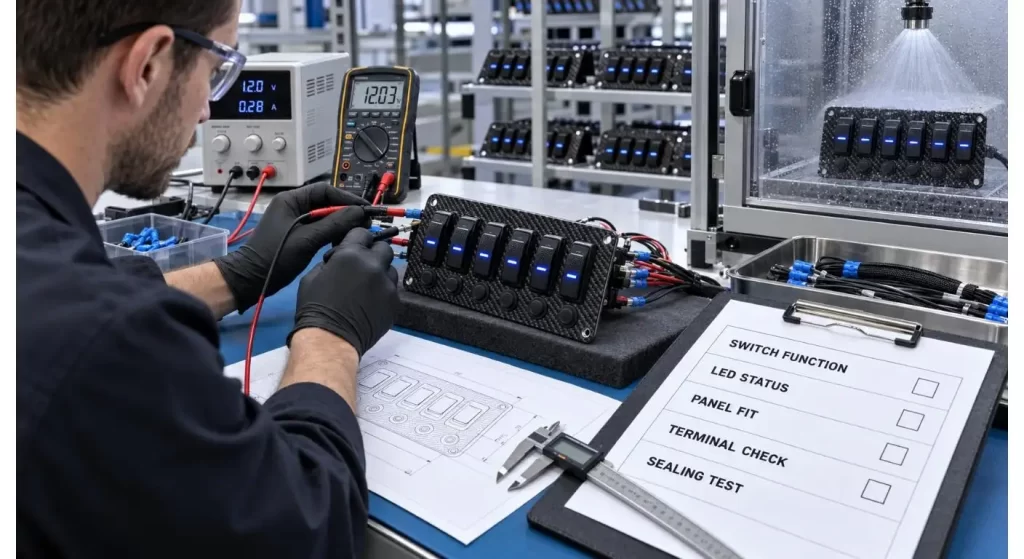
Test a working sample under realistic loads and voltage levels. Test all of the switches; see if the indicators light up properly and if any switch panel or terminal is very hot.
| Inspection Item | Verification Method | Acceptable Result |
| Switch function | Test every operating position | Output matches the wiring diagram |
| Indicator light | Test panel and load states | Correct light activates at the intended time |
| Panel fit | Install in a production-size opening | No flexing, gaps or interference |
| Terminal retention | Inspect and lightly pull connectors | Connections remain secure |
| Surface finish | Check under direct and angled light | No peeling, scratches or uneven pattern |
| Environmental sealing | Test the complete assembled panel | No water reaches electrical terminals |
In addition to this, switch alignment, cutting accuracy and surface finish, label adhesion and connector retention/rear clearance should be inspected. If an outdoor product, perform a suitable test for water exposure on the assembled panel instead of the individual switch.
For customization, the supplier must be submitted circuit list, dimensioned drawing, desired switch function, the material of the panel and target working environment etc. Based on this information, Hanxia's contact team can determine appropriate switches and requirements for customization.
Conclusion
A good carbon fiber rocker switch panel is an electrical control system and not just a pretty adornment for the dashboard. It requires matching every switch with the circuit it's designed for, protecting the wiring, and managing moisture from the interior and exterior of the house as well as enough room in which to install.
Start with real loads and environment. With these requirements in mind, the carbon fibre finish, switch colours and structure of the panel can be worked out without jeopardizing safety and maintainability.
FAQ
Q1. The carbon fibre rocker switch panel is waterproof?
Some panels are built to be waterproof or for marine applications, but waterproof switches are not enough to make an assembly waterproof. Inspect the faceplate gasket, mounting holes and the faceplate ports and rear connectors.
Q2. Is there a way to directly switch high current accessories with a rocker switch?
When the switch rating and the load characteristics allow. A relay is used frequently to control high current devices such as motors, pumps and light bars.
Q3. Does the actual carbon fiber compare to carbon fiber pattern?
Carbon fiber, which is lightweight, rigid and visually different, is more expensive and only genuine carbon fiber. A patterned aluminium or ABS panel might be all that is needed for many installations.
Q4. What is the smallest number of switches the panel can have?
Select adequate locations and future space requirements for circuits. Excessive unused positions will increase panel size and wiring.
Q5. Are there 12V/24V illuminated rocker switches?
Both systems may be useable with the switching contacts; however, the internal LED needs to be the same voltage. Please specify the full voltage rating prior to ordering.
