





What Is a 2.54mm DIP Switch?
A 2.54mm DIP switch is the industry-standard version of the Dual Inline Package switch, characterized by the specific spacing between its connecting pins. The number 2.54mm (0.1 inches) refers to the "pitch"—the distance from the center of one pin to the center of the next.
This specific spacing is critical because it matches the standard grid used in electronic breadboards and IC sockets. Unlike smaller "half-pitch" switches designed for compact mobile devices, the 2.54mm DIP switch is large enough to be easily manipulated by hand and fits perfectly into standard prototyping boards, making it the go-to component for hobbyists, industrial controls, and general PCB configuration.
Understanding "Pitch" in Electronics
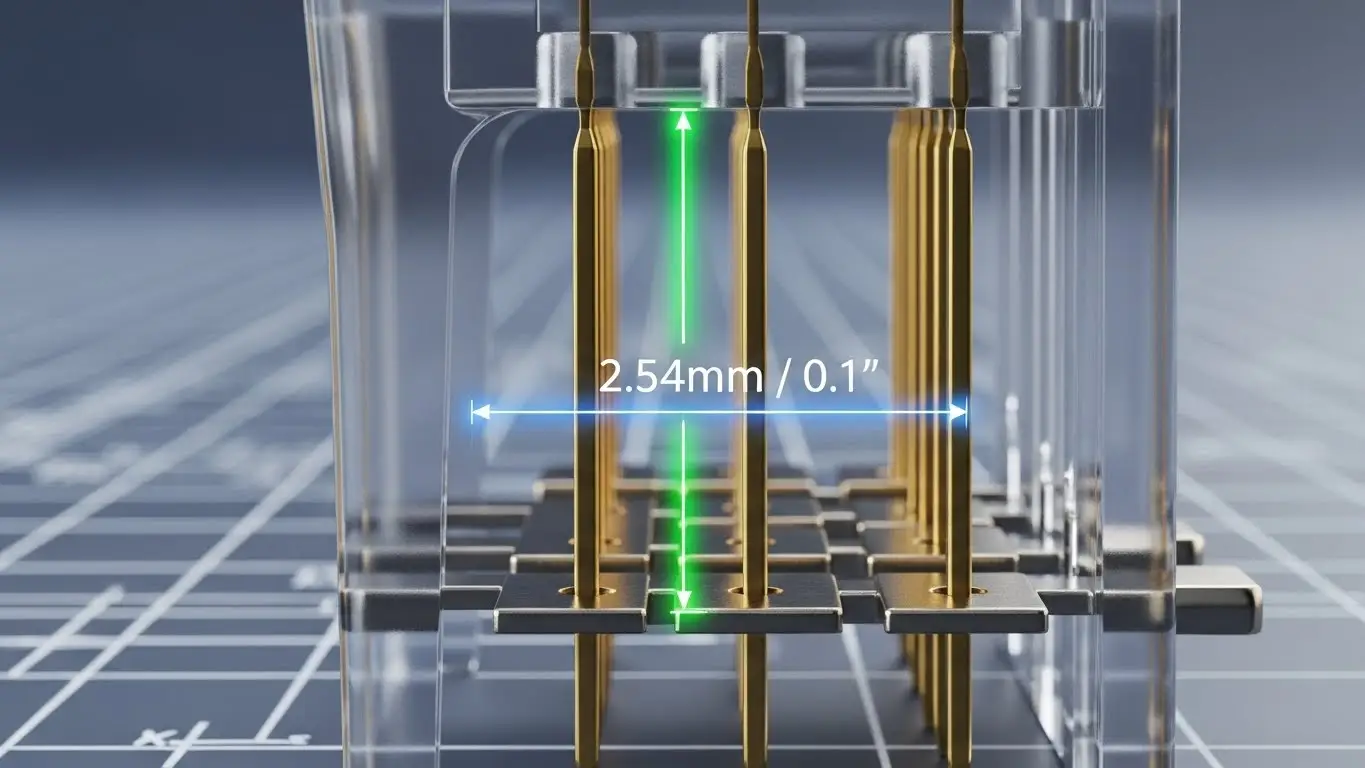
In electronics, "pitch" is the most important dimension when choosing a component. If the pitch is wrong, the component simply won't fit into the holes on your board.
The 2.54mm pitch is often called "standard pitch" or "100 mil pitch" (referring to 100 milli-inches). It was the dominant standard for decades because it struck a perfect balance: the pins were far enough apart to prevent soldering bridges (accidental connections), and the switch was large enough for humans to adjust without a microscope.
- Learn the basics: If you are new to these components, start with our guide on How DIP Switches Work.
Why 2.54mm Matters for Prototyping
Because 2.54mm is the standard spacing for breadboards and stripboards, these switches are "plug-and-play" for prototyping. You can insert them directly into a test board to configure settings without needing a custom PCB.
What is the Difference Between 2.54mm and 1.27mm DIP Switches?
The difference is size and density.
While the 2.54mm switch is the "standard" size, modern electronics often require smaller components to save space. This led to the creation of the 1.27mm "half-pitch" or Micro DIP switch.
- 2.54mm (Standard): Large, easy to solder by hand, breadboard friendly.
- 1.27mm (Micro/Half): Very small, requires precision tools to adjust, typically surface mounted.
If you are working on a compact device like a remote control, you might need the smaller version.
- Comparison: Micro DIP Switches Explained
| Feature | 2.54mm DIP Switch | 1.27mm DIP Switch |
| Pitch (Metric) | 2.54mm | 1.27mm |
| Pitch (Imperial) | 0.100 inch | 0.050 inch |
| Handling | Easy (Finger/Pen) | Difficult (Tweezers) |
| Main Use | Industrial, Prototyping | Mobile Devices, IoT |
Can You Use a 2.54mm DIP Switch on a Breadboard?
Yes, absolutely.
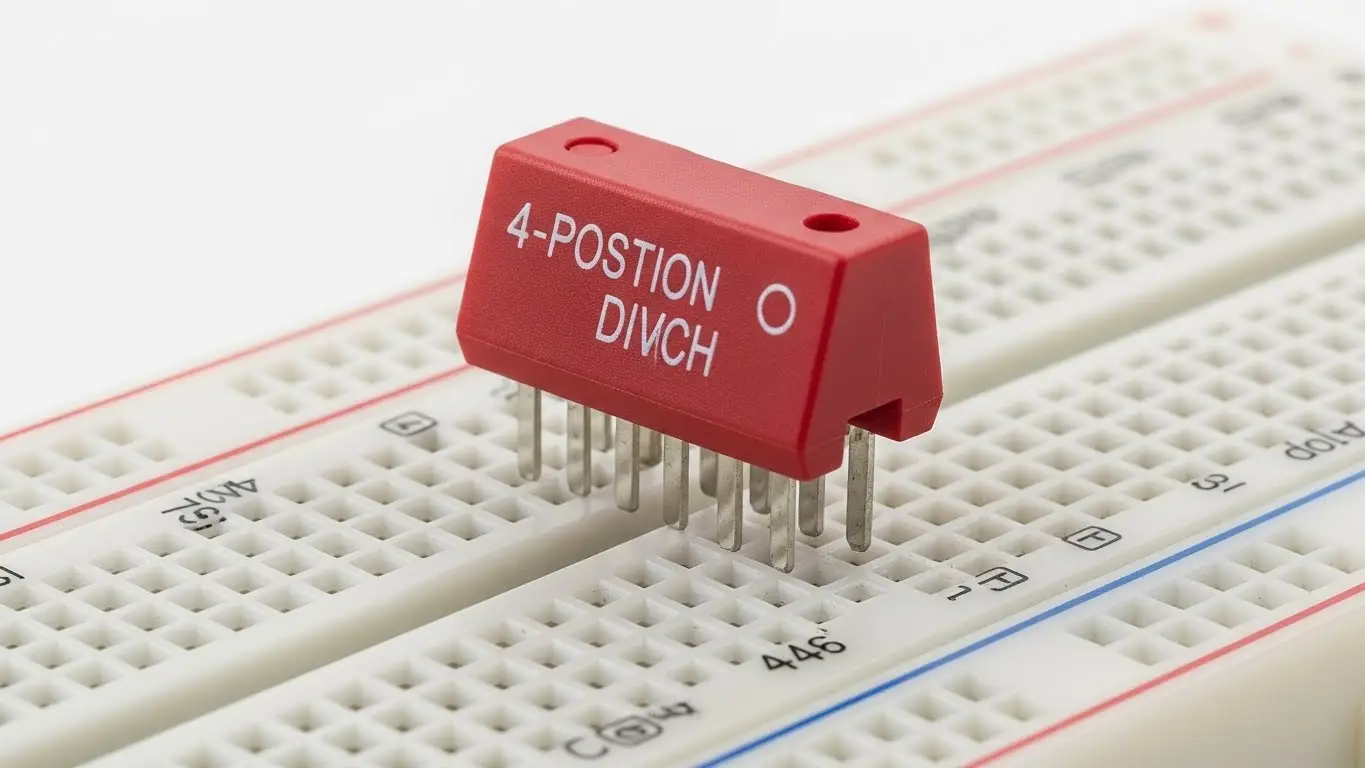
In fact, the 2.54mm DIP switch is specifically designed to be compatible with breadboards. The pins align perfectly with the 0.1-inch grid of holes on a standard breadboard.
Installation Tip: The standard DIP switch has two rows of pins. When placing it on a breadboard, ensure the switch straddles the center channel (the ravine) of the breadboard. This ensures that the pins on the left side are electrically separated from the pins on the right side.
Alt Text: Diagram illustrating proper placement of a DIP switch across the center divider of a breadboard.
Mounting Styles: Through-Hole vs. SMD
While 2.54mm is the spacing, the mounting style can vary.
- Through-Hole (THT): The pins are long and go all the way through the board. This is the most common style for 2.54mm switches because it is robust and easy to hand-solder.
- Surface Mount (SMD): The pins are bent outward (Gull Wing) or inward (J-Bend) to sit on top of the board. Even though SMD is usually associated with smaller parts, you can buy 2.54mm switches in SMD configurations for automated assembly lines.
- Read more: What is an SMD DIP Switch
Alternatives for User Interfaces
It is important to remember that DIP switches are for configuration (settings you change rarely), not for operation (buttons you press often).
If you are looking for a switch for a user to press—like a reset button, a power button, or a mode selector that changes frequently—a 2.54mm DIP switch is not the right choice. It is not designed for high-cycle durability.
Better alternatives for user input:
- Space Saving: If you need a button that fits on a crowded board, consider a Low Profile Tact Switch.
- Visual Feedback: If the user needs to see the button in the dark or know its status, use an Illuminated Tact Switch.
Frequently Asked Questions
Yes. 2.54 millimeters is exactly equal to 0.1 inches. In electronics manufacturing, this unit is often referred to as "100 mils."
Because they are relatively large, you can often adjust them with a fingernail. However, for precision, a small flathead screwdriver, a plastic stylus, or a ballpoint pen tip is recommended.
No. The pins will not line up with the holes or pads on your circuit board. You must replace a switch with one that has the exact same pitch.
Standard 2.54mm DIP switches are not waterproof. They may have a tape seal to protect them during soldering, but for harsh environments, you need to look for specific IP-rated sealed switches.
Key Takeaways
- Standard Size: A 2.54mm DIP switch features a 0.1-inch pin spacing, the industry standard for decades.
- Compatibility: This pitch makes them perfectly compatible with breadboards and IC sockets.
- Best Use: Ideal for prototyping, industrial settings, and manual configuration where extreme miniaturization isn't required.
- Not for Users: These are setup switches; use tactile buttons for daily user interaction.
Conclusion
The 2.54mm DIP switch remains a cornerstone of electronics design. Despite the trend toward miniaturization, its compatibility with breadboards and ease of manual adjustment ensures it will remain relevant for prototyping and industrial applications for years to come.
Whether you are building a prototype on a breadboard or designing a rugged industrial controller, selecting the correct pitch is the first step in a successful build.
Explore our full range of standard and micro switches at HX-Switch.
