





Sliding Gate Limit Switch Explained: Safer Stops For Auto Gates
Sliding Gate Limit Switch for Automatic Gate systems deliver their best performance when every stop is clear, repeatable, and protected from outdoor stress. A gate may run smoothly for months, then become unreliable during a single rainy week if the limit signal turns unstable. That is why experienced installers treat the limit switch as a safety component, not a minor accessory. At Hanxia, we build compact waterproof micro switches for demanding environments, so your gate stops where it should—day after day, season after season.
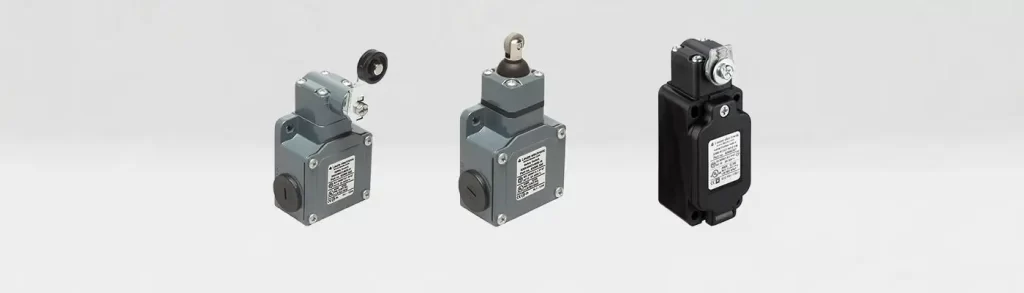
What a Limit Switch Really Does in a Sliding Auto Gate
A sliding gate operator needs two reliable “end messages”: one for fully open and one for fully closed. The Sliding Gate Limit Switch for Automatic Gate applications exist to provide those end messages in a physical, direct way. When the gate reaches a defined position, a bracket, magnet, or cam triggers the switch. The switch then sends a clear on/off signal to the controller. Depending on the control logic, the motor stops, slows, or changes state.
For beginners, the key idea is simple. The limit switch converts position into an electrical instruction. If the instruction arrives late, weak, or inconsistent, the gate may overrun the endpoint, strike a hard stop, strain the motor, or bounce and re-close. In the field, most limit-switch complaints are not about a gate refusing to move. They are about a gate failing to stop the same way every day. That inconsistency can become a safety concern, especially for properties that depend on predictable access control.
In practical terms, a good limit switch supports three goals at once: safer stopping, reduced wear, and smoother user experience. When the controller receives a stable endpoint signal, it can stop the motor without delay, reduce mechanical shock, and protect the rack, rollers, and gearbox from repeated impact at the end of travel.
Why Waterproof Protection Matters More Than People Expect
Outdoor gates face moisture in more forms than rain alone. Fog, condensation, splashes, and humidity trapped inside enclosures can affect electrical components over time. A switch can look normal from the outside while internal contact surfaces slowly degrade. Once the signal becomes unstable, the controller starts receiving a “maybe” instead of a firm “yes,” and gate behavior becomes unpredictable.
Hanxia’s waterproof micro switch is built to resist water and moisture, making it suitable for outdoor or harsh conditions. More importantly, it provides dependable switching action even in wet or humid environments. For installers and distributors, this is practical value: fewer call-backs during seasonal weather changes, and fewer “intermittent” faults that are difficult to diagnose.
Here are common field issues that moisture protection helps reduce:
✓ Intermittent stop points caused by humidity-driven contact instability
✓ Corrosion risk that shortens switch life in coastal or rainy regions
✓ Dust-and-moisture buildup that can make triggering less consistent over time
If you manage gates for apartments, warehouses, or commercial entrances, waterproofing is not an upgrade feature. It is part of keeping motion control stable when the environment is not stable.
The Practical Specs Beginners Should Focus On
Many buyers see a list of numbers and do not know which ones actually matter. For Sliding Gate Limit Switch for Automatic Gate designs, focus on signal stability, contact health, insulation strength, and repeatable actuation. These are the foundations of a clean endpoint signal.
Hanxia’s waterproof micro switch is rated at DC12V 50mA, a common low-power control signal level used in many gate control circuits. This makes it a practical match for control boards that expect a low-current switching input. The contact resistance is ≤100mΩ, which helps maintain clean signal transmission with minimal loss at the contact point. Over time, stable contact behavior supports reliable switching and reduces the chance of a “weak” signal that the controller misreads.
The switch also provides insulation resistance >100MΩ, which is especially relevant in humid conditions. Higher insulation resistance helps reduce leakage paths that can create noise or false states in control circuits. In simple terms, it supports safer, more stable switching behavior when moisture is present.
Finally, the operating force is 250±50g. This matters because it influences how easily the gate’s trigger mechanism actuates the switch. If operating force is too low, vibration or minor misalignment can cause unwanted triggers. If it is too high, the mechanism may require excessive pressure, which can increase mechanical stress or cause inconsistent activation. A controlled operating force helps make the switching point more predictable across many cycles.
These specifications are not “marketing numbers.” They explain why an endpoint signal remains consistent after thousands of open-close cycles, including through wet seasons and temperature changes.
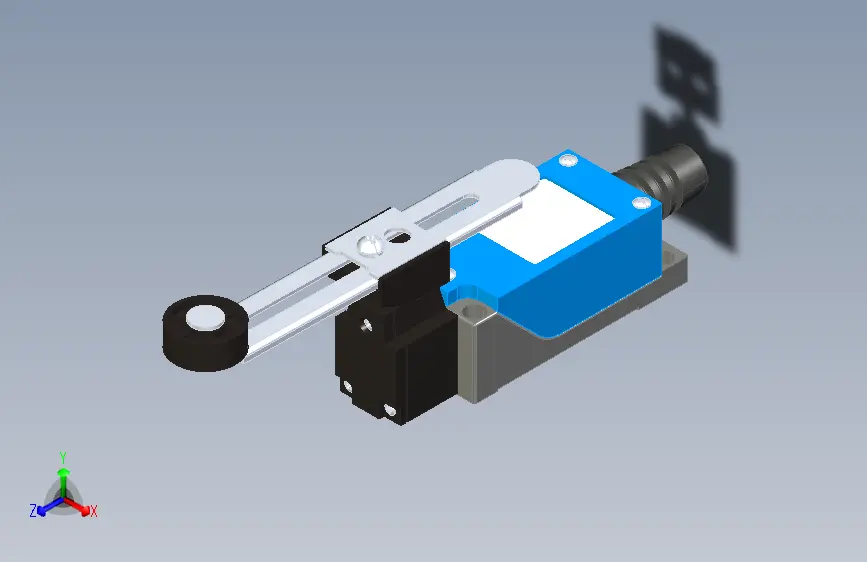
Compact Design and Precise Actuation: What You Gain in the Real World
Space inside gate operator housings is often limited. Installers may need to route wires, fit brackets, protect moving parts, and keep enough clearance for maintenance. A compact switch design saves valuable space and adds flexibility in placement. That flexibility matters when you need the actuator to meet the trigger at the correct angle, at the correct position, without interference.
Precise actuation is just as important as compact size. If actuation varies, the gate may stop early one day and late the next. That creates daily annoyances—misalignment with locks, gaps at the closing edge, or a gate that “pushes” against the end point. Hanxia’s design emphasizes accurate operation so the switching point is easier to control. For end users, this translates into smoother behavior: the gate stops cleanly, the motor runs with less strain, and the closing position stays consistent.
To connect features to user value, think in outcomes:
✓ Compact Design → easier installation in tight operator boxes and bracket layouts
✓ Precise Actuation → more consistent open/close positions and fewer adjustments
✓ Dependable Switching In Humidity → stable stopping behavior during rainy or foggy periods
When a gate is installed for daily use, the best compliment is that nobody notices it. Consistent stops make that possible.
Where a Waterproof Limit Switch Fits Beyond Auto Gates
Although this article focuses on gates, moisture-resistant switching is needed in many industries and equipment types. Any system that requires a reliable “position reached” signal in wet, outdoor, or high-humidity conditions can benefit from waterproof switching. That includes industrial equipment near wash-down areas, outdoor enclosures, and certain home appliance environments where condensation or splashes occur.
Hanxia’s waterproof micro switch is designed for applications requiring moisture protection and stable switching behavior. For system integrators, this broader applicability supports platform thinking. If you develop multiple products that operate outdoors or near water, you can standardize on a switch designed for moisture from the start, rather than redesigning after field failures.
This is also helpful for distributors. When one moisture-protected switch platform serves multiple applications, it simplifies inventory, training, and technical support. The product story becomes clearer: reliable switching in wet environments, compact installation, and consistent endpoint signals.
Why Hanxia: Scale, Testing, and Delivery Confidence
A limit switch is a small component, but it can decide whether an installation succeeds. That is why supply reliability and consistent quality matter. Since 2014, Hanxia has refined electronic parts manufacturing for 10+ years. With 7,500 customers across the U.S., Germany, South Korea, Taiwan, and Hong Kong, our global footprint demonstrates export readiness and continuity for long-term programs.
Likewise, production capacity is a must when backing distributors and large property projects. Hanxia operates 38 fully automated production lines and produces over 2 million units per day, helping large orders stay on schedule. Automation supports consistency by reducing assembly variability and improving product accuracy through controlled processes.
Quality control should not be a single checkpoint. We test at every step, from raw materials to final inspection, and every switch is factory tested to verify performance and durability before shipment. A 90-day return policy underpins risk-aware procurement, increasing confidence in each purchase.
CTA: Build Safer, More Reliable Gate Stops With Hanxia
If you are selecting a Sliding Gate Limit Switch for Automatic Gate project, contact Hanxia with your installation details: rainfall and humidity level, dust exposure, enclosure design, and control signal requirements. We will recommend a practical waterproof micro switch configuration that supports stable stop points, smoother operation, and fewer after-installation adjustments—so your gate system performs reliably in real outdoor conditions.
