





Mini Push Button Micro Switch: Compact Solutions for Modern Electronics
Recent trends in design and technology are leading modern electronic products to be smaller yet packed with more features than ever. As enclosure space and PCB real estate dwindle, component designers tailor each component to provide better performance in a smaller footprint.
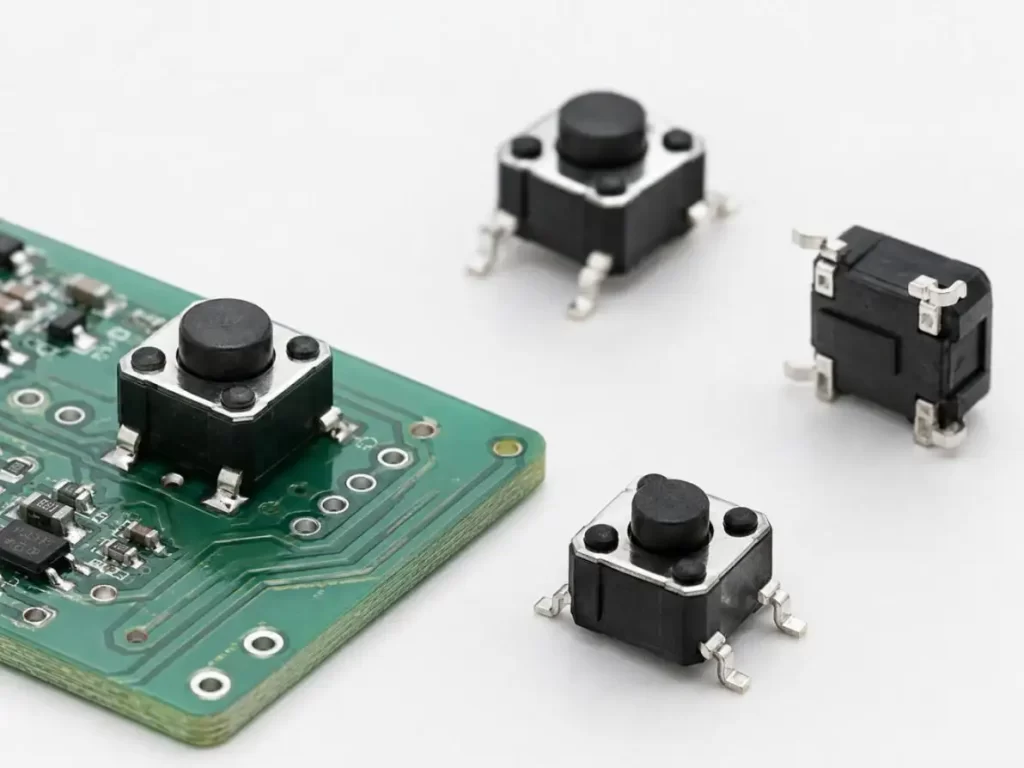
A Push Button Micro Switch is a great choice for on/off control, resets, mode selections, and even as a signal input. It's advantageous compared to larger control switches in that it saves space on your panel and offers great mechanical feedback in a very small package.
However, selecting a Push Button Micro Switch involves more than finding the smallest available model. Buyers should evaluate contact structure, operating force, travel distance, electrical load, terminal design and expected operating life as one complete system.
What Is a Push Button Micro Switch?
A Push Button Micro Switch converts a mechanical pressing action into an electrical switching signal. Its typical internal structure includes:
•A push-button actuator
•An internal spring mechanism
•Moving and fixed contacts
•An insulated housing
•Electrical terminals
•A PCB or panel-mounting structure
Depending on the design, the switch may provide momentary ON, momentary OFF or push-on/push-off operation. Contact configurations can include normally open, normally closed, SPST and other circuit options.
A compact micro switch may be installed directly on a PCB, behind a control panel or inside an equipment enclosure. Because manufacturers sometimes use "micro switch," "push button switch" and "mini push button switch" differently, buyers should compare actual dimensions, internal functions and electrical specifications rather than relying only on product names.
Why Push Button Micro Switches Suit Modern Electronics
Compact Installation
The small housing of a Push Button Micro Switch helps reduce PCB occupation and supports closely arranged control layouts. It is particularly useful when the enclosure has limited mounting depth.
Clear Switching Feedback
A coordinated actuator, spring and contact mechanism can provide a recognizable switching response. This input confirms an activation and may minimize operations that are accidental or incomplete.
Flexible Switching Functions
Configurations might include the following functions:
•Momentary ON
•Momentary OFF
•Push-on, Push-off
•Normally Open Contacts
•Normally Closed Contacts
•Single Pole or Multi Contact Structures
Efficient Assembly
Simplification of insertion, soldering, and automated assembly of a printed circuit board (PCB) is possible with standard terminals, mounting dimensions, and packaging. Consistent dimensions are especially important for high-volume electronics production.
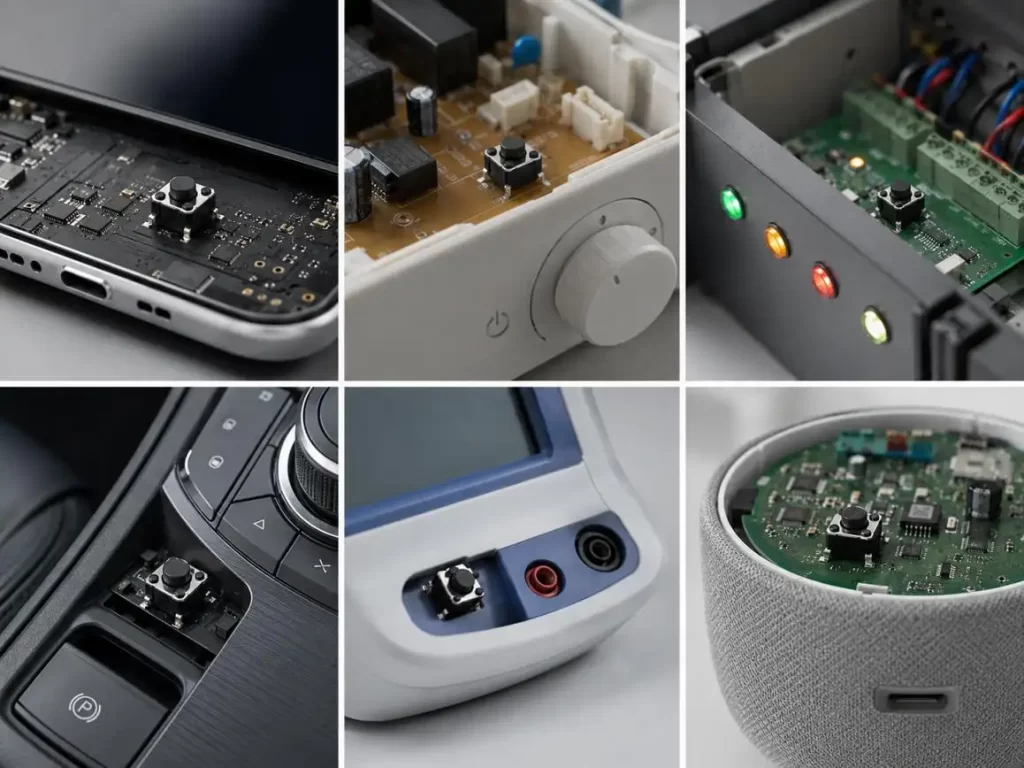
Common Push Button Micro Switch Applications
A Push Button Micro Switch can be adapted to different control and signal applications.
| Application | Typical Function | Key Selection Concern |
| Consumer electronics | Power or function control | Size, appearance and operating feel |
| Home appliances | Mode selection or reset | Electrical life and heat resistance |
| Industrial control panels | Signal input | Terminal design and reliable feedback |
| Automotive electronics | Auxiliary control | Vibration and temperature resistance |
| Medical and testing devices | Precise user input | Consistent operating force |
| Smart home products | Manual control or reset | PCB compatibility and durability |
The correct switch should match both the electronic circuit and the mechanical structure of the final device.
Push Button Micro Switch vs. Similar Switch Types
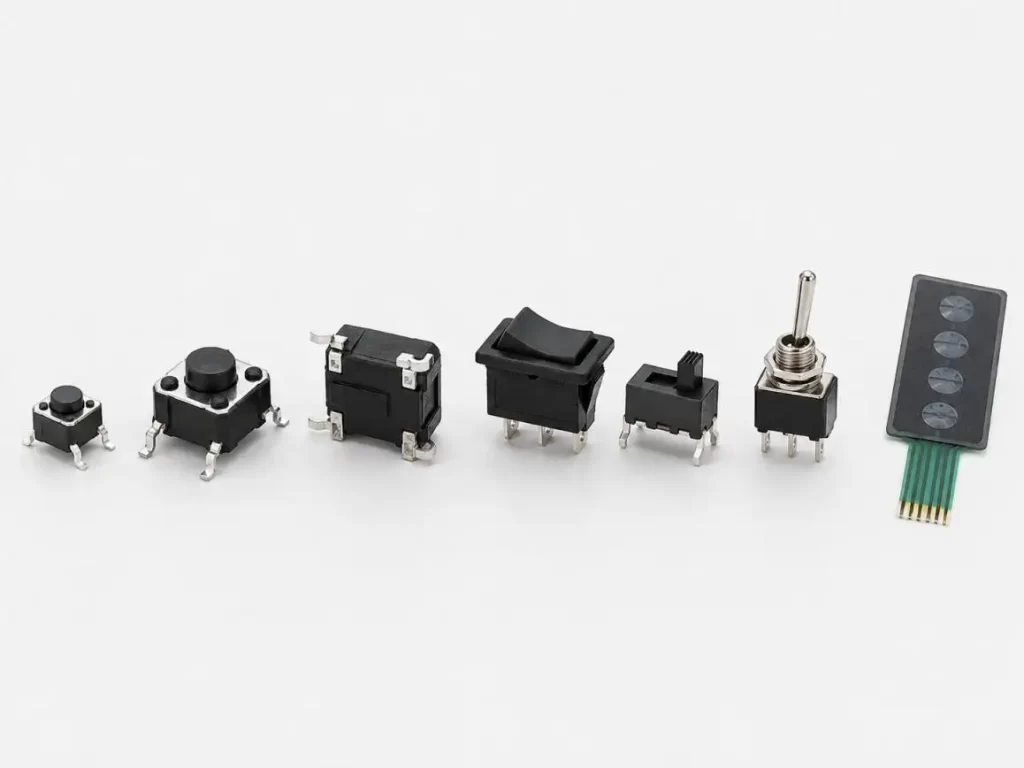
Horizontal comparison helps engineers determine whether a Push Button Micro Switch is the most suitable product category.
| Switch Type | Main Advantage | Typical Limitation | Suitable Uses |
| Push Button Micro Switch | Compact and easy to operate | Limited visible status information | Power, reset and function control |
| Tact Switch | Very small PCB footprint | Often designed for lower loads | Keypads and circuit boards |
| Rocker Switch | Clear ON/OFF position | Requires more panel space | Appliances and power equipment |
| Slide Switch | Supports position selection | Less suitable for repeated vertical pressing | Mode selection |
| Toggle Switch | Strong mechanical feedback | Larger exposed structure | Industrial equipment |
| Membrane Switch | Flat, printable interface | Different tactile and repair characteristics | Medical and control panels |
A tact switch may be appropriate for extremely small PCB controls, while a rocker switch is useful when the ON/OFF position must remain visible. A Push Button Micro Switch is often preferred when the application requires direct pressing, a compact independent structure and clear activation feedback.
How to Compare Push Button Micro Switch Specifications
After selecting the product category, buyers should compare individual Push Button Micro Switch specifications vertically.
| Parameter | Comparison Focus | Possible Impact |
| Dimensions | Length, width and mounting depth | PCB and enclosure compatibility |
| Operating force | Light, medium or heavy | User comfort and accidental activation |
| Travel distance | Pre-travel and total travel | Response speed and switching feel |
| Contact rating | Voltage and current | Electrical safety and contact life |
| Contact resistance | Initial and long-term values | Signal stability |
| Mechanical life | Operating cycles without load | Maintenance requirements |
| Electrical life | Cycles under rated load | Application reliability |
| Terminal type | PCB pin, solder lug or wire lead | Assembly process |
| Mounting method | Through-hole, panel or snap-in | Production efficiency |
| Environmental resistance | Heat, humidity and vibration | Application suitability |
The smallest switch or the model with the highest mechanical-cycle figure is not automatically the best choice. The specification must correspond to the actual circuit, enclosure and operating conditions.
How Operating Force and Travel Affect Performance
Operating force and travel directly influence the user experience of a Push Button Micro Switch.
A lighter actuation force works well for consumer electronics that are often used. Heavier force during actuation will help to avoid accidental activations during transport or use. Short travel distance will increase response time but will require tighter tolerances on the actuator and assembly.
Longer travel can create more noticeable feedback but requires additional installation space. Button caps, panel thickness and external actuators may also change the final operating force.
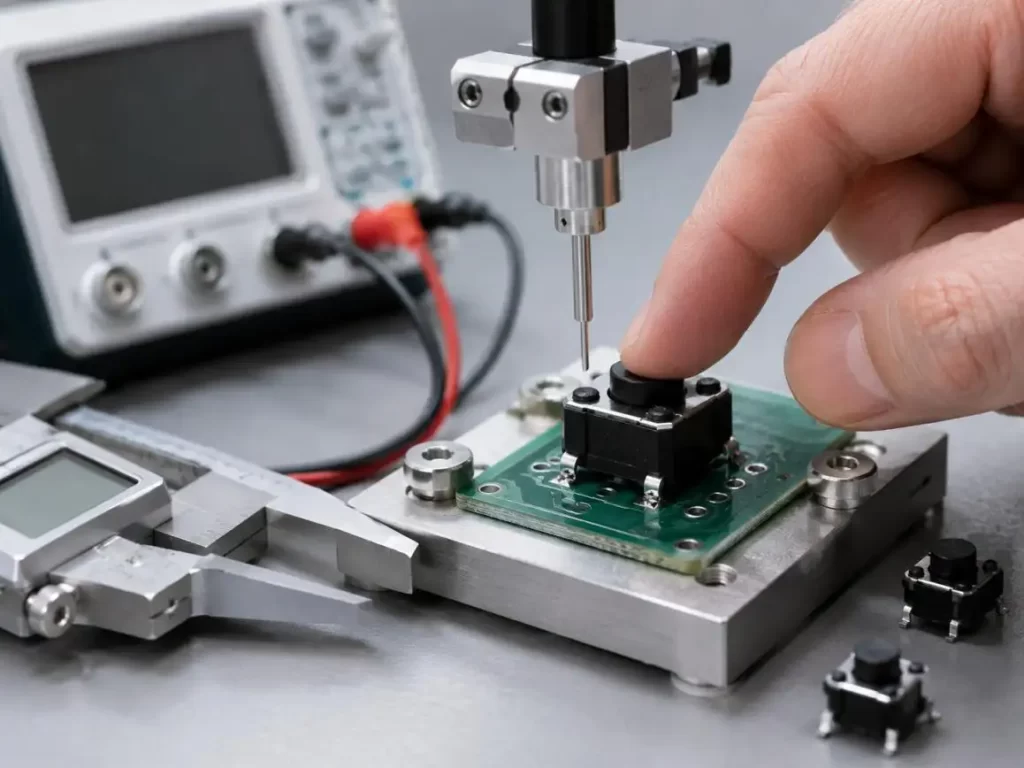
For this reason, engineers should test the switch inside a production-equivalent device rather than evaluating only an uninstalled sample.
Electrical Load and Contact Configuration
Before selecting a Push Button Micro Switch, buyers should define:
•Whether the switch controls a signal or a direct electrical load
•Actual working voltage and current
•Resistive, inductive, lamp or motor load type
•Normally open or normally closed operation
•Required pole and contact configuration
Two switches with the same rated current may perform differently under actual conditions. Motors, solenoids and other inductive loads can create inrush current or electrical arcing. Contact materials, switching frequency and test conditions should therefore be reviewed together.
Hanxia's Support for Custom Push Button Micro Switch Projects
Established in 2014, Hanxia specializes in the research, development and production of switches and sockets. Its production base in Wenzhou, Zhejiang, covers approximately 5,600 square metres and employs more than 90 skilled workers. A sales branch in Bao'an, Shenzhen, supports customer communication and project coordination.
Hanxia serves more than 3,500 customers and works with partners across China and international markets, including the United States, Germany, South Korea and Japan.
For a custom Push Button Micro Switch project, Hanxia can support:
•Switch dimensions and structure selection
•Button shape, height and colour options
•Terminal and mounting configurations
•Operating-force and travel development
•Drawing and PCB-layout review
•Sample preparation and application testing
•Dimensional, electrical and life-cycle inspection
•OEM packaging and production coordination
This approach helps buyers develop a complete specification instead of selecting only from a standard catalogue.
Typical Errors in Selecting Components
❌Thinking About Size Only: The smallest selection might be the most inappropriate because the smallest selection may not handle the necessary load or mounting provisions.
❌Forgetting About Load Type: The lifecycle of an electrical contact element is influenced by the type of load, particularly with inductive load.
❌Forgetting About All Factors: Contacts also need to be compared in terms of the rated currents.
❌Not Testing All Loose Switches: The travel and operating force of a switch may differ when installed in a panel compared to when it is tested in the free state.
❌Not Considering Prototype Samples: Small run or hand-built prototypes will not have the same consistency as when built in mass production.
❌Forgetting About Terminals: Variations in terminals may affect clearance, soldering, and fitting to the PCB.
Get the Right Fit for Your Requirements of Push Button Micro Switches
Push Button Micro Switches can be designed to meet your requirements of space, load, feel, alignment, and lifecycle. For a customized design of Push Button Micro Switches, provide Hanxia your PCB Design, Load, Operating Force, Installation and preferred Order Quantity. The engineering team at Hanxia will evaluate potential designs of Push Button Micro Switch and prepare samples based on the specified application to perform production-level design iterations.
FAQs
Q1. What is a Push Button Micro Switch?
A Push Button Micro Switch is a small electromechanical device that creates an electrical signal when a button is pressed. Common applications for this device are in the power, reset, mode, and control functions.
Q2. Where are Push Button Micro Switches used?
Push Button Micro Switches are used in control panels, automotive electronics, and smart home products, as well as in consumer electronics, home appliances, testing instruments, and small industrial equipment.
Q3. What is the difference between a Push Button Micro Switch and a tact switch?
Tact switches are typically smaller and occupy less PCB space, and are primarily used for low-current signal inputs. A Push Button Micro Switch can offer a greater variety of options for electrical loads, terminals, actuators, and mounting.
Q4. Can a Push Button Micro Switch have both momentary and latching functions?
Yes. Momentary and latching functions can be provided as part of the same device. Momentary functions can be either ON or OFF, while latching can be push-on/push-off.
Q5. What electrical specifications should buyers check?
Buyers should check the operating voltage and current, load type and configuration, the switch's contact configuration, the frequency of switching, and the expected electrical life.
