





Best Tactile Switch Manufacturer: How to Choose the Right Supplier for Your Electronic Products
Tactile switches are essential components used in thousands of electronic devices, from consumer electronics and industrial equipment to automotive systems and medical devices. Choosing the best tactile switch manufacturer is a critical decision for engineers, purchasing teams, and product developers because switch quality directly affects product reliability, user experience, and long-term performance.
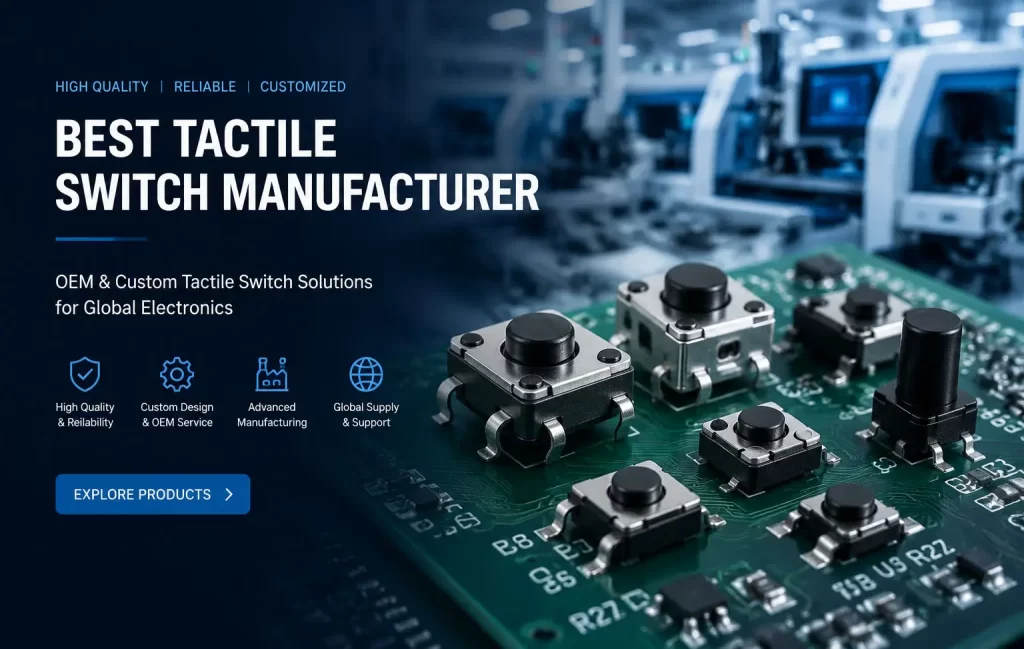
With hundreds of suppliers available worldwide, identifying a reliable tactile switch manufacturer requires more than comparing prices. Factors such as manufacturing capability, quality control, customization options, certifications, and technical support all play an important role.
This guide explains what makes a tactile switch manufacturer stand out and how companies can select the right partner for their projects.
What Is a Tactile Switch?
A tactile switch is a type of momentary push button switch that provides physical feedback when pressed. Unlike standard buttons, tactile switches create a noticeable “click” feeling, allowing users to confirm that an electrical connection has been activated.
These switches are commonly used in:
- Consumer electronics
- Remote controls
- Gaming devices
- Smart home products
- Industrial control panels
- Automotive systems
- Medical equipment
- Communication devices
Because tactile switches are often used thousands or even millions of times during a product’s lifecycle, durability and precision manufacturing are extremely important.
Key Factors When Choosing the Best Tactile Switch Manufacturer
1. Manufacturing Experience and Expertise
The best tactile switch manufacturers usually have years of experience designing and producing switching solutions for different industries.
An experienced manufacturer understands:
- Contact material selection
- Mechanical structure optimization
- Waterproof sealing technology
- Surface mount technology (SMD)
- Through-hole manufacturing
- Custom force requirements
- Reliability testing
A supplier with strong technical knowledge can help engineers choose the right switch design instead of simply providing standard products.
2. Advanced Production Capability
A professional tactile switch manufacturer should have modern production facilities capable of handling large-volume manufacturing while maintaining consistent quality.
Important manufacturing capabilities include:
- Automated assembly lines
- Precision injection molding
- Metal stamping equipment
- SMD production lines
- Automated inspection systems
- Reliability testing laboratories
High automation reduces production errors and ensures every switch meets the same specifications.
For companies requiring millions of units per year, production capacity is one of the most important factors when selecting a supplier.
3. Strict Quality Control System
Quality control separates reliable manufacturers from low-cost suppliers.
A trustworthy tactile switch manufacturer should perform multiple inspections during production, including:
- Incoming material inspection
- Mechanical testing
- Electrical performance testing
- Operating force measurement
- Contact resistance testing
- Life cycle testing
- Temperature and humidity testing
High-quality tactile switches should provide stable performance throughout their operating life.
Manufacturers serving automotive, medical, and industrial markets should also follow international quality standards such as ISO quality management systems and environmental compliance requirements.
4. Wide Range of Tactile Switch Solutions
The best tactile switch manufacturers offer a broad product portfolio to support different applications.
Common tactile switch categories include:
Standard Tactile Switches
Used for general electronic products where compact size and reliable operation are required.
Low Profile Tactile Switches
Designed for thin devices where space is limited, such as wearable electronics and portable equipment.
Waterproof Tactile Switches
Featuring sealing structures to protect against moisture, dust, and environmental exposure.
SMD Tactile Switches
Designed for automated PCB assembly processes and high-volume electronics manufacturing.
Custom Tactile Switches
Developed according to specific requirements such as:
- Different operating forces
- Custom dimensions
- Special terminals
- Unique actuator designs
- Customized packaging
A manufacturer capable of customization provides more flexibility for product development.
Why OEM and Custom Tactile Switch Manufacturing Matters
Many companies do not need a standard switch. They require a component designed specifically for their product.
A professional OEM tactile switch manufacturer can support:
- Product design consultation
- Prototype development
- Engineering modifications
- Tooling development
- Mass production
- Packaging solutions
Customization allows companies to improve product performance, differentiate their products, and create better user experiences.
For example, a gaming device may require a specific clicking force and feedback feeling, while an industrial controller may require a waterproof and highly durable switch.
Applications of High-Quality Tactile Switches
Reliable tactile switches are used across many industries.
Consumer Electronics
Examples include:
- Smartphones
- Smart devices
- Remote controls
- Audio equipment
- Wearable technology
Consumers expect buttons to feel consistent and respond accurately.
Automotive Electronics
Automotive applications require components that can handle vibration, temperature changes, and frequent operation.
Tactile switches are used in:
- Dashboard controls
- Steering wheel buttons
- Vehicle entertainment systems
- Electronic controls
Industrial Equipment
Industrial environments require switches with long lifespans and strong reliability.
Applications include:
- Control panels
- Machinery interfaces
- Measurement equipment
Medical Devices
Medical electronics require extremely reliable components because failure can affect safety and performance.
How to Evaluate a Tactile Switch Supplier Before Ordering
Before choosing a manufacturer, companies should evaluate:
Product Quality
Request:
- Datasheets
- Testing reports
- Samples
- Reliability information
Production Capability
Check:
- Factory size
- Manufacturing equipment
- Monthly production capacity
- Quality management system
Technical Support
A good supplier should provide engineering assistance and respond quickly to technical questions.
Supply Chain Stability
Reliable manufacturers should have stable material sourcing and consistent delivery performance.
Customer Experience
Look for:
- Long-term customers
- Industry applications
- Export experience
- Positive supplier reputation
Why Choosing the Right Manufacturer Matters
Selecting the wrong tactile switch supplier can lead to:
- Product failures
- Increased warranty costs
- Production delays
- Poor customer experience
- Additional engineering expenses
A reliable manufacturer becomes a long-term technology partner that supports product development from prototype to mass production.
Conclusion: Finding the Best Tactile Switch Manufacturer
The best tactile switch manufacturer is not necessarily the cheapest supplier. The right partner combines advanced manufacturing capability, strict quality control, engineering expertise, customization ability, and reliable customer support.
Companies looking for tactile switch solutions should prioritize manufacturers that can provide consistent quality, technical guidance, and scalable production capacity.
Whether developing consumer electronics, automotive systems, industrial equipment, or medical devices, working with an experienced tactile switch manufacturer helps ensure better product performance and long-term reliability.
