





Waterproof Push Button Switches: A Smarter Choice For Harsh-Use Applications
Waterproof Push Button Switches have become a critical choice for buyers who need stable input performance in products exposed to moisture, dust, vibration, and repeated daily use. In today's market, the real challenge is not simply adding a button to a device. It is preventing field failure while keeping the product compact, responsive, and commercially reliable.
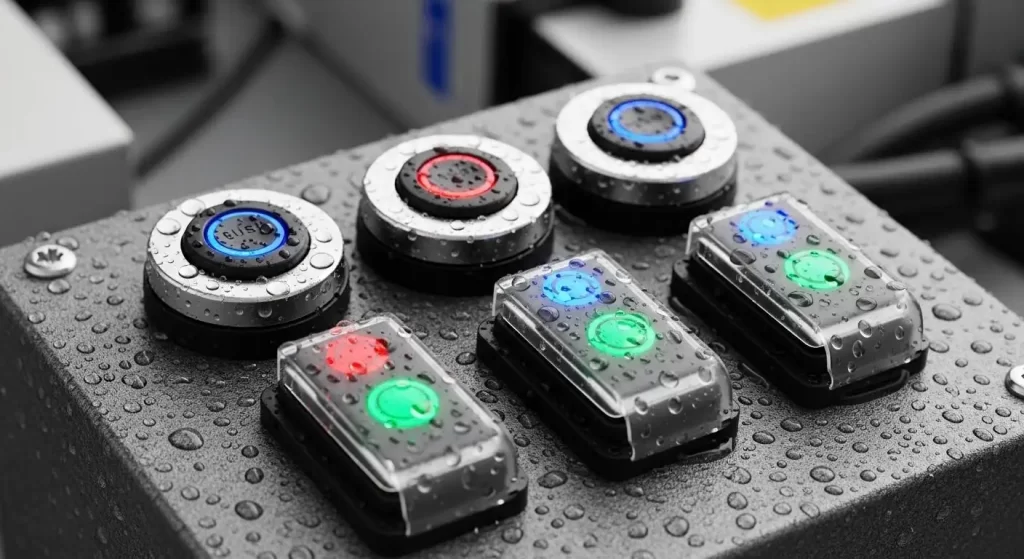
That is why more OEM and procurement teams are moving away from ordinary push buttons and toward sealed designs built for harsher working conditions. IEC's IP rating system exists precisely to classify how well electrical enclosures resist dust and water ingress, and IP67-level protection is now a familiar benchmark in electronics exposed to real-world environments.
The Industry Problem Is Not Actuation, But Exposure
Many switch failures do not begin with a dramatic electrical fault. They begin with slow water ingress, dust contamination, weakened tactile response, or unstable contact behavior after repeated cycles. In outdoor electronics, automotive controls, industrial panels, handheld devices, and compact equipment, those small failures often become warranty claims, downtime, or product returns.
Compared with standard non-sealed push buttons, waterproof models are designed to reduce the risk created by wet handling, condensation, splashing, and dirty operating environments. That difference matters because modern equipment is no longer used only in clean indoor spaces. Industrial HMI platforms from Siemens, for example, commonly target at least IP65 protection on the front panel, which shows how strongly the market now values sealed operator interfaces in practical field conditions.
Why Waterproof Designs Now Outperform Standard Push Buttons
A conventional push button may still work well in dry, cost-sensitive applications. But once the product enters a more demanding environment, the selection criteria change quickly. Buyers start looking beyond actuation force and footprint.
Here is where Waterproof Push Button Switches stand apart:
• Sealing Performance: A sealed structure helps block moisture and dust before contamination reaches the contact system.
• Operational Stability: Better resistance to water and dust helps preserve reliable switching behavior under tough operating conditions.
• Application Flexibility: Waterproof switches are designed for outdoor, marine, automotive, and industrial use where standard models often show limitations earlier.
• Lower Lifecycle Risk: A stronger switch design can help reduce maintenance events, replacement frequency, and after-sales friction. This is an inference based on how ingress protection and retention improve reliability under environmental stress.
For overseas buyers, this is the real commercial value. A switch is never just a component. It influences product reliability, customer perception, and supply-chain confidence.
HANXIA Focuses on the Feature That Matters Most: Reliable Sealing
HANXIA Waterproof Push Button Switches integrate materials for IP67 protection and higher for outdoor, marine, automotive, and industrial applications where water and dust resistance are needed. Other notable features include ease of use in wet environments and suitability for tight spaces, both of which address current trends for smaller and more reliable control devices.
That product direction makes sense in the broader market. Buyers are asking for more from each component because end products now combine tighter space constraints with wider usage scenarios. A switch may need to perform on a control box, a vehicle subsystem, a portable device, or an exposed electronic assembly without becoming the weak point in the design.
HANXIA's advantage is not only that it offers a waterproof option. The stronger selling point is that it treats sealing as a functional reliability issue rather than a cosmetic add-on. That is a better fit for procurement teams comparing long-term field performance instead of only unit price.
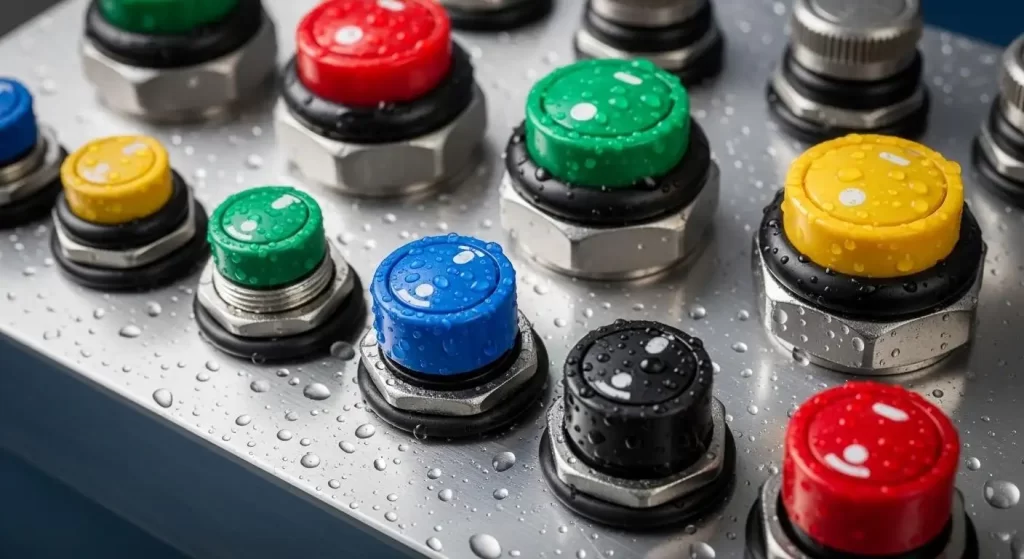
How HANXIA Keeps Pace With Market Trends
The switch market is moving in a clear direction: more compact devices, more outdoor or semi-exposed electronics, more demand for consistent tactile operation, and higher buyer sensitivity to reliability problems after deployment. HANXIA's catalog and company profile show a manufacturer built around switches and connectors, with a background dating to 2014 and a product range serving consumer electronics, industrial equipment, and automotive-related applications.
That matters because today's purchasing decisions are shaped by broader design trends:
• Miniaturization: Smaller devices leave less room for failure-tolerant component layouts, so switch reliability becomes more important. TE notes that component miniaturization increases the importance of performance and vibration resistance in real applications.
• Harsh-Environment Use: More products now operate near moisture, dust, vibration, and temperature fluctuation, pushing sealed input parts higher on the sourcing checklist.
• Retention and Stability: Molex describes retention decisions and their effect on electrical conduction under vibration and thermal cycling. This describes how buyers evaluate longevity and reliability on a switch and system level.
• User Experience: Actuation should be easy and safe to do when closed and glove protected. Reliability encompasses ease of use, even when the user is protected.
From a sourcing standpoint, HANXIA is a trends follower pragmatically. It is application based: sealed performance, compact design, and integrated reliability tested to modern electronics.
What to Benchmark Buyers Before Ordering
Waterproof Push Button Switches should not be compared based on price.
• IP Rating: Level of protection should be aligned with anticipated environment and criteria for testing.
• Use Case: Check the switch is intended for automotive, outdoor, handheld, or industrial use, not for generic indoor.
• Mechanical Reliability: Evidence design for vibration, cycling and, contact stability stability.
• Fit for Integration: Consider dimensions, mounting, and feel of operation. The component should be designed for the architecture of the product, not to match the drawing.
• Supplier Reliability: A switch performance in a product, should be understood by the manufacturer.
Final Thought
The market no longer accepts switches that meet the required electrical specification, even if that is just on paper. It rewards components that help finished products survive real conditions with fewer failures and better user confidence. That is exactly why Waterproof Push Button Switches are gaining ground over standard alternatives.
For buyers comparing sealed and non-sealed options, HANXIA offers a proposition that matches where the market is going: compact switch design, environmental protection, and application-focused reliability for outdoor, industrial, automotive, and modern electronic equipment. In a category where small parts can create large service problems, that is a commercially relevant advantage.
