





Slide Switch 2 Position: Precision Control For Modern Automotive Seat Systems
Slide Switch 2 Position components are becoming more important in automotive interiors because seat adjustment is no longer judged only by movement, but by precision, durability, packaging efficiency, and long-term reliability. For overseas buyers sourcing seat-control components, the real challenge is not finding a switch that can simply turn on and off. It is finding a switch that can deliver stable tactile control, fit tighter interior layouts, support low-voltage architectures, and remain dependable through repeated daily use.
As vehicle cabins become more electronic, more compact, and more comfort-focused, small components now carry much bigger expectations. Recent industry analysis from McKinsey points to rising electronics content in vehicles, while seating specialists such as Adient continue highlighting ergonomics, comfort, and safety as major directions for next-generation mobility.
The Real Issue Is Precision in a Small Space
In automotive seat systems, breakdowns do not happen overnight. Typically, small performance problems go unnoticed by consumers, but over time these factors are detrimental to user experience and product reliability.
Typical problems often include:
• Insufficient Tactile Feedback: The switch may feel unresponsive or vague while in use.
• Resistance Contact: The electrical stability may become weak over time.
• Integrated components become much more complicated as cabin space becomes limited.
Improvements in component functionality is anticipated by customers of seat modules, interior systems, and automotive electronics due to the reduction of price concerns.
Most customers prefer the switch to be designed in the following way:
• Compact Design: The switch should take up the smallest possible volume and should not hinder installation.
• Controlled Feel: The switch should have a 'click' for every activation.
• Stable Performance: The switch should perform reliably regardless of the number of activations.
• Wide Compatibility: It should be compatible with sedans, SUVs, premium vehicles, and electric models.
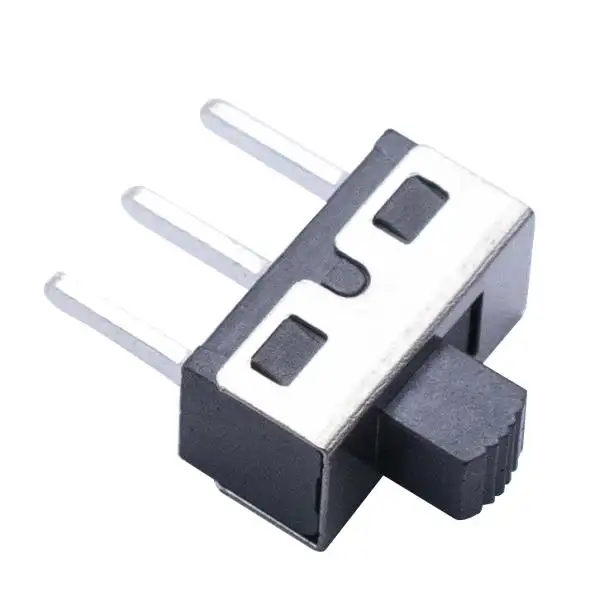
Here is where the HANXIA Slide Switch 2 Position derives even greater value. Rather than being a standard commodity component, it responds to a more functional requirement of current automotive interiors.
This also applies to seat adjustment systems:
• Exact seat customization - lateral and reclining backrest adjustments can be done.
• Improved functionality - effortless and reliable operation is provided.
• Simplified modular design - switch designs are less modular for today's seat configurations.
• The design of the switch for automotive interiors must be long lasting.
• The functionality of the switch design also meets the high standards of automotive quality.
• The priority for modern vehicle designs is the reliable functionality of the cabin and the switch design fulfills this.
The following points are of importance:
• Endurance - the switch must outlast mechanical fatigue.
• Longevity: The switch must provide sustained performance throughout the vehicles design life.
• Environmental Suitability: The switch must withstand automotive environments.
Why Compact Precision Will Matter Even More in 2026
Interior automotive designs are changing at a rapid pace. There is a need for OEMs to find a balance between comfort, electronics, lightweight designs and efficient system designs. In addition to these challenges, customer expectations drive growth in powered seating systems. Personalization and premium experiences are creating demand for powered seating and intelligent features. For 2026 reporting, vehicle makers will want to add more digitally integrated and ergonomical features.
Shifts are occurring in the industry and for switch buyers, there are expectations and requirements
• Well-defined actuation
• Smaller switches
• Efficient low-voltage requirements
• Long service life, because of durable performance over contact.
• Application Flexibility: A proven switch platform is easier to deploy across different vehicle classes and seat configurations.
This is why a well-designed 2-position slide switch remains highly relevant. It is simple in principle, but strategically important in execution.
How HANXIA Aligns With Current Market Needs
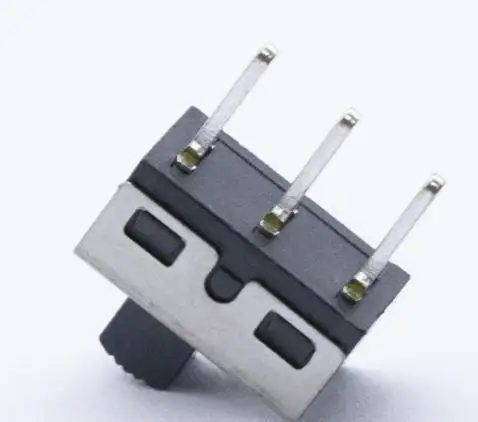
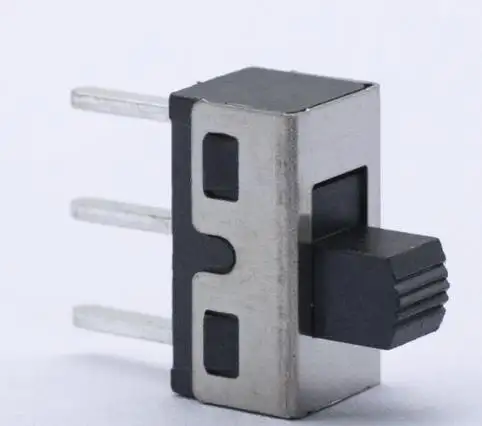
HANXIA is marketing the HX MSS23C02-H1.5 as an automotive seat adjustment solution, especially where control is manual or partially assisted. The specification outlines the engineering employee feedback most buyers would appreciate for the real vehicle programs: feedback regarding the compact design, the ideal operating force, steady electrical performance, and smooth integration into the vehicle interior assembly.
The following characteristics are most notable:
• Rating: DC12V 50mA which is ideal for low voltage applications in automotive control.
• Contact Resistance: ≤100mΩ to control the signal transmission.
• Insulation Resistance: >100MΩ for electrical reliability.
• Operating Force: 250±50g for tactile control of adjustment of the seat.
• Contact Loop: Monople for reliable switching.
In practice, the above mentioned characteristics commercial value is demonstrated as follows:
• Reliability: Seat system replacements are avoided due to the lasting reliability of the durable switching element.
• Control: The adjustment of the seat is precise which improves user control during forward, backward, or recline adjustment.
• Design: Compact and smart design minimizes seat actuator bulk with increased energy efficiency to accommodate the trend of more electronics in vehicle design.
• Compatibility: The switch is designed to be used in luxury vehicles, SUVs, sedans, and is applicable to electric or hybrid vehicle platforms.
For buyers, this combination of design qualities is most beneficial as it optimizes the performance of the product while also being practical for sourcing.
Built For Automotive Seat Applications, Not Generic Use
The strongest selling point of this product is not complexity. It is fit. The HANXIA Slide Switch 2 Position is engineered around a clear application logic: automotive seat adjustment. Recent trickle down theory has made component segmentation in easier to justify categories over broad defocused components, especially when addressing MW demand.
Examples of target use cases include:
• Automotive Seat Adjusters: Seat positioning, recline, slide, or swivel.
• Vehicle Seat Assemblies: Compatible with manual and powered seat adjuster assemblies.
• Luxury Car Interiors: Where tactile feeling and uniformity of switches are important.
• SUV and Sedan: For mainstream vehicle platforms with durable seat positioning.
• Electric and Hybrid Vehicles: For advanced seating systems with low-voltage electronic controls.
This type of fit also responds to the overall market evolution. In the context of growing demand for smart interiors, an ergonomic user experience, and intuitive systems, control miniaturization is expected to provide enhanced consistency and smarter integration.
HANXIA's Manufacturing Competencies are an Asset for Global Clients
For the overseas customer, quality is important, but for most overseas customers the confidence in supply is equally crucial. For importers, buyers of automotive electronics, and seat-system sourcing teams, the manufacturing profile of HANXIA is particularly appealing, as it is a leading automaker in providing stabilized outputs and predictable supply.
A few of the company's operational advantages are given below.
• Know-How: With nearly 10 years of manufacturing experience since its founding in 2014, HANXIA brings solid technical understanding to electronic components.
• Global Customer Base: HANXIA has earned the trust of more than 7,500 customers in the USA, Germany, South Korea, Taiwan, and Hong Kong.
• Automation: Its 38 automated production lines help maintain production efficiency and product consistency.
• Increase Capacity: Daily output exceeding 2 million units.
• Korean Technical Cooperation: Automated processes aid in minimizing human error and enhancing the stability of the entire operation.
• Quality Control Discipline: Inspection covers raw materials, in-line sampling, and final testing, with 100% factory inspection before shipment.
For procurement teams, this is where HANXIA shows that its technology is keeping pace with modern demand. The market today rewards suppliers that can combine compact design, production automation, repeatable quality, and scalable fulfillment. HANXIA's structure speaks directly to that expectation.
A Smarter Choice for Seat Control Programs
For many buyers, the future of seat-control components is not about adding unnecessary complexity. It is about improving precision, reducing packaging pressure, and securing reliable supply for a more electronic and comfort-driven automotive market. The Slide Switch 2 Position category still matters because it solves a real control problem in a direct, efficient way.
HANXIA transforms a functional category into a more robust sourcing alternative by integrating precise actuation, compactness, low-voltage applicability, and controlled manufacturing backing. For automotive seat systems requiring reliable user interaction and enduring durability, this offering goes beyond being a simple switch. It addresses the increasing need for precise, reliable, and easy-to-integrate electronics for vehicle interiors.
