





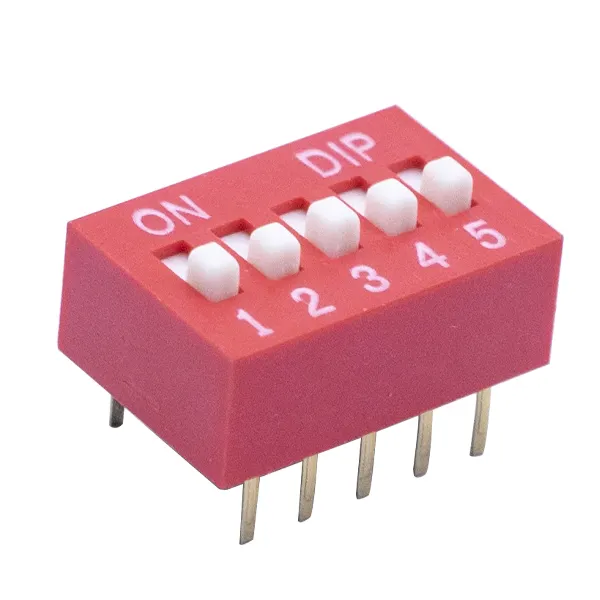
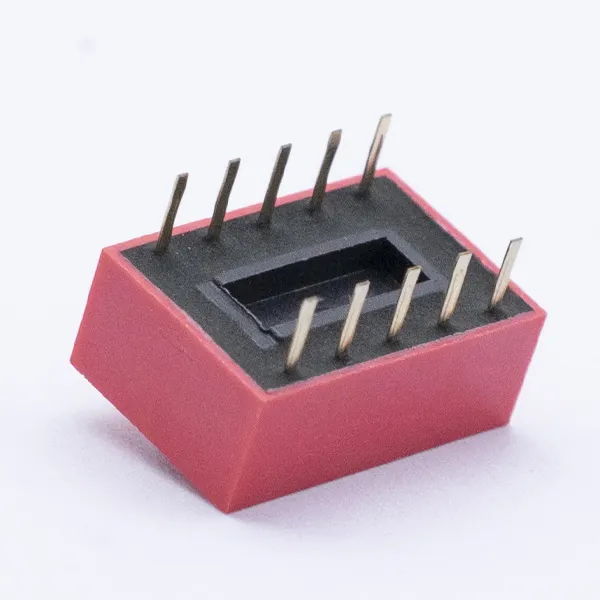


Product Description
This compact 5‑position rotary DIP switch provides reliable, space‑saving configuration for communication equipment where simple, nonvolatile settings are needed. A positive detent mechanism delivers clear 72° indexing per position, minimizing misreads under vibration. Gold‑over‑nickel contacts ensure low contact resistance and long life at logic‑level currents, while sealed constructions (tape/epoxy) allow automated soldering and post‑reflow cleaning without flux ingress. Available with binary or Gray code output tables, the device interfaces cleanly to microcontrollers or discrete logic for channel selection, node addressing, and baud‑rate or boot‑mode settings. Choose top‑adjust (screwdriver slot or arrow knob) or side‑adjust styles, with through‑hole 2.54 mm pitch or gull‑wing SMD pins for dense RF and networking PCBs.
Key features:
- 5 positions with tactile detent; 72° index per step
- Code options: binary or Gray code; custom truth tables on request
- Legends: 0–4, 1–5, or A–E; clear top arrow or recessed slot
- Sealed “washable” versions compatible with reflow and cleaning (J‑STD‑020 practices)
- Gold‑plated contacts for low‑level logic; anti‑sulfur options for telecom environments
- Terminations: 2.54 mm through‑hole (DIP) or SMD gull‑wing; low profile height
- Top or side adjustment; fingerwheel, flat, or screwdriver styles
- UL94V‑0 housing materials; RoHS/REACH compliant
Typical specifications (verify per selected datasheet):
- Positions: 5; indexing angle: 72°
- Contact rating: up to 25 mA at 24 VDC (resistive); low‑level logic switching recommended
- Contact resistance: ≤50 mΩ initial
- Insulation resistance: ≥100 MΩ at 100 VDC
- Dielectric withstand: 500 VAC, 1 minute
- Bounce time: ≤10 ms typical
- Mechanical life: 15,000–25,000 steps
- Operating temperature: −40 to +85 °C
- Actuation torque: 2–5 N·cm typical
- Pitch: 2.54 mm; SMD and THT footprints available
- Sealing: tape or epoxy top seal for washability; optional dust cap
Applications:
- Two‑way radios, repeaters, base stations, and RF modules
- Routers, switches, gateways, and industrial Ethernet nodes
- Telemetry units, IoT concentrators, and field controllers
- Panel modules for channel/group selection and node addressing
- Setting baud rate, boot mode, and feature enables without firmware access
Customization options:
- Output coding (binary/Gray/custom), pinout, and truth table
- Legends (0–4, 1–5, A–E), color caps, and knob style
- Top vs side actuation, detent force, and torque
- Sealing level (tape, epoxy), anti‑sulfur contact finish
- Extended temperature ranges and conformal‑coat compatible profiles
- Packaging: tape‑and‑reel (SMD), tube or bulk (THT)
Design notes:
- Use pull‑ups/pull‑downs sized for low current; avoid exceeding contact ratings
- Prefer Gray code if reading during motion to minimize transition errors; sample after detent
- Debounce in firmware or hardware; read multiple times and majority‑vote in high‑vibration environments
- Maintain clear access for field adjustments; protect with a cover if exposed to dust or ESD
- Specify washable types if boards undergo aqueous cleaning; avoid solvent attack on markings
