





Comprehensive Guide to HX-Switch Toggle Switches: Features, Types & Applications
Toggle switches are among the most widely used electromechanical switches in electronic and electrical design. They provide a simple, reliable way to control electrical circuits by manually flipping a lever or actuator, making them ideal for on/off control and multi-position switching in diverse industries. This guide presents an in-depth look at HX-Switch Toggle Switches, exploring their operation, types, features, and real-world applications to help engineers and designers make informed choices.
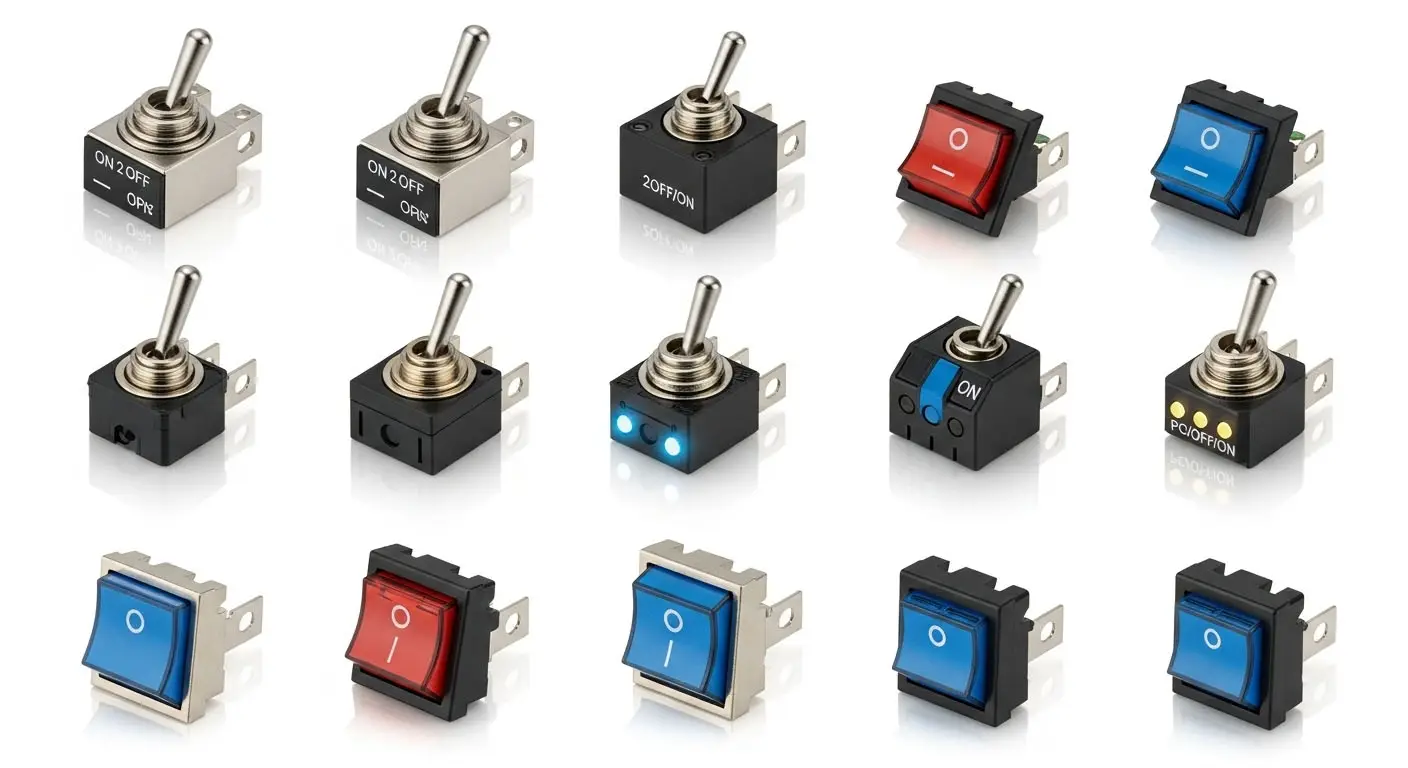
What Is a Toggle Switch?
A toggle switch is an electromechanical device that opens or closes an electrical circuit by moving a lever or handle between positions. When the lever is flipped, internal contacts either connect (closing the circuit) or disconnect (opening the circuit), controlling the flow of electricity in the system.
The simplicity of this design, along with its tactile feedback and durability, means toggle switches are used in applications ranging from consumer electronics to industrial machinery. Their rugged construction and reliable on/off action make them a mainstay in many electrical systems.
Key Advantages of HX-Switch Toggle Switches
HX-Switch toggle switches are designed for performance and reliability across a spectrum of applications. Key benefits include:
🔹 Intuitive Manual Control
Toggle switches allow operators to quickly change circuit states with a simple physical motion — flipping a handle or lever. The mechanical movement offers clear tactile feedback, so users instantly know the switch position without needing electronic indicators.
🔹 Durability and Longevity
Constructed with robust materials, these switches withstand frequent actuation and harsh environmental conditions. Many HX-Switch toggle switch designs are engineered to endure repeated cycles without performance degradation — ideal for both consumer and industrial use.
🔹 Versatile Configurations
HX-Switch offers a wide range of toggle switch configurations, including various pole/throw options and mounting styles to match specific electrical and mechanical requirements.
🔹 Environmental Protection
In industrial and outdoor applications, sealed toggle switches resist dust, moisture, and other contaminants through specialized sealing options, ensuring long-term operation in adverse environments.
Types of HX-Switch Toggle Switches
Different toggle switch types are suited to different design needs. Understanding these types ensures the right switch selection for performance and reliability:
🛠️ 1. Single Pole Single Throw (SPST)
SPST toggle switches offer a basic on/off function, controlling a single circuit with two positions. They are ideal for simple applications like power controls, indicator circuits, and basic lighting functions.
🔁 2. Single Pole Double Throw (SPDT)
SPDT switches have a single input and two outputs, allowing selection between two circuits. These are commonly found in control panels and equipment where one input must be routed to one of two outputs.
🔌 3. Double Pole Single Throw (DPST)
DPST toggle switches control two separate circuits simultaneously. They are useful when paired circuit control or isolation is needed with a single lever action.
🔄 4. Double Pole Double Throw (DPDT)
DPDT switches allow two circuits to switch between two states. They are often used in complex control logic, motor control circuits, or applications requiring multiple signal paths.
🔒 5. Sealed & Environmental Toggle Switches
For missions exposed to dust, moisture, or harsh environments, sealed toggle switches provide added durability and resistance by protecting internal contacts, making them suitable for outdoor equipment and industrial controls.
Mounting and Electrical Options
HX-Switch toggle switches provide multiple mounting options — including vertical, right-angle, and panel mount types — to fit various installation styles and mechanical layouts. Termination options include PCB thru-hole, solder lug, quick connect, or wire wrap for easy integration into circuits.
Current ratings and electrical specifications vary widely, allowing designers to choose switches that meet their system’s power requirements, from low voltage low-current applications up to higher current loads.
Real-World Applications
HX-Switch toggle switches are used globally in applications that demand reliable manual control. Typical use cases include:
🚗 Automotive & Transportation
Toggle switches are commonly used for vehicle lighting, auxiliary power switches, and control panel interfaces in automotive and off-highway vehicles due to their tactile response and rugged design.
🏭 Industrial Equipment & Machinery
In industrial settings, toggle switches control motors, conveyor systems, and instrumentation, where reliability and long service life are crucial.
🏡 Consumer Electronics
HVAC systems, power tools, and audio-visual equipment often use toggle switches for simple, visible user control of key functions.
🛠️ Test & Measurement
Laboratory instruments, test rigs, and measurement equipment benefit from clear on/off states and robust performance of toggle switches in daily use.
⚓ Marine & Aerospace
Corrosion-resistant and sealed toggle switches are deployed in marine panels and aerospace systems where environmental resilience and dependable switching are essential.
Choosing the Right HX-Switch Toggle Switch
Selecting the appropriate toggle switch involves evaluating several design factors:
☑️ Electrical Load & Rating
Match the switch’s voltage and current rating to the application’s electrical load to prevent overheating or contact failure.
🔎 Pole/Throw Configuration
Choose a switch configuration that aligns with your control logic needs — from simple on/off (SPST) to complex multi-circuit switching (DPDT).
📐 Mounting & Termination
Consider the installation environment and assembly process when choosing mounting style and terminal type. Board space, panel design, and connection method all influence switch choice.
💪 Environmental Considerations
If your application operates outdoors or in dusty, wet environments, select sealed or ruggedized toggle switches for protection and safety.
Conclusion
HX-Switch toggle switches remain integral components in modern electrical and electronic design because of their reliability, ease of use, and versatility. From basic on/off controls in consumer products to rugged industrial systems, these switches offer robust performance across a variety of applications.
By understanding the types, features, and selection criteria discussed here, engineers and designers can effectively choose the right toggle switch to enhance functionality, durability, and performance in their projects.
