





How Waterproof Rocker Switch IP65/IP67 Improves Outdoor Safety
A switch might be one of the smallest parts on an outdoor machine, but it can be the part that decides whether the whole system keeps running - or suddenly stops. In real-world environments, power control points are exposed to everything: windblown grit, rain, muddy gloves, salt spray, oil mist, and constant vibration. When a basic, non-sealed switch is mounted on a panel, it becomes an easy entry point for moisture and dirt. Over time, that "small" weakness can turn into downtime, damaged components, or operator safety risks.

That's why many builders and maintenance teams upgrade to a Waterproof Rocker Switch IP65 / IP67. It's designed for harsh conditions where the control interface must stay dependable, even when the machine is not.
What IP65 and IP67 Actually Protect Against
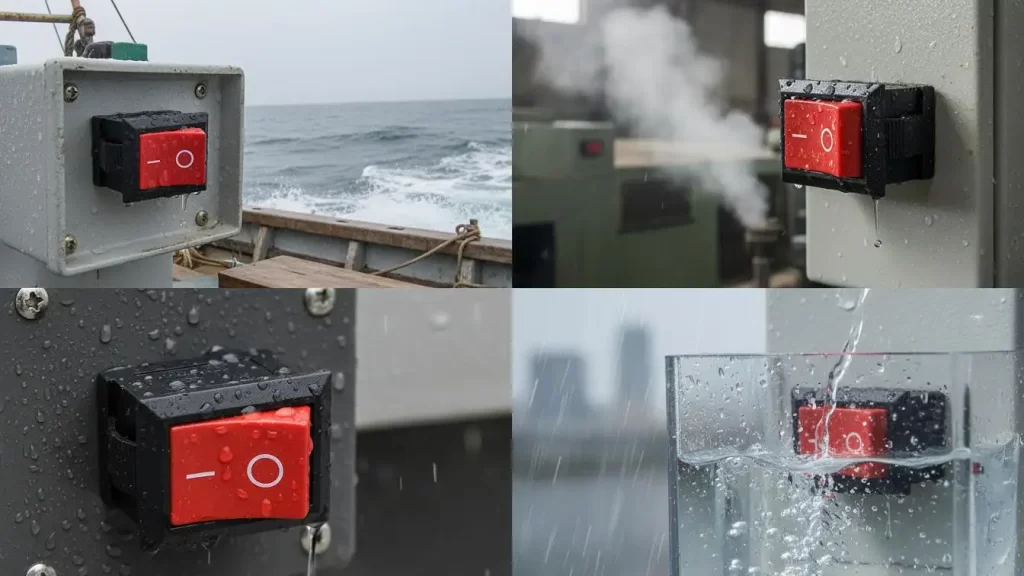
The IP rating tells you how well a device is sealed against solids (like dust) and liquids (like water). In simple terms, IP65 denotes robust protection against dust ingress and water projected in jets. IP67 extends this by permitting short-duration immersion under defined test parameters set by the manufacturer.
In outdoor equipment, this sealing is essential engineering protection, helping prevent moisture intrusion, where water penetrates the housing and disrupts contact stability.
•Dust and grit buildup: particles can interfere with moving parts and contact surfaces.
•Corrosion: dampness plus metal parts can lead to oxidation and poor conductivity.
•Vibration fatigue: repeated shaking can loosen internal alignment or create unstable contact.
When sealing prevents contaminants from reaching the critical areas, the switch stays consistent - press after press, day after day.
Reliability Is Safety: the Real Payoff
Waterproofing is only part of the safety story. In many outdoor settings, accidental operation is a bigger risk than people expect. Operators may wear thick gloves, climb around equipment, or work quickly in low visibility. A standard rocker can be bumped by a sleeve, tool, or moving cable. A sudden shutdown on a pump, generator, or motor can be more than annoying - it can be dangerous.
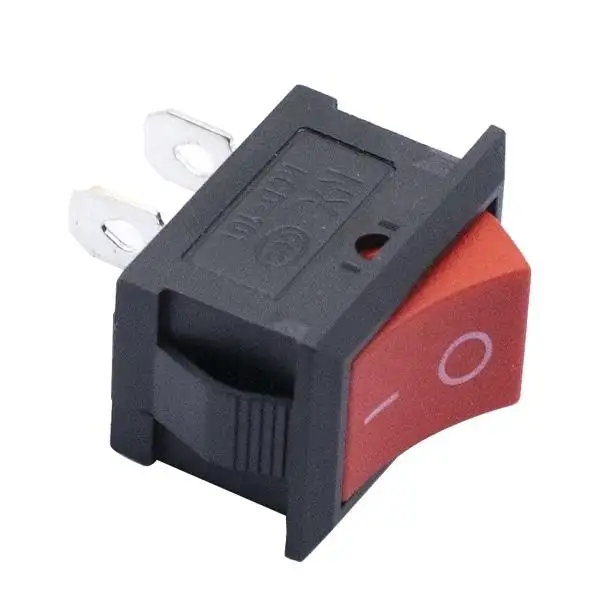
Many Waterproof Rocker Switch IP65 / IP67 models include a protective cover (often red). That cover improves safety in a few practical ways:
•Prevents unintended presses by acting as a physical guard.
•Improves visibility so the main power control is easy to locate fast.
•Forces intentional action - you have to mean it when you flip the switch.
This matters in applications where unexpected startup or shutdown can damage equipment, cause spills, or put people at risk.
Inside the housing, many designs use a stable micro-switch style contact mechanism. Even in low-control-current circuits (for example, control signals in DC systems), consistent contact behavior is crucial. A tiny interruption can stop automation, trigger fault codes, or create confusing "sometimes it works, sometimes it doesn't" symptoms.
Where You'll See IP65/IP67 Rocker Switches Used
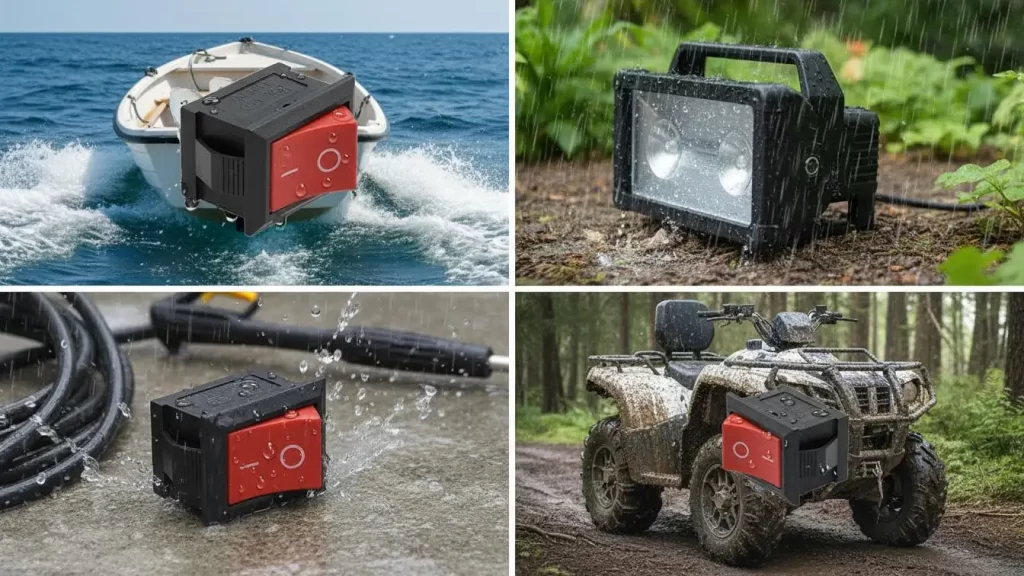
If a machine has to live outdoors - or gets washed down frequently - sealed switching becomes a smart upgrade. Common use cases include:
•Construction and industrial tools: compressors, mixers, portable saws, and site equipment exposed to dust and rain.
•Outdoor generators and backup power units: systems that must start and run consistently through rain and extreme conditions - ideal use cases for a Waterproof Rocker Switch IP65 / IP67.
•Agriculture and landscaping equipment: sprayers, pumps, and mowers regularly hit by chemicals, mud, and washdowns.
•Marine and off-road vehicles: boats, ATVs, and utility vehicles dealing with salt spray, splashing, and heavy vibration.
•Fixed outdoor installations: cleaning systems, water pumps, and control panels installed in exposed areas.
In all these scenarios, the cost of a failure is rarely the cost of the switch. It's the lost hours, the service call, the stalled job, or the safety incident.
How to Choose the Right Waterproof Rocker Switch
Not all sealed switches are equal, even if they look similar. Here are selection points that actually matter.
1) Electrical Ratings and Load Strategy
Match the switch rating to your circuit. If the switch is controlling a heavy load, consider using it to drive a relay or contactor rather than running full load current through the switch. That approach can extend switch life and reduce heat and wear at the contacts.
2) Pick IP Level Based on Real Exposure
Ask how the equipment is treated on its worst day, not the average day. If the panel may be hit with hose spray, used in storms, or exposed to standing water, choosing Waterproof Rocker Switch IP65 / IP67 options (especially IP67) can reduce surprises later.
3) Human Factors: Gloves, Speed, and Mistakes
If accidental bumps are likely, select a guarded version. A protective cover isn't just cosmetic - it's a safety feature that helps prevent unplanned shutdowns or restarts.
4) Materials and Corrosion Resistance
Outdoor and marine environments can destroy cheap metal parts quickly. Look for durable housings, quality seals, and corrosion-resistant components, especially when salt or chemicals are present.
5) Mounting and Replacement Convenience
Many rocker switches follow common panel cutout sizes, making retrofits easier. Confirm dimensions, panel thickness limits, and sealing requirements so the switch maintains its rating after installation.
Installation Practices That Protect IP Performance
Ingress protection depends on correct mechanical fit. To preserve the seal:
•Verify cutout dimensions and remove burrs that could slice the gasket.
•Clean the panel surface and confirm flatness to prevent gaps around the sealing ring.
•Apply only the recommended installation force/torque; overtightening can deform seals.
Add strain relief and route cables to prevent cyclic loading on the terminals.
• Think of sealing as a system: the switch, the panel fit, the gasket, and the cable handling all work together.
- A Small Upgrade That Strengthens the Whole Machine
Upgrading to a Waterproof Rocker Switch IP65 / IP67 can look like a minor change on a parts list, but in outdoor equipment it's often a reliability multiplier. Sealing reduces contamination-related failures, guarded designs reduce accidental operation, and consistent switching supports safer, more predictable machine behavior.
If you build, service, or operate outdoor machinery, review your control panels with a simple question: Is the switch built for the environment the machine actually faces? If not, a sealed rocker switch may be one of the most cost-effective safety and uptime improvements you can make.
Next step (CTA): Discuss your environment, load conditions, and panel requirements with your supplier or engineering team and shortlist the right Waterproof Rocker Switch IP65 / IP67 for your next design or retrofit. One small component can protect an entire workflow.
