





Waterproof Alternatives to Regular Tact Switches: The 2026 Guide
The best waterproof alternatives to regular tact switches range from IP67-rated sealed tact switches for a direct replacement, to piezo switches for vandal-proof durability, and capacitive touch sensors for a sleek, sealed hygienic surface. For extreme environments like underwater diving gear, Hall Effect switches (magnetic) are the ultimate solution as they allow the electronics to be completely encapsulated with zero physical penetration of the housing.
Choosing the right alternative depends on your "wetness level": Do you just need to survive a coffee spill (IP67 Tact), or do you need to operate 10 meters underwater (Hall Effect)?
Why Do Regular Tact Switches Fail?
Standard tact switches are "open air" devices. They rely on a metal dome flexing to touch a contact. This design has two fatal flaws in wet environments:
- Ingress: Water enters the housing, causing short circuits or corrosion (rust) on the contacts.
- Suction: The act of pressing the button creates a vacuum effect, actively pulling moisture into the switch body.
If you are redesigning a PCB for harsh environments, you may also want to explore industrial Ethernet switch alternatives to ensure your connectivity is as rugged as your user interface.
1. The "Drop-In" Fix: IP67 Sealed Tact Switches
Best for: Consumer electronics, rain exposure, budget constraints.
If you cannot change your PCB layout or casing, this is your only option.
- How it works: Manufacturers add an internal silicone membrane or O-ring seal around the actuator.
- Pros: Same "click" feel; identical footprint to standard switches; low cost.
- Cons: Rubber seals eventually degrade (typically 3-5 years in sun/ozone).
- Verdict: Good for "splash-proof" needs, but not "submersible."
2. The "Tank" Option: Piezo Switches
Best for: Industrial controls, public kiosks, heavy gloves.
Piezo switches are the go-to for vandal-resistant and outdoor applications.
- How it works: A solid metal faceplate deflects microscopically when pressed. The piezoelectric crystal inside generates a voltage pulse from this pressure.
- Waterproof Level: IP68 / IP69K (High-pressure washdown).
- Pros: 100% sealed metal surface; works with thick gloves; no moving parts to jam with ice or sand.
- Cons: Requires a "hard" press; zero travel feel (feels like pressing a rock); more expensive.
- Comparison: See how these stack up against other durable options in our guide on long-life alternatives to tact switches.
3. The "Hygienic" Option: Capacitive Touch
Best for: Medical devices, food service, modern aesthetics.
If your device needs to be wiped down with bleach or alcohol, capacitive is king.
- How it works: Detects the electrical capacitance of a finger through a plastic or glass panel.
- Waterproof Level: Infinite (The sensor is behind a solid wall).
- The "Rain" Problem: Water is conductive. Raindrops can trigger "false touches." You must use a controller chip with "Water Rejection" algorithms if this will be used outdoors.
- Read More: For a deep dive on the pros and cons, check touch sensors vs. tactile switches.
4. The "Submarine" Option: Hall Effect / Reed Switches
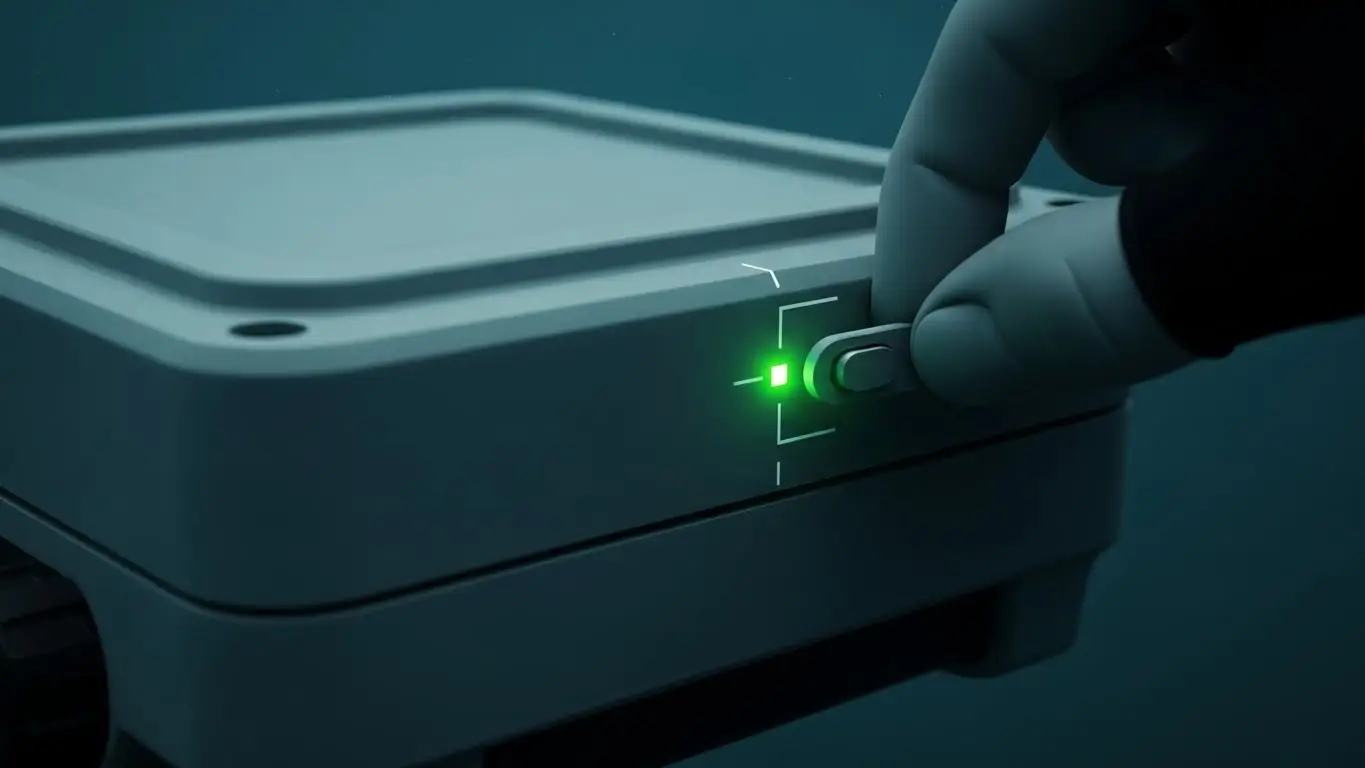
Best for: Diving equipment, underwater drones, explosive environments.
When you need to go deep, you can't have any holes in your case.
- How it works: You place a magnet inside a moving plastic button on the outside of the case. A Hall Effect sensor sits on the PCB inside the sealed case. When the magnet moves close, the switch triggers.
- Pros: Zero case penetration (magnetic field travels through plastic/aluminum); zero leak risk.
- Cons: Requires custom mechanical design for the button assembly; solid-state sensor draws constant power.
- Context: Similar to how DIP switch replacement solutions modernize configuration, Hall Effect switches modernize the very concept of actuation.
Comparison Matrix: Selecting Your Waterproof Switch
| Feature | IP67 Tact Switch | Piezo Switch | Capacitive Touch | Hall Effect (Magnetic) |
| Water Rating | IP67 (Splash) | IP68/69K (Submersion) | Sealed (Panel) | IP69K+ (Deep Sea) |
| Tactile Feel | Excellent (Click) | Poor (Stiff) | None | Good (Spring based) |
| Glove Use | Excellent | Excellent | Poor | Excellent |
| Cost | Low ($) | High ($$$) | Medium ($$) | Medium ($$) |
| Fail Mode | Seal degradation | Electronics failure | False touches (Rain) | Magnet loss |
Frequently Asked Questions
Generally, no. Water is conductive and "looks" like a giant finger touching the entire screen at once, causing the sensor to lock up or trigger falsely. For underwater use, Piezo or Hall Effect is required.
IP67 means the switch is totally protected against dust (6) and can withstand immersion in water up to 1 meter depth for 30 minutes (7). It is not rated for continuous underwater usage or high-pressure jets (that would be IP69K).
Yes. For wearables or tiny IoT devices, designers often use Metal Dome Arrays covered by a sealed adhesive layer. This provides the "click" of a tact switch with a waterproof seal in a tiny footprint. Learn more in our article on best alternatives to micro tact switches.
A Reed switch is a mechanical glass tube that needs zero power to operate (passive). A Hall Effect sensor is a chip that needs a battery. If your device needs to sit on a shelf for 10 years (like an emergency beacon), use a Reed switch.
Key Takeaways
- Splash vs. Submersion: Use IP67 tact switches for rain; use Hall Effect or Piezo for underwater.
- The "False Touch" Risk: Be careful using Capacitive Touch outdoors; rain can trigger it.
- Glove Requirement: If users wear thick neoprene or leather gloves, Capacitive will fail. Use Piezo or Mechanical.
- Sealing Strategy: The best switch is no switch. Using a Hall Effect sensor allows you to mold a completely solid plastic case with zero holes.
Conclusion
Don't just look for a "waterproof version" of a cheap switch. Ask yourself: How wet will this get? For a coffee maker, a sealed tact switch is fine. For a medical device, go capacitive. For a diving light, build a magnetic (Hall Effect) trigger. Matching the technology to the environment is the only way to guarantee reliability.
