





Top Uses of Round Rocker Switch in Electronics
Round Rocker Switch parts power more devices than you think. They sit on crowded panels and make on/off control feel natural. Designers pick them for compact size and clear feedback. Users love the confident click. In home gear, they simplify daily routines. In labs, they prevent false triggers. In racks, an illuminated option speeds checks in the dark. Yet the real value hides in the tradeoffs - space, efficiency, and safety. Today we reveal the top uses across electronics, plus small choices that cut support calls and boost reliability. One detail, often ignored, makes the biggest difference. Ready to find it?
Why Product Teams Rely On A Round Rocker Switch
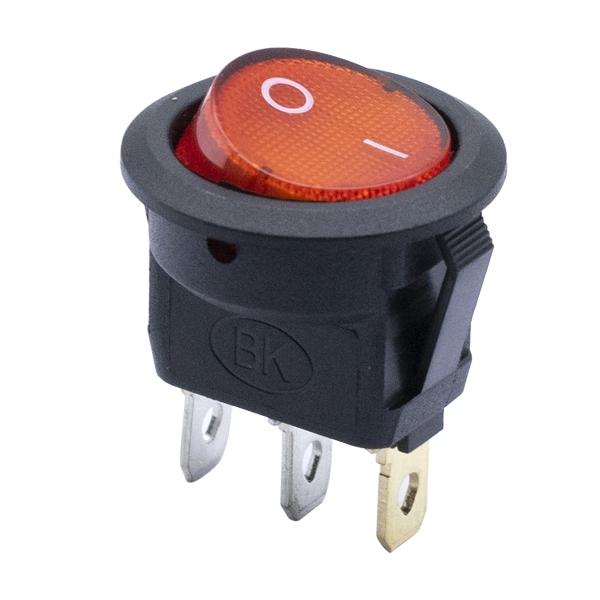
Designers rarely get more panel space or more battery capacity; they're asked to ship smaller, lighter, and more efficient devices. A Round Rocker Switch fits this reality. Its compact circular profile drops cleanly into tight bezels and curved fronts, while the short travel and crisp actuation give users a confident "click" that signals intent. In audio gear, that click helps prevent surprises: power and mute states are clear before the speakers ever wake up. In office equipment, a well-placed rocker reduces accidental activations and support tickets - fewer returns and fewer "it won't turn on" emails.
Field technicians notice the difference, too. On communication racks, an illuminated Round Rocker Switch functions as a quick status beacon in dim rooms, making it easy to confirm power at a glance. Test and measurement teams value stability even more; firm actuation reduces bounce and false triggers, which protects measurement integrity on sensitive benches. And in industrial environments, a two-position round LED variant communicates "on/off" instantly to operators who don't have time to interpret cryptic indicators.
The Hanxia Approach
At Hanxia, we build for repeatability. That means controlled tolerances and cosmetic checks so the surface shows no remarkable damage, cracks, or rust out of the box. Internally, the contact loop is engineered for stable conduction through frequent cycles, supporting commercial duty where switches see heavy use.
• Long-lasting reliability - Materials and moving parts are selected to withstand repeated actuation without "mushiness."
• Precise actuation - A consistent operating force maintains accuracy and reduces accidental toggles in crowded panels.
• Compact footprint - Saves enclosure space, simplifies cable routing, and leaves room for sensors or ports.
• Low power draw - Complements energy-saving modes and extends standby life in battery-based devices.
• Broad compatibility - Works across audio apparatus, office devices, communication equipment, measuring instruments, TV sets, and legacy media players.
✅ The Numbers That Matter On Your Schematic
• Rated value: DC 12 V, 50 mA for low-current control lines and logic-level power paths.
• Contact resistance: ≤ 100 mΩ to limit voltage drop and heat.
• Insulation resistance: > 100 MΩ to protect user safety and signal integrity.
• Operating force: 250 ± 50 g for a confident, repeatable click that users instantly recognize.
These fundamentals explain why the Round Rocker Switch is a staple in low-power control circuits and indicator-driven panels. It balances tactile feedback with electrical stability, so your interface feels solid while your electronics run cool and clean.
Real-World Use Cases (And The Pain Points They Solve)
- Audio And Entertainment: Amplifiers, soundbars, and small mixers need a power control that users can find by feel. A round rocker's tactile cue prevents "mystery states," cuts accidental shutdowns, and reduces audible pops by encouraging correct sequencing.
- Office And Home Equipment: Printers, laminators, and compact appliances often live in crowded spaces. The circular cutout keeps front panels tidy, while low power consumption supports aggressive sleep modes. Fewer components wake up unnecessarily; energy budgets stay on track.
- Communication And Networking: In dark racks, an illuminated Round Rocker Switch doubles as a status indicator. Quick visual feedback means less time spent probing lines and more time resolving the real issue.
- Measuring Instruments: Sensitive tools can't risk a double trigger. Firm, precise actuation minimizes bounce and mis-fires, preserving data integrity and reducing rework.
- Industrial Control: Operators need clarity. A two-position round LED switch conveys state without a manual, speeding onboarding and lowering training costs. The compact profile also leaves space for emergency stops and labels where they matter most.
Selection And Integration
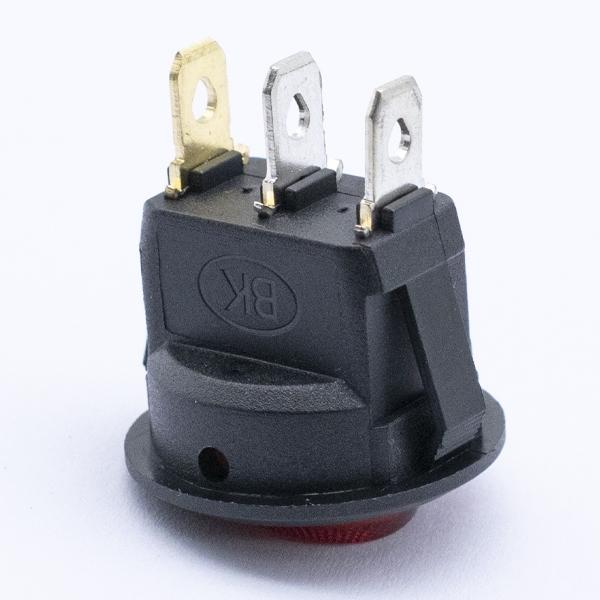
Choosing the right Round Rocker Switch is about more than matching a hole size. Start by aligning the electrical rating to the job. For logic rails and low-current paths, 12 V / 50 mA fits neatly and keeps thermal stress off your board. If you must control larger loads, use the rocker to drive a relay or a transistor stage; you preserve the feel while safeguarding the contacts.
Then map the human interface. If the device is used in dim spaces or seen from an angle, consider an illuminated option. It cuts support questions and speeds troubleshooting. Think about assembly as well: short lead lengths, clear labeling, and a keyed orientation reduce build time and cut wiring errors.
✅ Integration Tips You Can Use Right Now
- Match rating to the load: Keep within 12 V / 50 mA, or switch a driver stage for higher currents.
- Reserve panel space: The compact round profile simplifies tight layouts and curved industrial design.
- Prioritize feel: The 250 ± 50 g operating force yields a decisive, trustworthy click.
- Design for life: ≤ 100 mΩ contact resistance helps minimize heat and loss over repeated cycles.
For portable products, a mini round rocker switch 12V supports dense control clusters without sacrificing ergonomics. If status clarity is part of your safety case, a round illuminated rocker switch delivers unmistakable feedback with minimal UI complexity.
❓ Why This Choice Improves Total Cost Of Ownership
Switches seem small, but poor choices ripple through a product's lifecycle. Vague feedback creates user errors; inconsistent actuation turns into return merchandise authorizations; unnecessary power draw drains batteries and inflates support scripts. By specifying a Round Rocker Switch with proven tactile behavior and low resistance, teams reduce NFF ("no fault found") returns, shorten diagnostics, and streamline training. The result is a quieter support inbox and higher customer satisfaction without a penny added to bill of materials for "smart" features you don't need.
At Hanxia, we manufacture Round Rocker Switch solutions that respect your constraints and your brand promise. We combine controlled tolerances, robust cosmetic standards, and dependable internals so your interface feels premium - and stays that way.
Call To Action
Planning a refresh or a new build? Talk to Hanxia about samples, application notes, and fast production support. Let's integrate a reliable, space-saving Round Rocker Switch that elevates your user experience - one precise click at a time.
