





How Potentiometer With Push Button Switch Reduces Circuit Complexity
Designing a clean PCB is hard. Space is tight. Timelines are tighter. A Potentiometer With Push Button Switch looks like a small choice, yet it can reshape your whole layout. One control. Two actions. Fewer traces. Less risk. Your UI feels simpler. Your test plan gets shorter. But the real payoff hides in production and reliability. Why do fewer parts speed certification? How does this choice cut noise and field failures? And what trade-offs should you avoid in firmware and mechanics? In the next section, we reveal the key patterns, a quick checklist, and a surprising test result.
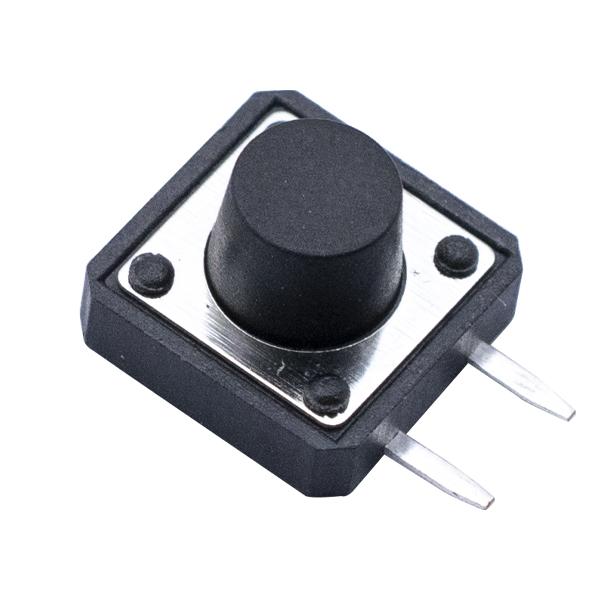
Why Integrating One Control Reduces Real-World Complexity
Most projects still treat "adjust" and "confirm" as two separate parts: a rotary potentiometer for setting and a discrete push switch for action. That split approach adds traces, vias, connectors, and BOM lines. It also increases firmware paths for debounce and fault handling. By merging rotation and confirmation in one control, you remove wiring, free board area for radios or batteries, and gain a simpler test plan. In compact consumer electronics, every millimeter and every fixture change matters.
At the factory, fewer parts mean fewer reels to manage and a shorter pick-and-place program. AOI gets simpler because there are fewer solder joints to inspect. In the field, fewer mechanical interfaces translate to fewer intermittent faults. Our customers in audio equipment, wearables, and smart appliances consistently report that a Potentiometer With Push Button Switch helps them hit thickness, weight, and reliability targets while keeping the interface intuitive: turn to set, press to confirm.
✅ Common Pain Points It Solves
• Extra routing and vias for a separate switch
• Bulky or fragile harnesses inside tight enclosures
• Inconsistent button feel across mixed suppliers
• Longer test time due to more contact points and fixtures
The integrated control also improves UX. Users do not hunt for a second button. They complete the action at the control they are already touching. That small change reduces mis-presses, cuts returns, and shortens onboarding time in consumer products.
What Makes Hanxia's Integrated Control Different
Hanxia builds for real assembly lines and real usage conditions. Our 12×12 tactile architecture suits dense boards and clean front panels. The compact footprint saves space and makes shielding and grounding more predictable. Mechanical design teams can standardize on a single opening, a single knob family, and a single fastening scheme across multiple products.
- Precise Actuation, Stable Feel
We tune the actuation so rotation and press feel consistent across lots. Stable feel reduces firmware edge cases and false triggers during compliance tests. It also cuts support tickets caused by "soft" or drifting buttons.
- Low Power For Portables
Low quiescent and actuation power help you meet battery budgets without redesigning the power tree. For remotes and wearables, tiny savings accumulate into noticeable runtime.
✅ Ready For Consumer Electronics
- Rating: 50 mA at 12 VDC supports common control stages.
- Insulation Resistance: ≥ 100 MΩ to limit leakage and noise coupling.
- Dielectric Strength: 250 V at 50 Hz for 1 minute for added safety margin.
- Operating Force: 70 gf ± 30 gf, a crisp click without user fatigue.
- Operating Temperature: −20 ℃ to 80 ℃ for global climates.
- Contact Structure: Single contact loop for straightforward routing and test.
These characteristics make the Potentiometer With Push Button Switch a natural fit for home appliances, entertainment systems, handheld controllers, and personal electronics. Designers avoid add-on parts for "feel" tuning, and test teams spend less time reworking fixtures or revalidating thresholds.
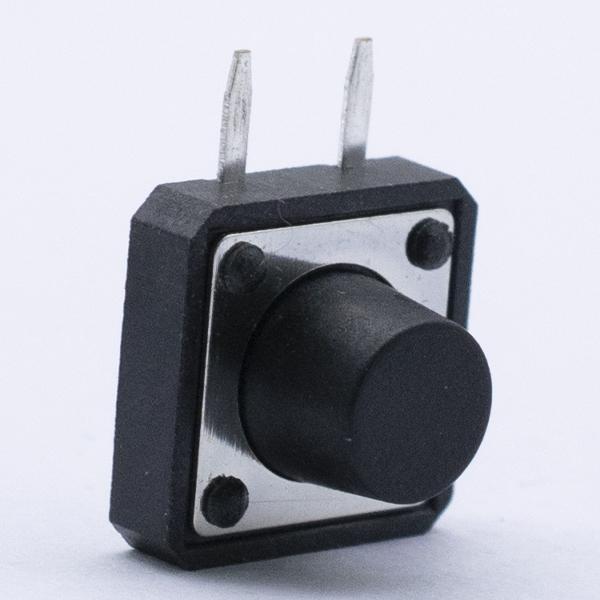
✅ Electrical And Mechanical Highlights
- Compact 12x12 footprint that simplifies panel and PCB co-design
- Consistent tactile response that helps pass compliance on the first try
- Low power behavior that extends battery life in portables
- Materials and finishes selected to resist cracking, rust, and visible wear
Real applications include mode select + confirm in appliances, volume trim + mute in audio gear, and menu navigate + enter in wearables and remote controls. In each case, one control replaces two components, which reduces risk and makes the interface more direct.
How Hanxia De-Risks Your Launch
Reducing circuit complexity only helps if your supply chain stays simple. Hanxia aligns product, process, and service so your team can move from EVT to mass production with fewer surprises.
Founded in 2014, we support 7,500+ customers across the U.S., Germany, South Korea, Taiwan, and Hong Kong. Our 38 fully automated production lines deliver over 2 million units per day. That scale protects your schedule during launch ramps and seasonal spikes. We partner with Korean automation specialists to maintain tight dimensional control, which keeps actuation feel consistent from lot to lot. Every unit is 100% factory tested - from incoming material checks to final inspection - so you receive parts that meet performance and durability targets the first time.
Logistics should not block a release. We back shipments with a 90-day return policy, giving your team room to prototype, validate, and refine without procurement risk. Hanxia application engineers provide fast, practical help on panel thickness, knob mass, and debounce timing so your Potentiometer With Push Button Switch integration remains predictable as the enclosure, gasket, or UI evolves.
✅ Implementation Tips For Faster Design-In
- Keep traces short and guard around the wiper node to reduce noise
- Share a clean ground reference for rotation and press to improve stability
- Validate user feel in the final enclosure; knob mass changes perception
- Separate firmware debounce profiles for press vs. rotation events
Small process choices also pay off. Plan for consistent torque in knob assembly to avoid feel drift. Use test points near the wiper to accelerate EVT diagnostics. Document the press-and-hold map early so UX and firmware do not diverge.
Final Words
If you want a cleaner PCB, fewer parts, and a more intuitive interface, explore Hanxia's Potentiometer With Push Button Switch solutions. Request samples, reliability data, and DFM guidance today. We'll help you shorten your BOM, stabilize user feel, and reach market on time.
