





Metal Push Button Switch vs Plastic: Which Is Better
The choice looks simple. It isn't. A Metal Push Button Switch feels solid. Plastic feels light. Metal resists heat, oil, and knocks. Plastic cuts cost and weight. Metal shines in harsh sites. Plastic thrives in consumer gear. But there's more. Hidden trade-offs lurk in safety, lifespan, and touch. Your project could win or fail on this call. Which one truly suits your panel, lab, or robot? From Hanxia's seat on the factory floor, the answer isn't one-size-fits-all. It depends on where the product lives, how often it's used, and what downtime would cost your team. In this guide, we share how we think through the trade-offs, how our manufacturing keeps quality steady at scale, and a simple framework to help you choose with confidence.
The Real-World Trade-Offs You Should Consider
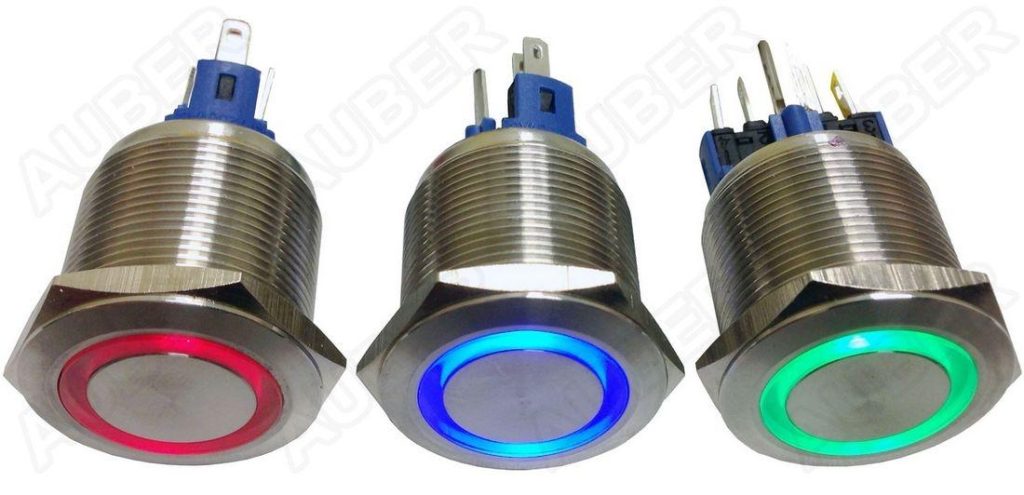
If you design for tough environments, metal earns its keep. A Metal Push Button Switch brings a rigid housing, better scratch resistance, and a solid, premium feel that operators trust. Plastic switches keep weight and cost low and are ideal for benign indoor spaces. Neither is "always right" - the use case decides.
Tactile feedback is often overlooked, yet it shapes user behavior. In noisy bays or on a line where gloves are standard, the sharper click of a Metal Push Button Switch reduces mis-triggers and speeds training. Plastic can flex more under load. That is fine in a small appliance or kiosk, but it may frustrate crews on industrial control panel switches that see thousands of cycles each week.
Ingress and aging deserve attention, too. Sealed designs protect against dust and moisture, but seals only work when the body holds shape. Metal maintains gasket compression through heat cycles and solvent exposure better than many plastics. For outdoor, marine, or washdown duty, metal plus proper sealing (for example, IP67 metal push button switch applications) offers safer margins. In clean, air-conditioned cabinets, plastic is often the smartest spend.
Where each material typically fits:
- Rugged & Public Spaces: Machinery, vehicles, marine panels, access terminals → Metal resists impact, vandalism, and abrasion.
- Cost-Sensitive & Indoor: Kiosks, consumer devices, light-duty fixtures → Plastic balances price, weight, and adequate performance.
- Premium Brand Aesthetics: Brushed or anodized metal elevates perceived quality at first touch.
- Thermal or Chemical Exposure: Metal housings keep alignment under heat and solvents, preserving long-term feel.
✅ Quick Decision Snapshot
- Durability & Impact: Metal wins; plastic optimizes cost and weight.
- User Feel: Metal delivers crisp, repeatable actuation; plastic can feel softer.
- Sealing Stability: Metal helps seals last across temperature swings and vibration.
- Total Cost Of Ownership: Factor downtime and replacement, not only the unit price.
How Hanxia Builds Switches For Consistent Performance
At Hanxia, stable quality starts long before the assembly line spins up. We collaborate with top Korean counterparts for technical exchanges and innovation, then source high-quality raw materials that match the duty profile you specify. Good inputs and shared know-how reduce variation later and shorten your path to a qualified part.
Our factory uses fully automated assembly to minimize human error. Fixtures hold tolerances tight; closed-loop tools track torque, depth, and timing. After assembly, automated inspection and functional testing confirm every unit against strict criteria. Only switches that meet spec move to packaging. This process isn't flashy - but it's what keeps your build schedule predictable.
What you can expect working with Hanxia:
- Throughput With Precision: 38 fully automated lines and >2 million units/day capacity to support launches and seasonal peaks.
- Certified Assurance: Products comply with CE, REACH, and ROHS 2.0; multiple patents back our design choices.
- Systemic Quality: ISO 9001 certification underpins our documentation, traceability, and corrective action flow.
- Tailored Solutions: From actuation force to LED color and terminal style, we tune details to your harness, panel thickness, and interface needs.
This is why a Metal Push Button Switch from one vendor can feel different from another - materials matter, but process discipline keeps the "click" consistent from unit one to unit one million. That consistency protects your brand and your service costs.
✅ Product Notes From The Line
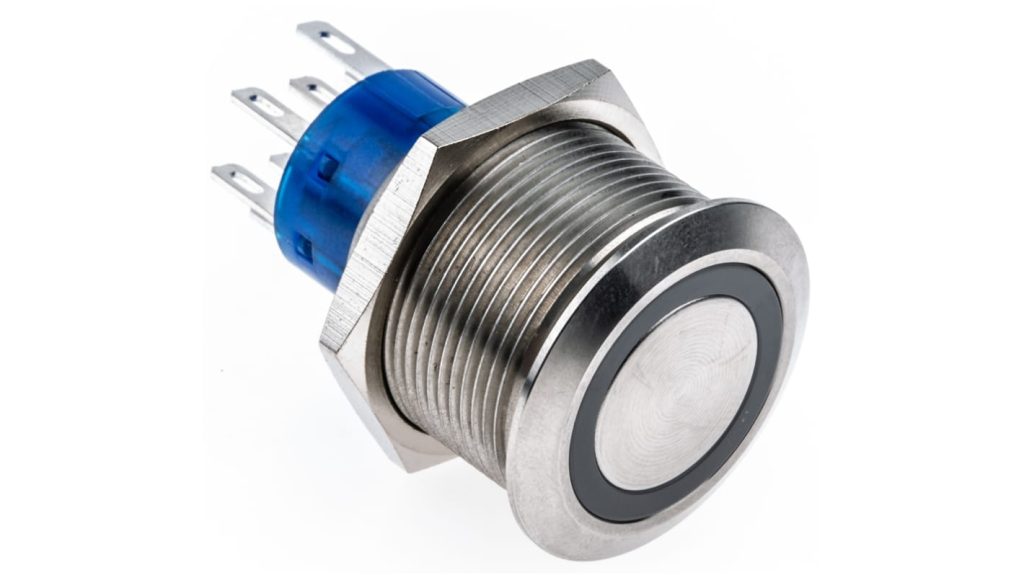
- Materials & Finishes: Stainless or aluminum alloy housings with brushed or anodized finishes resist wear and elevate appearance.
- Sealing Options: Panel and rear sealing options to meet IP targets without complicating assembly.
- Terminals & Wiring: Solder lug, screw, and quick-connect variants speed integration and maintenance.
- Illumination: Uniform LED rings or symbols that stay legible in bright bays, with efficient thermal management.
A Practical Framework To Choose Metal Or Plastic
Start with the environment, then layer in user experience, compliance, and lifecycle cost. Map the switch's daily reality: temperature, vibration, liquids, dust, gloves, and the cost of a failure. When uncertainty remains, test the edge case - not the easy case.
Selection checklist you can run with your team:
- Environment: Heat/cold range, dust, liquids, oil/chemical exposure, vibration, impact risk.
- User Interface: Actuation force, travel, tactile profile with/without gloves, indicator visibility at distance.
- Compliance & Proof: Required marks and documentation (CE, REACH, ROHS 2.0), and test reports to match.
- Production Fit: Panel thickness, cut-out standard, terminal style, assembly steps, test method at end-of-line.
- Lifecycle Math: Replacement frequency, access time, field service skill level, downtime penalties, warranty targets.
Rule of thumb:
If the switch will see abuse, vibration, or public interaction, a Metal Push Button Switch usually wins on total cost of ownership. If the product is compact, price-sensitive, and lives indoors, modern plastic designs can meet spec while preserving budget.
✅ Example Scenarios
- Outdoor Payment Terminal: Wide temperature swings, rain, and vandal risk → Metal, sealed to IP67, with tamper-resistant profile.
- Compact Home Appliance: Light duty, indoor use, strict BOM target → Plastic with clear tactile feedback, simplified wiring.
- Factory Control Pod: Gloves, noise, and long shifts → Metal with higher actuation clarity and bright indicator to reduce errors.
At Hanxia, we don't start with a part number - we start with your constraints. Share your environment, expected cycles, and annual volume, and we'll propose a metal or plastic configuration with a clear rationale on feel, sealing, and lifecycle cost. Our engineers can prototype quickly, validate with automated functional testing, and scale without changing the user experience you approved.
Call To Action
Ready to lock in the right switch? Contact Hanxia for a fast application review and a tailored BOM recommendation. Whether you need a premium Metal Push Button Switch for harsh duty or a cost-effective plastic alternative for controlled settings, we'll help you ship on time, to spec, and at scale.
