





How DIP Switches Are Used in Basic Electronics
DIP switches are used in basic electronics to manually configure hardware settings without the need for software code or external programmers. By toggling individual switches in a block to "On" or "Off," users create a unique binary code that the device reads to determine its behavior.
Common applications include setting the frequency for garage door openers, assigning unique addresses to sensors on a network, or selecting difficulty modes on arcade circuit boards. They provide a permanent, visual way to "set and forget" options, ensuring the device retains its configuration even when power is lost.
What Is the Main Role of a DIP Switch?
At its core, a DIP (Dual In-line Package) switch is a device that allows you to change the flow of electricity in a circuit manually. Unlike a standard push button used for typing, a DIP switch is designed to be set once and left alone.
Think of it as the "Options Menu" for hardware. Instead of scrolling through a screen to change settings, you flip physical levers. For a broader look at how these components fit into the larger family of circuit board parts, check out our guide on What Beginners Should Know About PCB Switches.
Transforming Physical Swaps into Digital Signals
When you flip a switch, you are either completing a circuit (allowing current to flow, usually read as "1") or breaking it (stopping current, read as "0"). The microcontroller on the board reads this state to know how to act.
How Do DIP Switches Create Binary Codes? (PAA)
DIP switches create binary codes by combining multiple switch positions to represent a single number. Each switch corresponds to a power of two ($1, 2, 4, 8, 16...$), allowing a small block of 8 switches to create 256 unique combinations.
Understanding the Logic
If you have an 8-position DIP switch, the device reads the combination of ups and downs as an address. This is critical for systems like remote controls or DMX lighting, where multiple devices share the same wire or airwaves but need to listen to different commands.
To master the math behind setting these specific codes, I highly recommend reading our Beginner’s Guide to DIP Switch Configuration, which breaks down the binary calculation step-by-step.
Can DIP Switches Be Used for User Input? (PAA)
While technically possible, DIP switches are rarely used for active user input because they are too small and difficult to actuate quickly. They are designed for semi-permanent configuration, not for the frequent pressing required by user interfaces.
The Better Alternative for Input
If you are building a project that requires a user to constantly interact with the device—like a reset button, a volume control, or a keypad—you should not use a DIP switch. The actuators are tiny and often require a tool to move.
For user interaction, you should use a Tactile Switch. These are designed for millions of presses and provide the satisfying "click" users expect. You can learn the difference in our Introduction to Tact Switches.
Common Applications in Electronics
You will find DIP switches in a surprising number of places once you know where to look
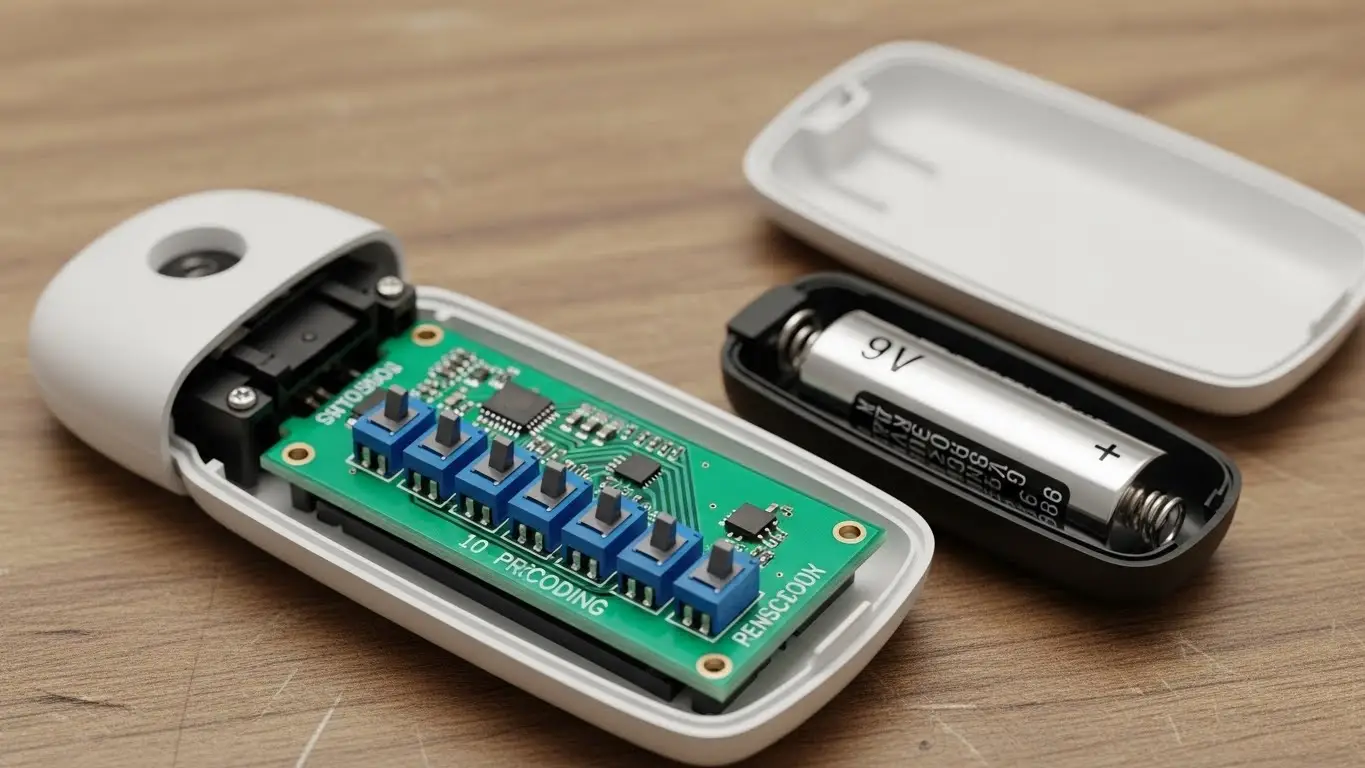
1. Multi-Device Networking
In industrial automation, sensors often communicate over a single cable (like RS-485). Each sensor needs a unique ID (Address 1, Address 2, etc.) so the main computer knows which one is talking. A DIP switch on the back of the sensor sets this ID.
2. Frequency Matching
Older garage door openers and ceiling fans use DIP switches to match the remote control to the receiver. If your neighbor's remote opens your garage, it's likely because you both have the DIP switches set to the default factory code.
3. Mode Selection
Development boards often use them to select boot modes. For example, Switch 1 might tell the board to "Boot from Flash Memory," while Switch 2 tells it to "Boot from USB."
For more examples of how these switches handle rugged environments and complex networks, refer to our Industrial Switches Comprehensive Guide.
What Are the Advantages of Hardware Configuration? (PAA)
The main advantages of using DIP switches for configuration are simplicity, permanence, and visual verification. You do not need a computer, a screen, or a driver update to check the settings; you simply look at the physical position of the switches.
Why Not Just Use Software?
Software can glitch, memory can be corrupted, and passwords can be forgotten. A physical switch is "non-volatile." If the power goes out for ten years, when you turn it back on, the switch is still in the same position.
- Security: Harder to hack remotely since the setting is physical.
- Diagnostics: A technician can walk up to a machine and see exactly how it is configured without plugging in a laptop.
Integrating DIP Switches into a Circuit
If you are a student or hobbyist adding a DIP switch to your breadboard or PCB, there is one critical concept to understand: The Pull-Up Resistor.
Microcontrollers hate "floating" signals. If a switch is open, the wire isn't connected to anything—it acts like an antenna picking up static.
- Switch Open (Off): The resistor "pulls" the voltage up to 5V (High Signal).
- Switch Closed (On): The switch connects the pin directly to Ground (Low Signal).
Without this resistor, your electronics will behave erratically.
Frequently Asked Questions
No, DIP switches are passive components. They do not consume power themselves; they simply allow or block the current that is already flowing through the circuit.
It is generally unsafe to adjust DIP switches while the device is powered. The device usually only reads the switch state during the "boot-up" sequence. Changing it while on might be ignored or cause the software to crash.
Standard DIP switches typically come in blocks of 1, 2, 4, 8, 10, or 12 positions. The most common is the 8-position switch because it aligns perfectly with an 8-bit byte in computing.
Standard DIP switches are not waterproof. If you are using them in a humid environment or an outdoor sensor, you must buy "sealed" versions, often covered with a protective tape or membrane.
Key Takeaways
- Function: DIP switches are used for semi-permanent hardware configuration, not active user input.
- Logic: They work on binary logic (On/Off), often using groups of switches to create numerical addresses.
- Simplicity: They offer a visual, reliable way to set options without needing software or screens.
- Circuitry: Always use pull-up or pull-down resistors when connecting them to a microcontroller to ensure a clean signal.
Conclusion
Understanding how DIP switches are used in basic electronics gives you control over your hardware. Whether you are coding a new prototype or fixing an old remote, these small components provide the reliable, physical logic that keeps devices running correctly.
Now that you understand the usage, make sure you have the right tools to set them. Review the step-by-step process in our Beginner’s Guide to DIP Switch Configuration before you start flipping levers.
