





What Custom Push Button Switch Options Improve User Safety
When a machine starts with a single press, the Custom Push Button Switch is often the quiet hero behind it. It is the small control on your panel that turns power on, stops a motor, or triggers an alarm. It decides how the device feels in the hand and how clearly the status is shown to the user. But not all push buttons are equal, especially when safety is on the line. So which Custom Push Button Switch options actually protect people, and which are just "nice to have"? Let's look closer.
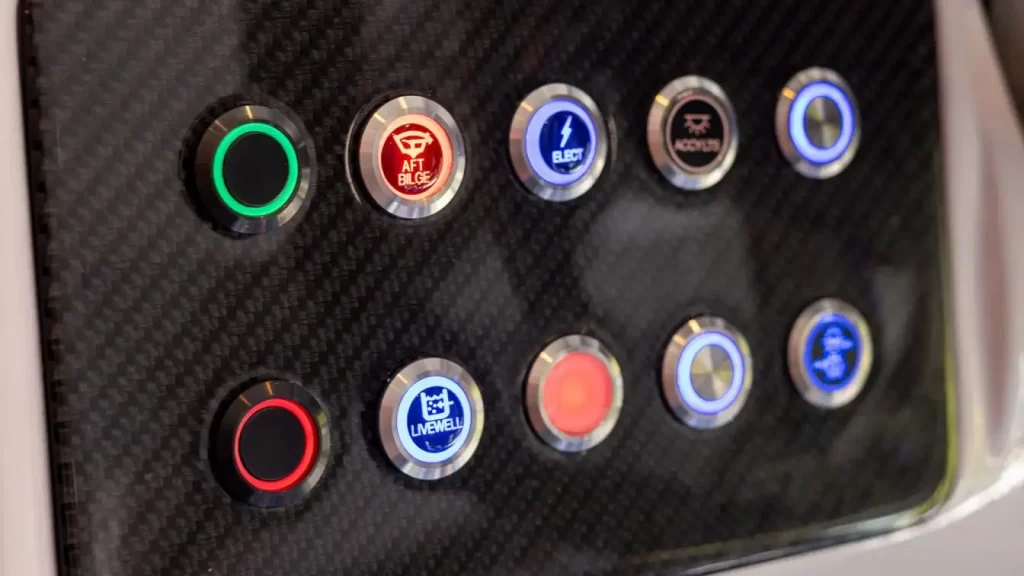
Why The Right Custom Push Button Switch Matters For Safety
Accidents in the field rarely happen because "everything exploded at once." They usually start with tiny, annoying issues that repeat: a button that feels vague, an LED you can't see in bright light, or a control that activates when someone brushes past it. A well-specified Custom Push Button Switch lets you remove many of these weak points before the product ever leaves your factory.
Think about the real environment your device will face:
❓ Will operators wear thick gloves or work with oily hands?
❓ Is the equipment used outdoors, around coolant, or near cleaning chemicals?
❓ Could a stray elbow or dropped tool hit the switch by mistake?
Each of these questions points to a specific set of options: stronger sealing, guard rings, a higher actuation force, or a larger illuminated cap.
Reliability over time is just as critical. A switch might feel perfect on day one but become stiff, inconsistent, or noisy after tens of thousands of cycles. That's when safety incidents start to creep in. When evaluating a Custom Push Button Switch, pay attention to the rated mechanical and electrical life, the stability of the actuation force, and whether the contact type matches your load (for example, inductive DC motors versus simple resistive loads).
Human factors are the other half of the story. People need three things from a safety-related control: clear intent ("this is the right button"), clear feedback ("I definitely pressed it"), and clear status ("the machine is on or off"). Cap size and shape, color, symbol, and the quality of the tactile click all play into that. A Custom Push Button Switch that nails these basics will feel safe and intuitive even for new or stressed operators.
Which Custom Push Button Switch Options Actually Improve User Safety
Not every fancy feature on a datasheet makes your product safer. Some are pure convenience, others are mainly about aesthetics. The options below typically offer the biggest safety gains in real-world applications.
1) Design Features That Prevent Misuse
• Guarded Or Recessed Bezels
A slightly raised bezel or guard ring around the Custom Push Button Switch can dramatically cut accidental activations, especially on crowded panels or handheld tools that get tossed into bags or drawers. It forces a more deliberate press, which is exactly what you want for critical functions.
• Momentary vs. Latching Operation
For quick "start," "confirm," or "reset" actions, a momentary switch is usually safer: the machine responds only while the user is actively pressing. Latching (on/off) switches are better for power or mode selection, where a clear, stable state is needed. Matching the logic to the action avoids confusion and reduces the risk of leaving equipment in an unsafe state.
• Redundant or Independent Contacts
A Custom Push Button Switch with multiple contact sets lets you build in redundancy or monitoring. One contact can drive the control circuit, while another feeds a safety relay or a status input to your controller. If one side fails or behaves abnormally, your system can detect it and fail safely.
• Appropriate Contact Materials
Using the wrong contact material for your load can lead to welding, pitting, or bounce. That's not just a reliability issue; it can cause unexpected starts or intermittent stops. Choose contact technology and ratings that match your voltage, current, and load type - not just the cheapest option that "kind of" fits.
2) Human-Centered Feedback And Visibility
A good Custom Push Button Switch doesn't just switch a circuit. It communicates.
- Use high-contrast colors and well-known conventions: red for emergency stop, green for start or "safe," blue or white for general functions.
- Consider larger diameters and textured caps where gloves are common, so users can find and press the button without looking down for several seconds.
- Favor low-glare or matte finishes so legends remain readable under strong lighting, sunlight, or after repeated cleaning.
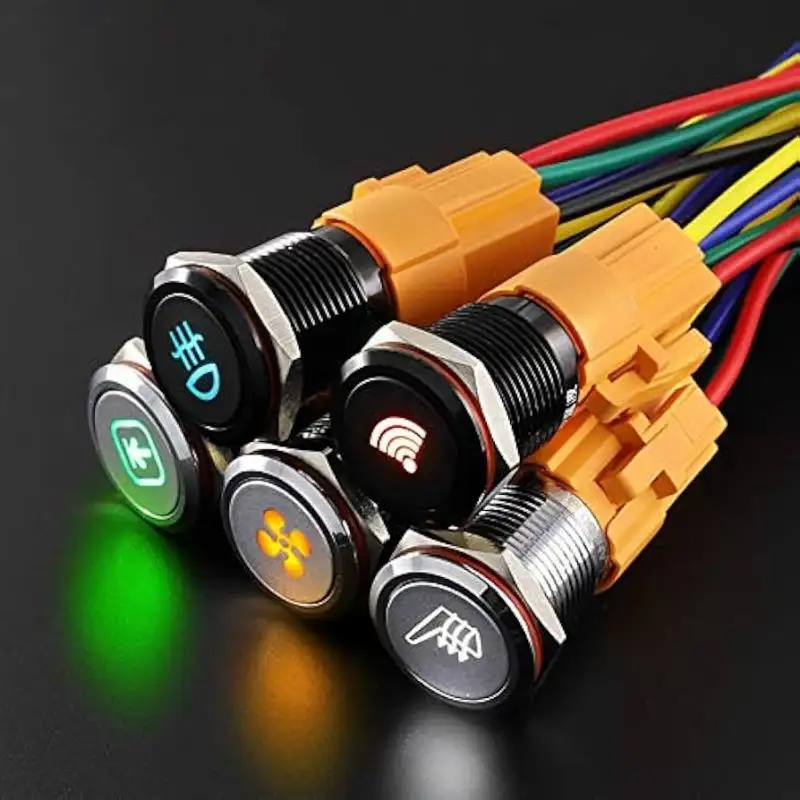
Tactile and audible feedback are small details that build confidence. A crisp, consistent click tells the operator, "You've activated the function - no need to slam the button again." Status illumination completes the picture. A ring light, halo, or backlit symbol can show machine state from across the room. Using steady, flashing, or bi-color LEDs to signal different states helps prevent unsafe assumptions in noisy or low-visibility environments.
- Environmental And Regulatory Considerations
• Sealing And Ingress Protection
If your device lives in dusty workshops, outdoor enclosures, or near liquids, an IP-rated Custom Push Button Switch is essential. Good sealing keeps moisture, dust, and cleaning agents away from the contacts and internal mechanism, reducing the risk of shorts or false triggering.
• Resistance To Vibration And Shock
Industrial and automotive equipment can shake a panel to pieces over time. Choose switches with robust housings, anti-rotation tabs, and secure mounting hardware so that labels stay aligned and the switch does not loosen or spin, which can confuse users and lead to incorrect operation.
• Material Safety And Flammability
Non-corrosive metals and self-extinguishing plastics support long-term safety, especially where heat, chemicals, or UV exposure are part of the environment.
• Standards And Certifications
Whenever possible, specify a Custom Push Button Switch that aligns with the standards relevant to your market and application. Suitable certifications won't solve every safety problem, but they do provide a baseline for insulation, creepage distance, and other critical aspects of design.
How To Specify And Validate The Right Custom Push Button Switch
Turning all of this into a clear specification is where many teams struggle. A simple, structured approach helps you avoid missed details and last-minute redesigns.
Start with a short "safety story" for the switch: Who uses it, in what conditions, and what could go wrong if it fails or is pressed accidentally? From that story, extract concrete requirements:
• If accidental activation is a risk, call for a recessed or guarded bezel and a minimum actuation force.
• If visibility is a concern, specify illumination type, color logic, and minimum viewing angles.
• If the device is portable, define how easy it should be to press with one hand while holding the unit with the other.
Next, lock down the mechanical and electrical integration. Define panel cutout size, panel thickness, connector type, wiring space, and the number of poles and throws you actually need. This prevents you from choosing a Custom Push Button Switch that looks great but forces awkward cabling or compromises later.
Before you sign off, run a lightweight validation plan. It doesn't have to be complex:
• Check Actuation Feel: Measure and compare actuation force across multiple samples; make sure the click is distinct and consistent.
• Review Visual Feedback: Test the LED and legends in bright sunlight, indoor lighting, and dim conditions.
• Cycle And Durability Tests: Run realistic switching cycles and see whether feel or electrical behavior drifts.
• User Trials: Let both experienced and new operators try the interface; watch for mis-presses, hesitation, or confusion around status.
• Failure Mode Review: Confirm what happens if the switch fails open or closed and that your system behavior remains as safe as possible.
Finally, involve your purchasing team early. Ask suppliers for life and ingress ratings, material information, and test reports. Request samples in the exact configuration you plan to use - same cap color, legend, bezel, illumination, and contacts - so your evaluation matches the final product.
Closing Words
If you're working on a device where safety and usability can't be left to chance, consider reviewing your current Custom Push Button Switch choices. Our team can help you evaluate risks, compare options, and configure a switch solution that fits your environment, user profile, and compliance needs - so every press is safer, clearer, and more reliable.
