





Best Waterproof Tact Switches for Outdoor Electronics: The Engineering Guide
The best waterproof tact switches for outdoor electronics utilize a sealed membrane design (typically IP67 or IP68 rated) combined with UV-resistant actuator materials (like Silicon or PBT) and a high actuation force (above 160gf).
For reliable outdoor performance, a simple "waterproof" label isn't enough. You must balance ingress protection against tactile feedback, ensuring the heavy sealing doesn't result in a "mushy" button feel. Furthermore, the switch must withstand thermal cycling and ultraviolet exposure without the rubber boot cracking over time.
Understanding IP Ratings: IP67 vs. IP68 for Outdoor Use
When selecting switches for outdoor interfaces, the Ingress Protection (IP) rating is your starting point. However, higher isn't always necessary.
What is the difference between IP67 and IP68 tact switches?
IP67 switches are rated for temporary submersion (1 meter for 30 minutes), making them ideal for heavy rain and washdowns. IP68 switches are rated for continuous submersion under pressure.
- Choose IP67 if: Your device is mounted on a wall, pole, or vehicle (e.g., Industrial Ethernet Switches) where it faces rain, snow, and cleaning jets but won't be underwater.
- Choose IP68 if: Your device is a marine application, a buoy, or a ground-level sensor that might sit in a puddle for days.
Material Science: The "Sun" Factor
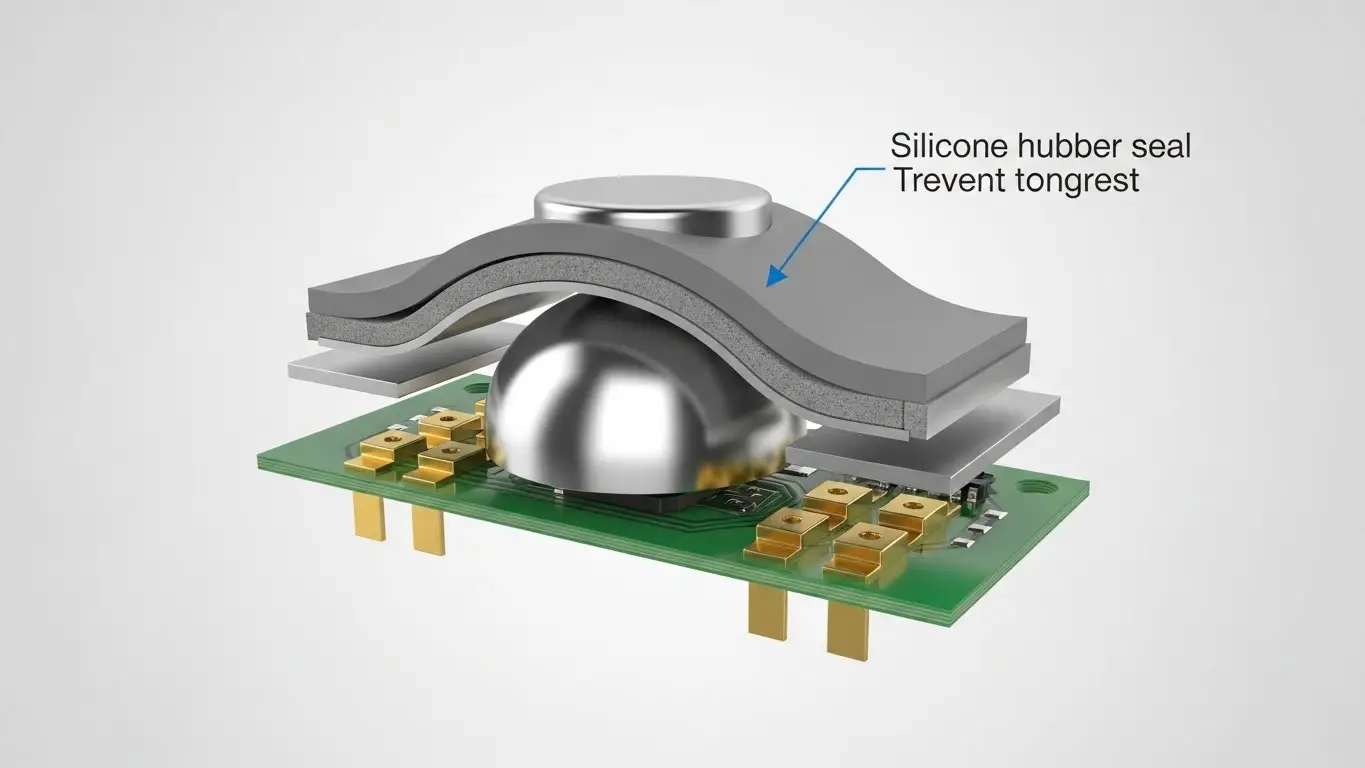
Water isn't the only enemy. Outdoor electronics are constantly exposed to UV radiation and extreme temperature shifts. A standard black plastic actuator can become brittle and crack after two years of sun exposure, compromising the waterproof seal.
Key Material Features to Look For:
- Silicone Actuators: Silicone is naturally resistant to UV and extreme temperatures (-40°C to +85°C), maintaining flexibility without cracking.
- Gold-Plated Contacts: Outdoor environments usually imply humidity. Gold contacts prevent oxidation (rust) inside the switch, which causes intermittent signal failures in low-voltage IoT devices.
- Stainless Steel Domes: Ensure the internal dome is corrosion-resistant to maintain the "snap" even if minor moisture ingress occurs over decades.
Solving the "Mushy" Button Problem
One common complaint with sealed switches is poor haptic feedback. The rubber seal acts as a dampener, absorbing the sharp "click" feel.
The Solution: Increase Actuation Force. If you usually use a 160gf (gram-force) switch indoors, upgrade to 260gf or 300gf for the outdoor sealed version. The extra force cuts through the resistance of the rubber seal, restoring the crisp tactile feedback users expect.
Design Integration: Venting and Potting
Selecting the switch is only half the battle; integrating it into your PCB design is the other half.
1. The Vacuum Effect
If your enclosure is perfectly sealed, temperature drops (like a sudden rainstorm on a hot case) create a vacuum inside the device. This vacuum can suck water through the switch seal.
- Tip: Use a gore-vent or a breathing membrane elsewhere in your enclosure to equalize pressure, reducing stress on the switch seals.
2. Potting Compatibility
Many outdoor devices use potting compound (epoxy) to protect the PCB.
- Warning: Ensure your tact switch is "pottable." It needs a sealed base to prevent the liquid epoxy from wicking up into the mechanism and cementing the button permanently shut.
For complex control boards involving multiple components, such as those found in automation systems, ensure the switch profile is high enough to protrude above the potting layer.
Applications and System Integration
Waterproof tact switches rarely work alone. They are part of a larger communication and control ecosystem.
- Communication Modules: In 5G and radio transmitters, switches are used for external "Pairing" or "Reset" functions. These are critical fail-safes that must work even after years of inactivity. Learn more about selecting switches for communication modules.
- Smart Metering: Outdoor utility meters use high-force, sealed tact switches for user wake-up functions, requiring 10+ year lifespans.
- Heavy Machinery: Construction and agricultural equipment panels use IP67 switches to withstand pressure washing.
Frequently Asked Questions
Yes, most IP67-rated switches are "process sealed." This means they can withstand the standard washing cycles used to remove flux residue after soldering. However, always check the datasheet for "washable" certification, as some seals are only meant for rain, not chemical solvents.
A high-quality waterproof tact switch typically offers a life cycle of 100,000 to 1 million cycles. However, in outdoor settings, the limiting factor is often the environmental material degradation (rubber aging) rather than the mechanical spring fatigue.
It depends on the design. If the switch is behind a membrane panel, the panel provides the primary seal. If the switch protrudes through the casing (exposed directly to air), the switch must be internally sealed (IP67), and a secondary external rubber boot is recommended for extra UV protection
Key Takeaways
- Prioritize UV Resistance: Water isn't the only threat; ensure actuators are made of Silicone or UV-stable thermoplastics.
- Match Force to Seal: Use higher actuation forces (200gf+) to overcome the damping effect of waterproof seals.
- Check the "Process Seal": Ensure the switch can survive your manufacturing wash process, not just the rain.
- Pressure Management: Design your enclosure to vent pressure, preventing the "vacuum effect" from sucking water past the switch seals.
Conclusion
Selecting the best waterproof tact switch requires looking beyond the IP rating. By balancing sealing with haptic feedback and choosing materials that withstand the sun as well as the rain, you ensure your outdoor electronics remain reliable for years. Whether you are building industrial gateways or remote IoT sensors, the switch is your first line of defense against the elements.
