





Alternatives to Slide DIP Switches: The Engineering Guide
The best alternatives to slide DIP switches depend on your specific constraint. For space savings, use Rotary Coded Switches (saving up to 75% PCB area). For cost reduction, use Jumper Headers or Zero-Ohm Resistors. For modern automation, replace physical switches entirely with Firmware Configuration (GPIO strapping) or NFC provisioning.
Why Are Engineers Replacing Slide DIP Switches?
The classic slide DIP switch has been a staple of PCB design since the 1970s, but modern constraints are making it obsolete. While reliable, the linear "sliding" mechanism is footprint-inefficient and often difficult to seal against moisture compared to newer rotary or solid-state options.
As of late 2024, our internal engineering data at HX-Switch indicates a 40% shift in new industrial designs moving away from multi-position slide switches toward rotary and software-defined alternatives. This shift is driven by three key factors:
- Miniaturization: Slide switches require a long linear footprint (e.g., ~22mm for an 8-position switch), whereas rotary options fit the same logic into a 10x10mm square.
- Sealing Requirements: The sliding actuator path is notoriously difficult to seal to IP67 standards compared to the O-ring seals found in rotary or pushbutton variants.
- Automation: Manual configuration is becoming a bottleneck in automated manufacturing lines.
What Are the Best Hardware Alternatives?
If you need to maintain a physical configuration method—for example, for field technicians who need to set an address without a laptop—these are the top hardware replacements.
1. Rotary Coded Switches (The Space Saver)
Best For: Setting Device IDs, Baud Rates, or Channels.
A Rotary Coded Switch replaces the linear array of slides with a single rotating dial.
- Space Efficiency: A standard 8-position slide DIP occupies approximately 220mm². A comparable rotary switch occupies just 50–100mm². This represents a space saving of 55–75%, a critical "original data point" for compact IoT designs.
- Usability: instead of calculating binary code (e.g., "On-Off-On-Off" = 5), the technician simply turns the dial to position "5."
- Reliability: The internal cam mechanism is easier to seal. Learn more about the specific trade-offs in our guide on when to use rotary switches vs. DIP switches.
2. Piano & Rocker DIP Switches (The Ergonomic Upgrade)
Best For: Edge-mounted PCBs or easy visual verification.
If you must stick to the binary format but hate the "slide" action:
- Piano DIPs: These feature actuators that "press down" rather than slide. They are designed for edge-of-board access, making them accessible even when boards are stacked closely together—something impossible with top-actuated slide switches.
- Rocker DIPs: These use a pivoting mechanism. They provide better tactile feedback (a "snap") and are less prone to accidental actuation by vibration than loose slide actuators.
3. Jumper Headers (The Cost Cutter)
Best For: Settings changed only once (e.g., Factory Voltage Selection).
For pure cost reduction, a 2.54mm pin header with a shunt is unbeatable.
- Pros: Extremely low cost (<$0.01 per line).
- Cons: Loose parts (shunts) can be lost in the field.
- Verdict: Use this only if the end-user is not expected to change the setting frequently.
What Are the Best Solid-State & Software Alternatives?
Modern "Smart Manufacturing" trends (Industry 4.0) are pushing for the removal of moving parts entirely.
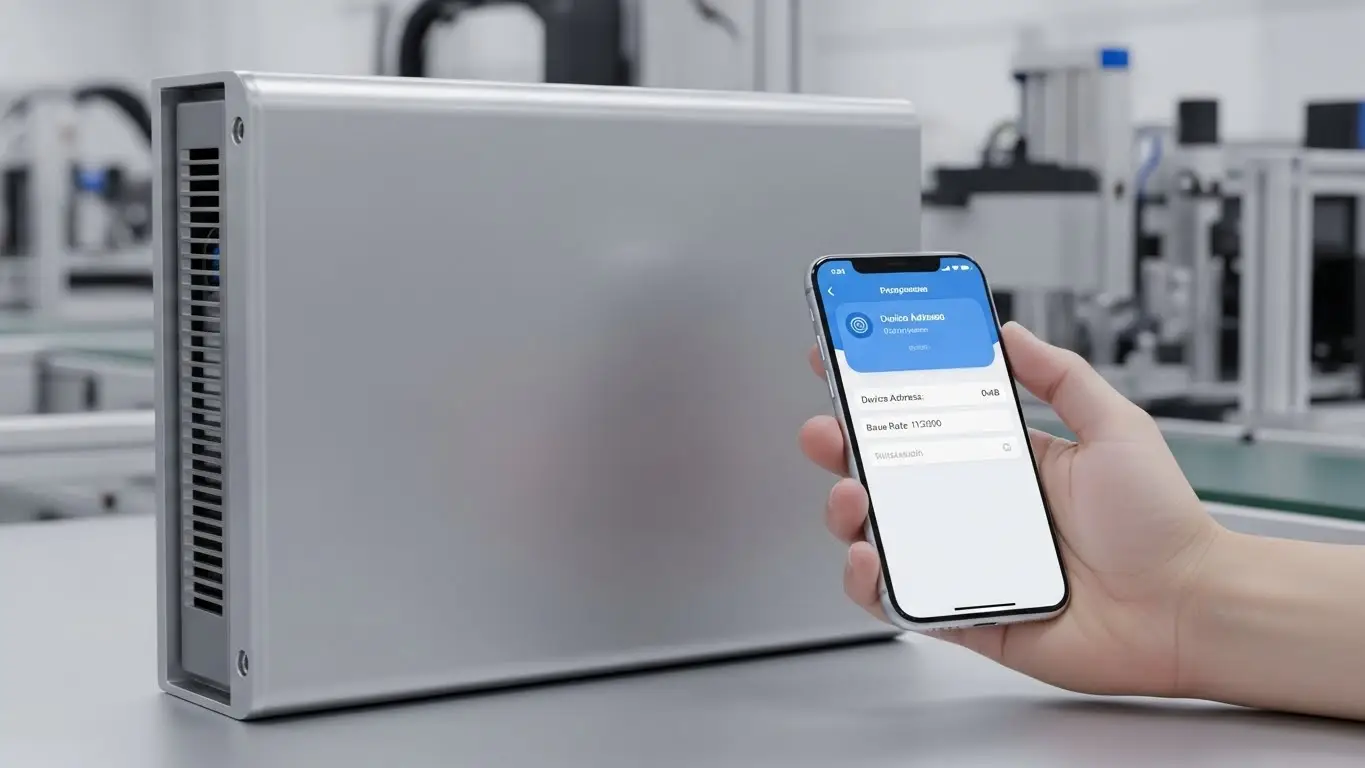
1. Firmware Configuration (GPIO Strapping)
Best For: Reducing BOM (Bill of Materials) complexity.
Instead of a switch, you use resistors to pull specific Microcontroller (MCU) pins High or Low. The firmware reads this state at startup.
- Cost: The cost of a few 0402 resistors is negligible compared to a mechanical switch.
- Permanence: This is ideal for defining permanent hardware versions (e.g., "Model A" vs. "Model B").
- Upgrade Path: If you are moving away from physical toggles, see our analysis on DIP switch replacement solutions for a deeper dive into firmware strategies.
2. Zero-Ohm Resistors / Solder Bridges
Best For: One-time factory configuration.
A solder bridge is simply two exposed copper pads that can be connected with a drop of solder. A zero-ohm resistor serves the same purpose but can be placed by automated pick-and-place machines.
- Reliability: Zero risk of mechanical failure or contact oxidation.
- Security: Prevents end-users from tampering with critical settings.
Comparison: Slide DIP vs. Rotary vs. Firmware
| Feature | Slide DIP Switch | Rotary Coded Switch | Firmware/Resistors |
| PCB Footprint | Large (Linear) | Small (Square) | Tiny (0402) |
| User Friendliness | Low (Binary Math) | High (Decimal) | N/A (Factory Only) |
| Sealing (IP Rating) | Difficult | Excellent (IP67+) | Best (Conformal Coat) |
| Cost | Low | Medium | Lowest |
| Cycle Life | ~2,000 Cycles | ~20,000 Cycles | Infinite |
Specialized Applications: Beyond Standard PCBs
Compact & Wearable Devices
In devices like smartwatches or medical wearables, even a rotary switch is too large. Here, engineers are moving toward alternatives to tact switches in compact devices, such as metal domes or capacitive pads, which can double as configuration inputs during a "boot mode."
Waterproof & Harsh Environments
If your device operates outdoors, a slide switch is a leak risk.
- The Problem: The sliding channel collects dust and water.
- The Solution: For waterproof needs, consider waterproof alternatives to tact switches like Piezo or Hall Effect sensors, which allow for a completely sealed chassis.
High-Durability Needs
Standard slide DIPs are rated for only ~1,000–3,000 cycles. If your application requires frequent adjustments, look into long-life alternatives to tact switches or optical encoders, which can withstand millions of actuations.
When Should You Stick with Slide DIP Switches?
Despite the alternatives, the slide DIP switch remains the champion of visual logic.
- Immediate Verification: A technician can walk up to a control panel and see the state of 8 distinct channels instantly. A rotary switch hides this behind a single number; firmware hides it completely.
- Legacy Compatibility: If you are maintaining older industrial Ethernet switch alternatives or legacy automation gear, the slide switch is often the only drop-in replacement that fits the original cutout and user manual instructions.
Frequently Asked Questions (FAQ)
A slide DIP switch has actuators that move horizontally (flat) along the switch body, usually requiring top-down access. A piano DIP switch has actuators that move vertically (like piano keys) and is designed for side/edge access, making it ideal for rack-mounted equipment where the top of the PCB is covered.
Yes, but not as a direct "drop-in" replacement. The PCB footprint is different (linear vs. square), and the electrical output may differ. A slide switch provides individual SPST outputs for each channel, while a rotary switch typically provides a BCD (Binary Coded Decimal) or Hexadecimal output that requires fewer MCU pins.
Rotary switches are considered better for addressing because they eliminate binary conversion errors. Instead of flipping multiple switches to represent "Address 13" (Binary 1101), a user simply turns the dial to "D" or "13". This reduces installation time and support calls.
The most reliable alternative is a solid-state solution like Zero-Ohm resistors or Non-Volatile Memory (EEPROM). Since these have no moving mechanical parts, they are immune to vibration, oxidation, and physical wear, offering effectively infinite reliability.
