





Why Choose 0.5mm 1mm FPC Connector for Flex Circuits
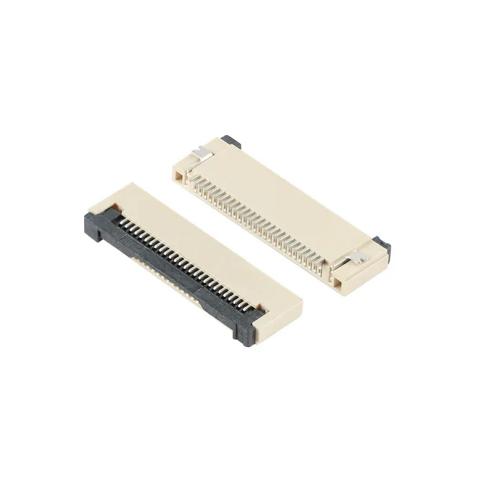
Why choose 0.5mm 1mm FPC Connector for flex circuits? Because tiny spaces demand smart links. Devices bend, twist, and move. Signals must stay clean. Power must stay efficient. The wrong connector adds heat, noise, and delays. The right one saves space and time. But which pitch fits your build? 0.5 mm for density, or 1 mm for easier handling? What about latch style, stack height, and mating life? In the next sections, we reveal hard-won lessons from the line, simple design checks, and a clear path to reliable ramps.
The Practical Challenges Engineers Face (And How We Solve Them)
Flex circuits snake through hinges, wrap batteries, and curve around frames. Every millimeter matters. A connector must hold tight without fighting the enclosure. It must survive repeated mating. It must carry power and high-speed signals without adding noise. And it must be easy to place on the line, even when launch schedules are tight.
At Hanxia, we design around those realities. We focus on flatness, latch accuracy, and controlled contact force so a 0.5mm 1mm FPC Connector seats cleanly and stays seated. The result is stable builds across EVT, DVT, and PVT - not just perfect samples on a lab bench.
• Industry-Leading Expertise - Over 10 years in precision connectors, with deep control of tolerance, plating, and spring geometry.
• Advanced Production Technology - Automated assembly lines deliver consistency lot after lot, cutting escape defects.
• Strict Quality Control - 100% testing for durability, signal integrity, and power efficiency safeguards field performance.
• Wide Compatibility - Options aligned to varied voltage, current, and data-rate needs so you can standardize your BOM.
• Custom & OEM Solutions - Tailored sizes, orientations, and retention features to match your flex thickness and bend plan.
• Fast, Secure Global Shipping - Reliable logistics for prototypes and mass production, with full traceability.
❓ Why 0.5 mm And 1 mm Dominate Flex Builds
Both pitches balance density with usability. The 0.5 mm pitch enables tighter routing and smaller footprints. It shines in ultra-compact devices and high-I/O displays. The 1 mm pitch gives you more insertion tolerance, thicker traces, and easier manual handling on small batch lines. Many platforms use both: 0.5 mm for display or camera subassemblies, 1 mm for battery or sensor harnesses. Choosing between them should reflect real constraints - assembly flow, enclosure limits, and test coverage - not just board area.
What Makes Hanxia's Fine-Pitch Connectors A Safer Bet
When teams pick Hanxia, they usually want predictability. They want to avoid line stops and cut rework. We build for that.
- Precision That Shows Up On Your Line
We control coplanarity and pitch stability from reel to reel. For SMT, that means reliable paste transfer and clean reflow wetting. For assembly, that means lower insertion stress and smoother latch actuation. With a 0.5mm 1mm FPC Connector, even small variations can create intermittent faults; our process narrows those variations so the connector aligns, bites, and holds the first time.
- Quality You Can Measure And Trust
Every unit is tested for mechanical life, signal path integrity, and current-carrying efficiency. This is not just lab marketing. It prevents the long-tail failures that appear months after launch - vibration-induced opens, micro-fretting, or marginal contacts in cold starts. With this depth of screening, you can route complex flex paths and still maintain margin.
- Integration Options That Reduce Compromise
We offer straight and right-angle orientations, multiple stack heights, and actuation styles that fit your build (flip-lock, slide-lock, or friction-fit). If your device needs a special footprint, our OEM team tunes housing geometry, plating stacks, or retention features without forcing an enclosure redesign. That flexibility is crucial in flexible printed circuit connector selection for multi-SKU platforms.
• Assembly-Friendly: Polarized housings and guided entries cut mis-insertion risk.
• Serviceable: Latch feedback is clear, so operators know when the flex is fully seated.
• Protected: Housing edges are designed to reduce flex scuffing during repeat mating.
Applying 0.5 mm And 1 mm In Real Products
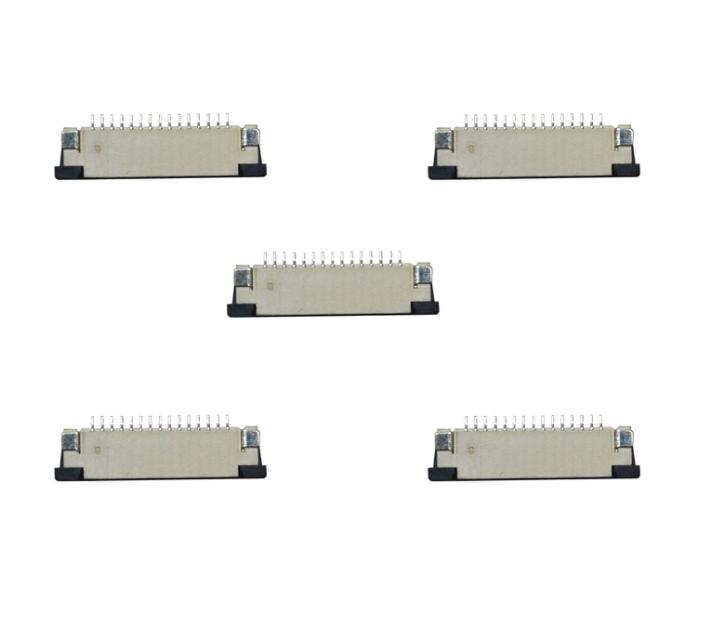
Small devices succeed when you plan early and avoid surprises late. Use the pointers below during your design reviews. They help you lock the right 0.5mm 1mm FPC Connector before tooling.
- Choosing The Right Pitch For Your Constraints
Pick 0.5 mm when board space is scarce, I/O density is high, or the flex stack demands tight bending near the connector. This is common in smartwatches, AR/VR optics, and micro-camera modules.
Pick 1 mm when you need easier manual handling, thicker copper for power rails, or extra tolerance in pilot builds. This often fits handheld scanners, industrial controls, and medical diagnostics.
- Design And DFM Tips That Pay Off
• Mechanical Envelope: Validate housing height, latch clearance, and cable exit angle with your enclosure and nearby components.
• Assembly Flow: Decide early whether operators or robots insert the flex. Match orientation and actuation to that flow.
• Electrical Headroom: Map voltage, current, and data rates to connector options with proven signal integrity margins.
• Reliability Margin: Align expected mating cycles and environmental exposure with tested durability classes.
• Customization Path: Unique stack-ups benefit from an OEM variant. Lock it early to protect your schedule.
- Example: Fine-Pitch For Wearables
A fine-pitch FPC connector for wearables must endure daily motion and occasional drops. We optimize contact spring force to maintain a reliable wipe without over-stressing the flex tail. We also tune latch geometry so the connector resists peel forces from curved housings. This engineering discipline is why wearables teams often standardize on Hanxia across product generations.
Why Teams Standardize On Hanxia (And How To Get Started)
Engineers return to us for three reasons: fewer surprises, faster ramps, and easier maintenance. Our documentation covers handling notes, footprint recommendations, reflow profiles, and packaging options - reels for SMT, trays for prototyping. We support pilot runs and mass production with the same rigor, so your build behaves the same at 100 units and at 100,000.
If you are moving from a legacy connector, we can perform a quick fit-gap review to minimize layout changes. For new designs, we help you select the shortest path to a robust release with a 0.5mm 1mm FPC Connector - from early samples through PPAP-level validation when required.
Call To Action
Ready to de-risk your flex connection? Ask Hanxia for a rapid DFM check and sample kit tailored to your device. We'll recommend the best pitch, orientation, and latch style for your space, signal, and assembly needs - and outline an OEM path if customization will save time or cost down the road. Contact Hanxia today to start your build with stable quality and reliable delivery.
